
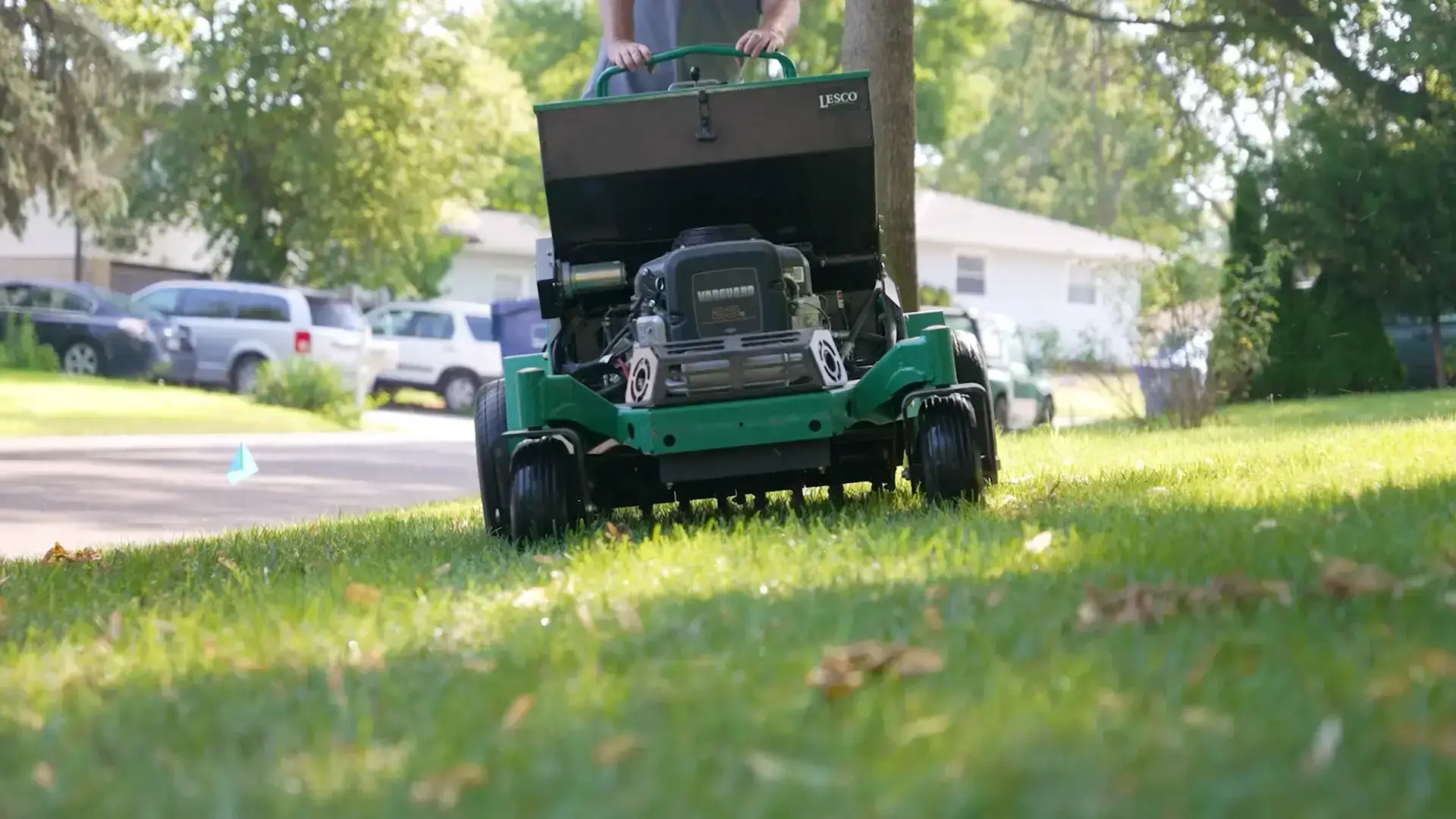
Short Answer: For cool-season lawns in Lincoln and Omaha, late August through September is the single best window of the year to aerate and overseed. The soil is still warm, the air is cooling, and summer weeds are fading, which is exactly what new grass needs to establish. Aeration relieves the compaction our clay soils build up over summer, and overseeding thickens the lawn before weeds can move into thin spots. Work done in this window shows up as a thicker, greener lawn next spring. Miss it and you wait a full year.
By late summer, a lot of Nebraska lawns are looking tired after the heat, and it is tempting to write off the yard until spring. That is the most common lawn mistake we see, because the weeks most homeowners ignore are the most valuable of the entire year for a cool-season lawn.
It is an easy instinct to understand. The lawn has taken a beating through July and August, school is starting, and the yard feels like next year’s problem. But cool-season grass is wired for exactly these weeks, and a little work now pays off far more than the same effort would in spring. Understanding why changes how you treat the lawn from here through the fall.
Why Cool-Season Grass Loves This Window
Our lawns here are Kentucky bluegrass, tall fescue, and ryegrass, and they are built for late summer into early fall. The days cool off, the nights cool down, and the soil holds the warmth it built up over summer. Roots grow aggressively, and new seed germinates fast. Just as important, summer weeds like crabgrass are finishing their cycle instead of fighting your new grass for space and water. Seed put down now gets a clean runway it would never get in spring.
There is a reason the timing is so specific. Cool-season grass germinates and roots best when soil temperatures sit in roughly the 50 to 65 degree range, and around Lincoln and Omaha that is exactly where the ground lands from late August through September as the summer heat lets go. The air is comfortable enough for steady growth, the soil is still warm from summer, and the plant is putting its energy into roots rather than just top growth. Spring simply never lines all of that up the same way, which is why fall work consistently outperforms it.
Aeration: The Step Most Lawns Are Missing
Nebraska soils compact over a season of foot traffic, mowing, and heat, and compacted soil quietly chokes a lawn. Roots cannot spread, water runs off instead of soaking in, and fertilizer never reaches the root zone. Core aeration pulls small plugs from the soil to open it up so air, water, and nutrients get down where they are needed. Fall is the ideal time because the grass is growing vigorously and fills the openings quickly.
After aeration you will see small soil plugs scattered across the lawn. Leave them where they fall. They break down on their own within a week or two and return their nutrients and beneficial organisms to the surface, so there is no need to rake them up. It is also worth understanding that compaction is not a one-and-done problem. Our Nebraska soils tighten back up over each season of mowing, foot traffic, and heat, which is why the lawns that stay consistently healthy tend to be the ones aerated on a regular fall schedule rather than once every several years.
Overseeding: Thickening What You Already Have
Even a healthy lawn thins over time. Overseeding spreads fresh seed over the existing turf to bring in new plants and fill gaps before weeds claim them, and a dense lawn is the best weed control there is. Aeration and overseeding go together for a reason. The holes give new seed direct contact with the soil, which is exactly what it needs to take hold.
The seed you choose matters as much as the timing. A quality blend suited to Nebraska conditions, matched to how much sun each part of the yard gets, establishes far better than a bargain-bin mix, and the right blend also brings in improved disease and drought tolerance over time. Seed-to-soil contact is the other half of the equation, which is the whole reason aeration and overseeding are paired. Seed that settles into an open aeration hole roots reliably, while seed sitting on top of thatch or hard ground often never takes.
Getting New Seed to Establish
New seed needs consistent moisture until it germinates and roots, which means light, frequent watering for the first couple of weeks, a shift from the deep, infrequent watering that suits an established lawn. Hold off on heavy foot traffic while seedlings are young, and keep mowing the established lawn at the proper height so it does not shade out the new growth. Started in this window, new seed establishes and is ready to take off first thing next spring.
The watering shift is the part homeowners most often get wrong, so it is worth being specific. Until the seed germinates, the top inch of soil should stay consistently moist, which usually means a short watering once or even twice a day rather than one long soak, especially if a warm, dry stretch settles in. Once the new grass is up and growing, you gradually back off to less frequent, deeper watering to push the young roots down. Patience helps too, since different grasses in a blend germinate at different rates, so a slightly patchy first couple of weeks is normal and fills in.
How the Fall Sequence Fits Together
Aeration and overseeding are the headline, but they work best as part of a short fall sequence rather than in isolation. The usual order is to aerate first, overseed right into the fresh holes, and follow with a fall feeding that supports both the established lawn and the new seedlings as they come up. Mowing continues at the proper height as long as the grass is growing, and the watering shifts to match the new seed. Timed together in the late-summer window, each step reinforces the next, and the result is a lawn that heads into winter stronger and greens up faster and thicker in the spring. Trying to squeeze the same work into the spring rarely delivers the same result.
Signs Your Lawn Needs This the Most
Some lawns benefit from fall aeration and overseeding more than others, and the signs are easy to spot. Thin or bare patches, areas that have been slowly losing density year over year, and spots where water puddles or runs off instead of soaking in are all pointing to compaction and a lawn that could use thickening. Heavy summer weed pressure is another clue, since weeds move into the open space a thin lawn leaves them. If your yard shows any of these, this is the window to turn it around rather than watching it slide further next year.
Frequently Asked Questions
Isn’t spring the time to seed a lawn?
It feels that way, but for cool-season grass in Nebraska, fall is far better. Fall seed gets warm soil, cool air, and little weed competition, then a head start the next spring. Spring seed has to fight crabgrass and summer heat before it establishes.
How late into fall can I still seed?
New seed needs several weeks of growing weather to establish before the ground gets cold, so earlier in the window is better. Late August into September is the sweet spot around Lincoln and Omaha.
Do I really need to aerate every year?
Most Nebraska lawns benefit from annual aeration because compaction rebuilds each season, and lawns with heavy traffic or thin, hard spots benefit the most.
Can I aerate and overseed myself?
A motivated homeowner can, though renting the equipment and getting the timing, seed choice, and follow-up watering right is where most do-it-yourself attempts fall short. The value of having it done is mostly in nailing the sequence and timing in a narrow window and in the follow-through. Either way, the important thing is that it happens this fall.
What if my lawn is mostly weeds and thin grass?
A heavily weedy or very thin lawn may need more than a single overseeding to turn around, sometimes a broader renovation, and the weeds need to be addressed so they do not simply outcompete the new seed. Fall is still the right time to start, and we can look at your lawn and lay out a realistic plan.
What to Do Next
This is the window that decides what your lawn looks like next year, and it does not stay open long. Get your free quote today. Call Yard Boss at 402-588-4222 or email greenergrass@yardbosslawns.com, and visit yardbosslawns.com. We serve Lincoln, Omaha, Crete, and the surrounding communities.