Short Answer: The best lawn care company for your Lincoln lawn is the one whose program is actually built around Nebraska’s climate, soil, and grass types, who licenses every applicator through the state, who answers callbacks at no extra charge, and who can show you years of local reviews instead of national talking points. Ask the seven questions in this article before you sign anything, and you will know in about a five minute phone call whether a company is the right fit.
If you are reading this, you have probably been around the block a few times. Maybe you tried doing your lawn yourself for a couple seasons and the results were not what you hoped for. Maybe you hired a national chain last year and felt like you were just a route number on a clipboard. Or maybe a neighbor’s lawn looks fantastic and you are finally ready to figure out who they use and what to look for.
Wherever you are coming from, choosing a lawn care company can feel surprisingly hard. The pricing pages all sound similar. The promises all sound similar. And the differences that actually matter to your lawn are usually buried under marketing language.
So we wanted to put together an honest field guide. Here are the seven questions we would ask if we were on your side of the table, and what good answers actually look like for a Lincoln lawn.
1. Are Your Applicators Licensed Through the Nebraska Department of Agriculture?
This is the single most important question, and a surprising number of homeowners never think to ask it. In Nebraska, anyone applying restricted-use pesticides or commercial lawn chemicals is supposed to be licensed and trained through the Nebraska Department of Agriculture. That license is what tells you the person spraying your yard understands the products, the labels, the calibration, and the safety practices.
If a company hesitates or talks around this question, that is your answer. A reputable Lincoln lawn care company will name the license, confirm that every technician carries one, and offer to share their certification number if you ask.
2. Is Your Program Designed for Cool-Season Grass and Alkaline Soil?
Lincoln lawns are mostly tall fescue, Kentucky bluegrass, and ryegrass mixes. Our soil pH typically runs 7.5 to 8.5, which is on the alkaline side. Both of those things matter a lot when it comes to how a program should be built.
A company that runs the same fertilizer schedule in Lincoln that they run in Atlanta or Dallas is, frankly, not designing a program for your lawn. Cool-season grasses do most of their growing in spring and fall and need to be eased through summer with lighter applications. Alkaline soil locks up iron, which is why so many Lincoln lawns turn yellow even when they are technically being fed.
Here is what we have found works best in this part of Nebraska: a program with two well-timed pre-emergent rounds, slow-release nitrogen, iron supplementation, and biological soil builders that help unlock nutrients the soil already has. If a company cannot speak to those specifics, their program was probably built somewhere else.
3. What Happens If a Weed Breaks Through After You Treat?
Pay close attention to the answer here. Some companies charge $50 or more for a callback. Others include unlimited free service calls as part of the program.
Breakthrough weeds happen. Conditions vary, soil temperatures shift, and no program is perfect every single round. The real test of a lawn care company is what happens next. We handle service calls every Thursday at no extra charge for any customer on a full program, because the result is what we are actually selling, not the application itself.
If a company sells you a six or seven step program and then tries to charge you each time you ask them to come back for a missed weed, the math gets ugly fast. Ask before you sign.
4. How Long Have You Been Serving Lincoln, Specifically?
Local experience compounds over years. A company that has been treating Lincoln lawns for a decade or more has seen wet springs, dry summers, late freezes, early heat, the spread of Emerald Ash Borer, and every weed pressure cycle that comes with this region. They have a feel for when pre-emergent should go down in a cold spring versus a warm one, what disease pressure looks like in a humid July, and which neighborhoods tend to have specific soil quirks.
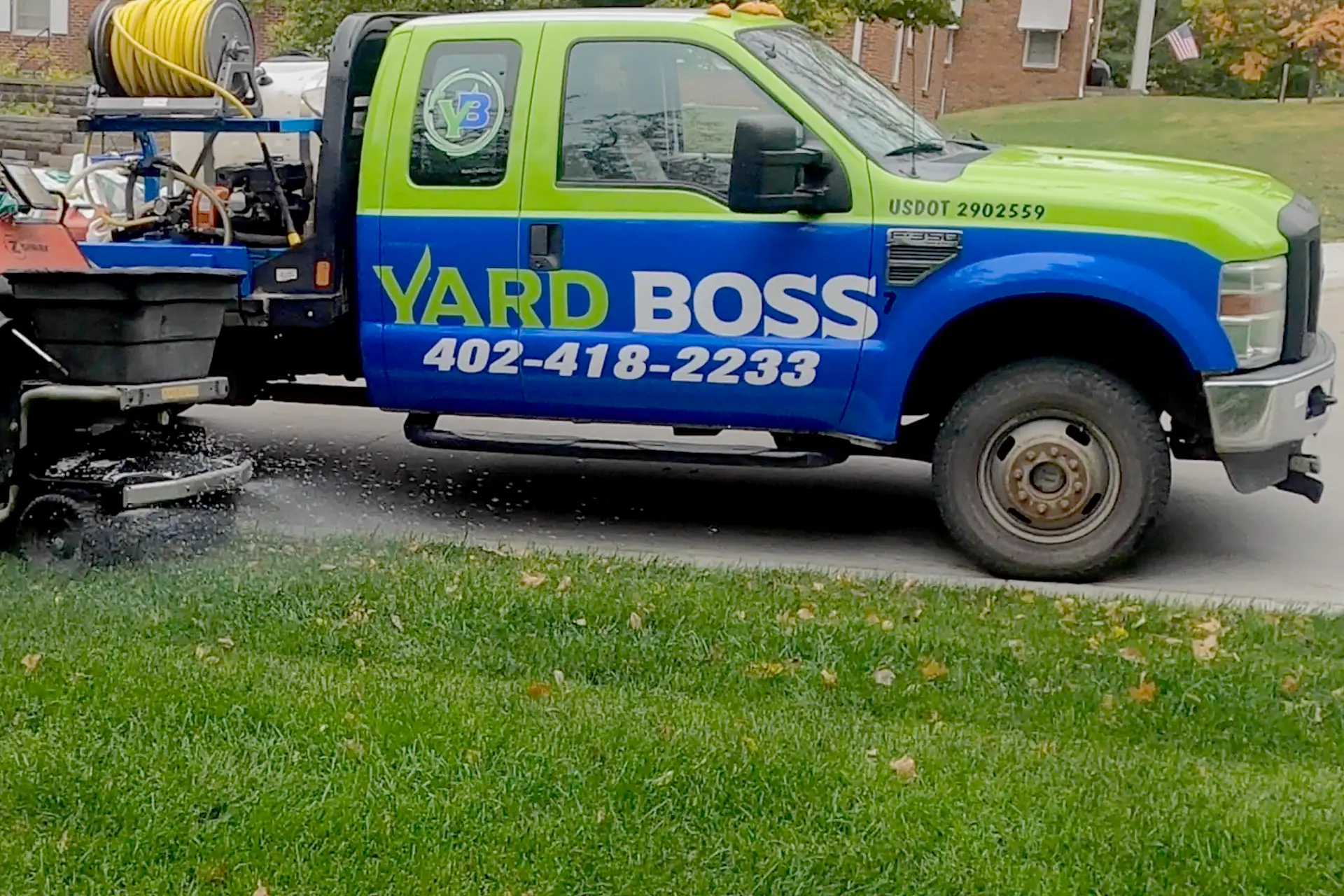
Yard Boss has been serving Lincoln, Omaha, and surrounding Nebraska communities since 2008. That is more than 18 years of accumulated local data. When you call us in late June about a brown patch, we have probably seen the same pattern in the same neighborhood ten times already. That kind of pattern recognition is hard to fake and impossible to outsource.
5. Can I See Real Reviews From Lincoln Customers?
Anybody can post a polished testimonial on their own website. What you really want to see is third party reviews on Google, where the company cannot edit or remove what people said.
Look for reviews that mention specific things: a technician’s name, a particular issue that got resolved, a specific Lincoln neighborhood. Detail signals authenticity. Look for the response pattern too. How does the company handle a negative review? Do they engage thoughtfully or get defensive? That tells you a lot about how they will treat you if something goes wrong.
We have hundreds of 5-star Google reviews from customers across Lincoln and the surrounding area, and we read every single one. Reviews are not a marketing exercise for us. They are how we keep ourselves honest.
6. Do You Offer a Real Satisfaction Guarantee?
The wording on this one matters. A real satisfaction guarantee says something like “if you are not happy with an application, we will redo it at no charge.” It does not have a long list of exceptions or fine print that essentially makes the guarantee meaningless.
Our 100% satisfaction guarantee is simple. If you are not happy with what you see after a treatment, we come back and make it right. There is no stack of disclaimers and no extra fee. We can offer that because we have built a program around getting it right the first time.
7. Can You Explain What Each Application Is Doing and Why?
This is the question that separates a company that has a real agronomic philosophy from one that is just running a route. Ask a representative to walk you through what gets applied in April versus June versus September, and why the timing is what it is.
Good answers sound like teaching. They will mention soil temperatures for pre-emergent, the lifecycle of grub larvae for grub control, why summer applications should be lighter for cool-season grass, and why a winterizer in late fall is when your lawn does most of its real root growth. Bad answers sound like a sales script with no science underneath.
If a company cannot explain why they do what they do, that is a sign that the people running the program have not thought it through, which means your lawn is the experiment.
What to Do Next
The best way to use this list is to call two or three companies and ask the same seven questions in the same order. The differences will jump out at you within a few minutes.
If you would like to put us through that test, we welcome it. Give us a call at (402) 418-2233 or visit yardbosslawns.com/contact for a free quote. We will walk your property if needed, identify your grass type and soil conditions, and put together a program designed specifically for what your lawn needs this season. There is no pressure and no surprises.
Yard Boss is a locally owned lawn care and pest control company serving Lincoln, Omaha, and surrounding Nebraska communities since 2008. Our applicators are trained and licensed through the Nebraska Department of Agriculture, our 6-step fertilization and weed control program is built around Nebraska’s cool-season grasses and alkaline soil, and every application is backed by our 100% satisfaction guarantee. We are proud of the fact that most of our growth still comes from neighbors recommending us to neighbors, and we work hard to keep it that way.