
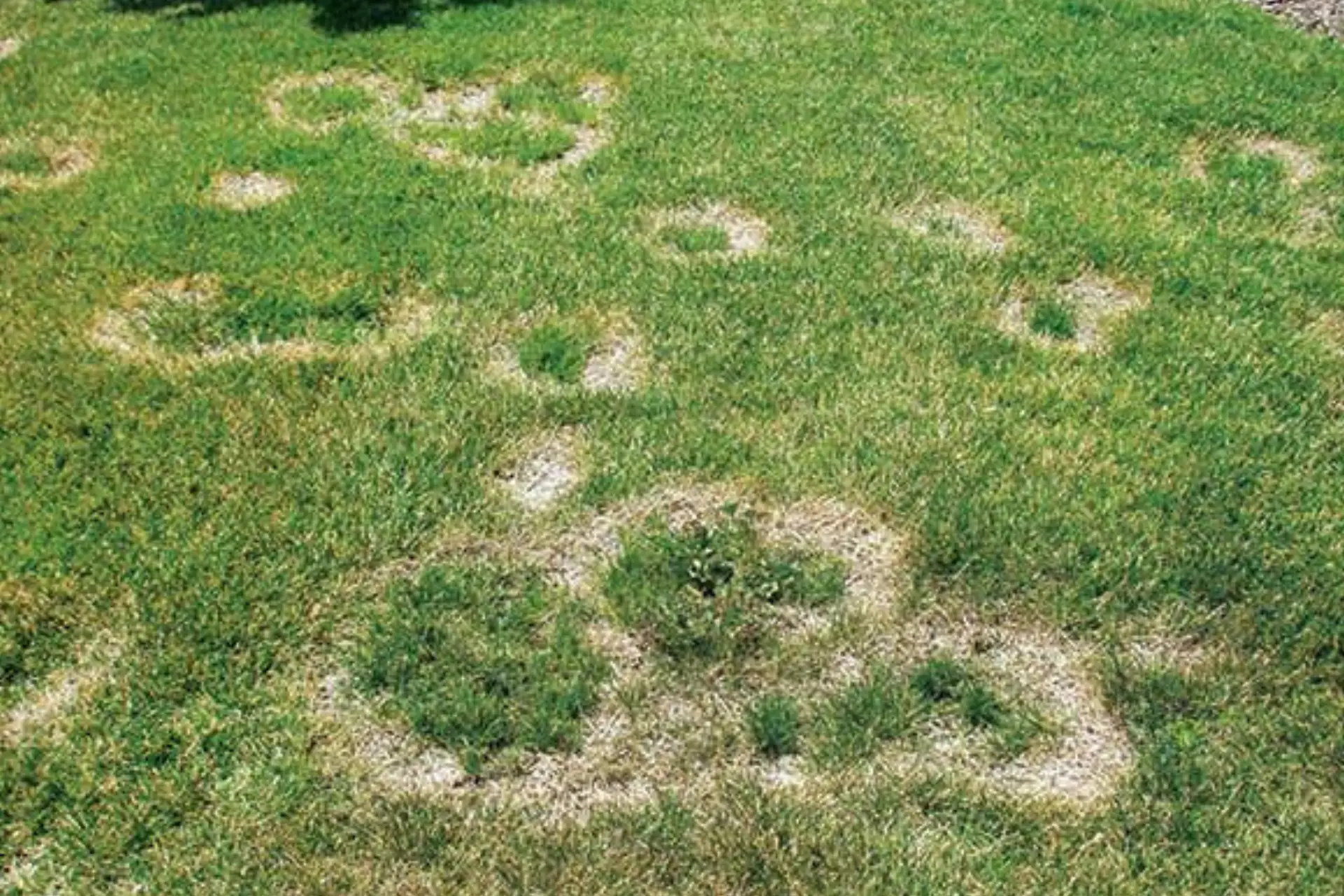
Short Answer: Brown patches in a Lincoln lawn during summer almost always trace back to one of six causes: drought stress, heat dormancy, brown patch fungus, dull mower blades, dog urine spots, or grub damage. The fix depends entirely on which one you are looking at, and they all have telltale signs once you know what to look for. The wrong fix can make some of these worse, so the diagnosis matters more than the speed.
If you are out in your yard right now staring at a patch of brown grass and trying to figure out what happened, you are not alone. We get this call dozens of times every July and August. The lawn looked great in May, and now there are patches that range from the size of a dinner plate to the size of a small car.
The good news is that most brown patches are recoverable. The frustrating news is that the right next step depends on what is actually causing it. Imagine watering a fungus problem more, or putting fertilizer down on heat-dormant grass. Both of those well-intentioned moves make the problem worse.
So before you do anything, let us walk through the six most common causes we see in Lincoln lawns and how to tell them apart.
Cause 1: Drought Stress
Drought stress is the most common cause we see in late June through August, especially during stretches with hot wind and no rain. The pattern is usually large, irregular areas of grass that turn from a blue-green color to a tan or straw color over the course of a week or two. The blades stay intact and feel dry to the touch.
The simplest test for drought stress is the footprint test. Walk across the lawn and look back. If your footprints stay visible because the grass does not spring back, the lawn is dehydrated. Healthy, well-watered grass pops back up almost immediately.
Here is what we have found works best for Lincoln lawns: about one inch of water per week, delivered in two or three deep waterings rather than daily light sprinkles. Deep watering encourages roots to grow down where the soil stays cooler. Light daily watering trains the roots to stay near the surface where they cook in July heat.
Cause 2: Heat Dormancy (Different From Drought)
This one looks similar to drought stress but is actually a different mechanism. Cool-season grasses like tall fescue and Kentucky bluegrass are biologically programmed to slow down and protect themselves when soil temperatures climb past about 80 degrees. They pull resources back into the crown of the plant and let the top growth go dormant on purpose.
A lawn in heat dormancy looks dull, tan, and stops growing. But the crown is still alive. If you pull a few blades and the base is still firm and white, your grass is dormant, not dead.
The fix here is patience. Do not push fertilizer onto a heat-dormant lawn. Do not dig it up or reseed in the middle of summer. Keep watering enough to keep the crown alive (about half an inch a week is enough to maintain), back off the mowing frequency, and wait for the cooler nights of late August and early September. The lawn will green back up on its own, often within ten days of the first cool stretch.
Cause 3: Brown Patch Fungus
Brown patch fungus is the fungal disease we see most often in Lincoln, especially during humid stretches when nighttime temperatures stay above 65 degrees. It hits tall fescue lawns particularly hard.
The signature look is roughly circular patches, often two to three feet across, that appear suddenly. Early in the morning you may even see a smoky gray ring around the edge of the patch where the fungus is actively spreading. The grass blades inside the patch turn tan with darker lesions, and the area looks sunken compared to the healthy lawn around it.
The wrong move with brown patch is to water more, especially in the evening. Wet leaves overnight are exactly what the fungus needs. Water early in the morning so the blades dry out by midday. If the disease pressure is high, a fungicide application from a licensed applicator can stop the spread, but cultural fixes (proper watering, mowing height of 3.5 to 4 inches, and avoiding heavy nitrogen in summer) prevent most cases entirely.
Cause 4: Dull Mower Blades
This one surprises people, but we see it constantly. A dull mower blade does not cut the grass cleanly. It tears the tip of each blade, leaving a ragged edge that turns brown within a day or two. From a distance, the lawn takes on an overall tan or hazy look that is easy to mistake for a disease or watering issue.
The test is simple. Get down on your hands and knees and look at the cut edge of individual blades. If the tips are clean and flat, your blade is sharp. If the tips are frayed, splitting, or torn, you need to sharpen.
Mower blades should be sharpened at least twice per season for a typical Lincoln lawn, and more often if you have a lot of turf or rough terrain. It is one of the simplest, cheapest things you can do for your lawn, and it pays back immediately.
Cause 5: Dog Urine Spots
If your patches are small (six inches to a foot across), roughly circular, and concentrated in the same areas of the yard, you are probably looking at urine spots. The center of the patch is brown and dead, often with a ring of unusually dark green grass around the outside where the diluted nitrogen acts like fertilizer.
Urine spots cannot be sprayed or fungicided away. The fix is mechanical: rake out the dead grass, topdress lightly with soil, and reseed in the fall when conditions are right for new grass to establish. For prevention, a thorough watering of the affected spot within an hour of the dog using it dilutes the nitrogen enough to prevent damage in most cases.
Cause 6: Grub Damage
Grub damage shows up most often in mid to late August. The pattern is irregular brown patches that feel spongy underfoot, and the grass pulls up easily because the roots have been chewed off below the surface.
The dead giveaway is the pull test. Grab a handful of grass at the edge of a brown patch and tug. If it lifts up like a piece of carpet with no resistance, you have a grub problem. You may even see C-shaped white larvae in the soil underneath.
Grub damage cannot be reversed in the patch itself. Once the roots are gone, that section needs to be reseeded. But preventive grub control applied earlier in the summer (typically June for Nebraska) stops the damage before it starts. We include preventive grub control as part of our 6-step program for exactly this reason.
How to Tell Which One You Are Dealing With
Imagine looking at your lawn with these six possibilities in mind. Walk over to a patch and ask: Is the shape regular or irregular? Does it pull up easily? Are the blade tips frayed? Is there a smoky ring early in the morning? Are the patches concentrated where the dog goes?
Most homeowners can narrow it down to one or two suspects in about five minutes once they know what to look for. From there, the right next step is usually obvious.
If you are still not sure or the patches are spreading fast, that is when calling someone is worth it. We do free property walks for exactly this reason. A trained eye can usually diagnose the cause in a few minutes and recommend the right fix without guesswork.
What to Do Next
If your lawn has brown patches and you would like a second set of eyes on it, give us a call at (402) 418-2233 or visit yardbosslawns.com/contact to schedule a free quote. We will come out, look at what is actually happening on your specific property, and tell you the truth about what is causing it and what it will take to fix.
Yard Boss has been serving Lincoln, Omaha, and surrounding Nebraska communities since 2008. Our applicators are licensed through the Nebraska Department of Agriculture, our 6-step program is built specifically for the cool-season grasses and alkaline soils that define this region, and every application is backed by our 100% satisfaction guarantee. With hundreds of 5-star Google reviews and 18+ years of local experience, we have seen pretty much every brown patch Lincoln summers can throw at a lawn. Whatever is going on out there, we can help you sort it out.