
Short Answer: Core aeration and overseeding are the single most impactful pair of services you can do for a tired Lincoln lawn, and the right time to do them is fall, ideally between mid-August and the end of September. Aeration relieves compacted soil and lets air, water, and nutrients reach the roots. Overseeding fills in thin areas with new grass that has the entire cool, moist fall to establish before winter. Done together, they often turn a thin, struggling lawn into a thick, healthy one in a single season.
If your lawn has been thinning out, struggling to recover from summer, or just refusing to fill in despite a good fertilizer program, there is a very good chance the issue is not the fertilizer. It is the soil itself, and what is happening (or not happening) below the surface.
That is exactly the problem that aeration and overseeding are designed to solve. We get more questions about these two services than almost anything else in our program, so we wanted to put together a thorough, honest walkthrough.
What Aeration Actually Is
Lincoln soils are heavy on the clay side, which means they compact easily over time. Foot traffic, mowers, dogs, kids, summer heat, and just gravity all press the soil down. Once the soil is compacted, the roots of your grass have nowhere to expand, and water, oxygen, and nutrients cannot move down to where the roots are.
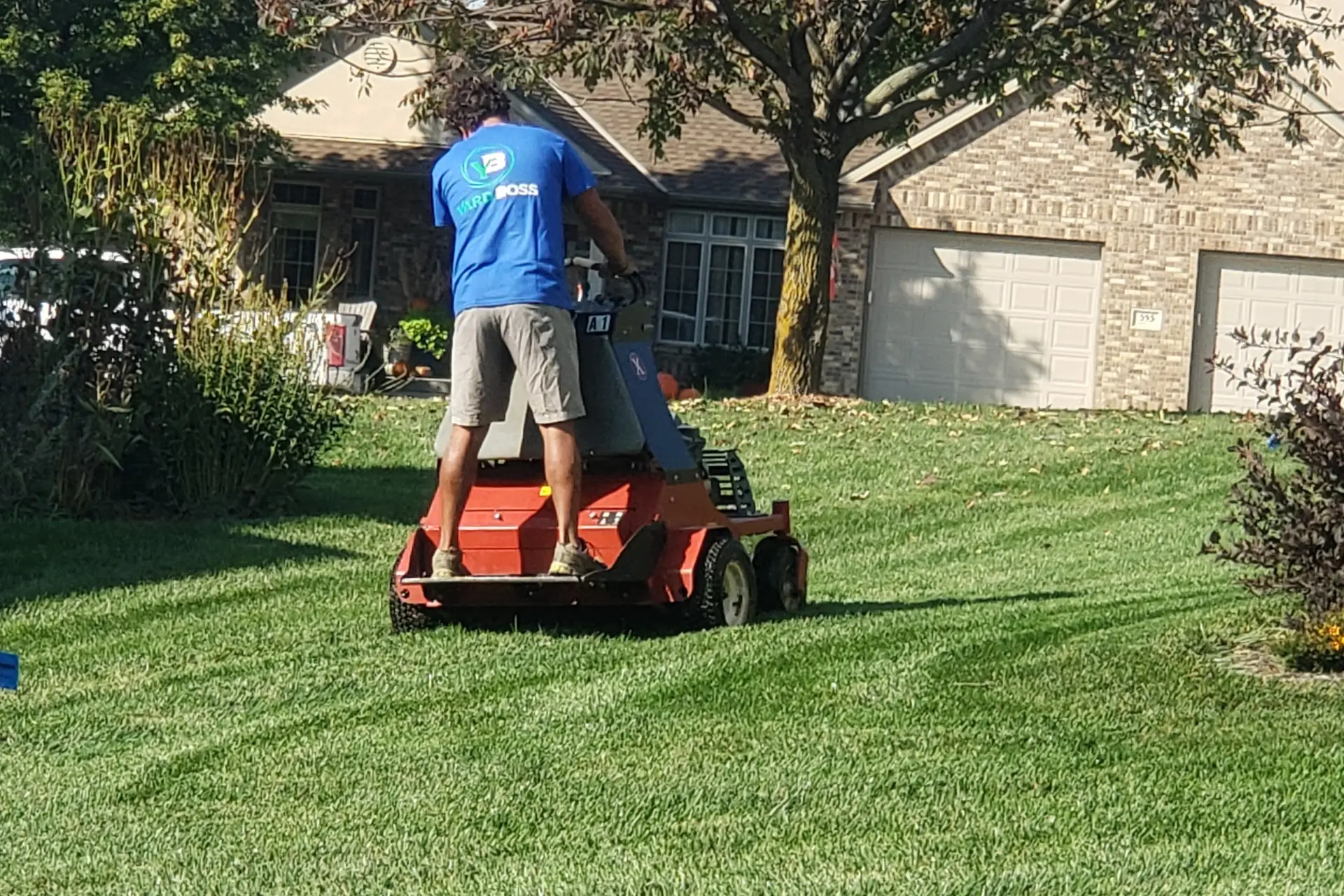
Core aeration uses a machine with hollow tines that pull plugs of soil out of the lawn, leaving thousands of small holes about two to three inches deep. Those holes immediately relieve compaction, give roots room to expand, and create channels for water and nutrients to soak in instead of running off.
Imagine the difference between trying to push a straw into hard, dry clay versus into freshly broken-up soil. That is essentially what happens to your grass roots before and after aeration.
The plugs themselves get left on the surface. They look a little messy for about a week, but they break down on their own and actually help the lawn by returning organic matter and beneficial soil microbes to the surface.
What Overseeding Actually Is
Overseeding is exactly what it sounds like: spreading new grass seed over an existing lawn to thicken it up, fill in thin areas, and introduce fresh, vigorous grass varieties.
The reason overseeding works so well after aeration is that the seed has a place to land. Those aeration holes create perfect little seed pockets where seed can settle into soil contact, get the moisture it needs, and germinate. Throwing seed onto an unaerated, compacted lawn is mostly an exercise in feeding birds.
For Lincoln lawns, we typically use a blend of improved turf-type tall fescue and Kentucky bluegrass cultivars selected for our climate. Newer cultivars handle drought, heat, and disease pressure significantly better than the varieties most older lawns were originally seeded with, so overseeding also gradually upgrades the genetics of your lawn over time.
Why Fall (Not Spring) Is the Right Time
This is one of the most important points in this whole article, so we want to make sure it lands.
The window for the absolute best aeration and overseeding results in Lincoln is roughly August 15 through September 30. Here is why fall beats spring decisively for cool-season grass.
Soil is still warm, which speeds germination. Nights are getting cool, which reduces stress on young seedlings. Weed pressure is at a yearly low because most summer annual weeds have already bolted or died off. Rain patterns are usually more reliable than midsummer. And critically, the new grass has a long, low-stress runway (fall, winter dormancy, spring) to develop a strong root system before it ever has to face Nebraska summer heat.
Spring overseeding sounds intuitive, but it sets new grass up to fail. Spring seed germinates right when crabgrass is also germinating, so the new grass competes with weeds for everything it needs. Then the seedlings, with maybe 90 days of root growth on them, get hit by July and August heat. Most of them do not survive. We have seen spring overseeding work in unusual years, but it is the exception, not the rule.
If somebody offers to overseed your Lincoln lawn in April, that is worth a polite question or two about why.
What the Process Looks Like
For a typical Lincoln property, here is what to expect on the day of service.
The aerator passes over the lawn in two directions, north-to-south and east-to-west, to create a dense, even pattern of holes. For a typical residential lot, this takes about 30 to 60 minutes depending on size and obstacles.
Immediately after aeration, the seed goes down. We use a calibrated spreader to put down the right rate for your conditions, focusing extra coverage on thin areas. The aeration holes catch the seed and create the soil contact germination needs.
For the next two to three weeks, watering is the most important thing the homeowner controls. New seed needs consistent moisture in the top half inch of soil to germinate and survive. We recommend short, frequent waterings (10 to 15 minutes, two or three times a day) for the first two weeks, then transitioning to longer, less frequent watering as the seedlings establish. Imagine the soil surface staying just slightly damp, not soaked.
You will start seeing germination in five to ten days. By three weeks, the new grass is usually visible across the lawn. By six weeks, it is mature enough to mow.
What Aeration and Overseeding Will Not Do
We want to be straight with you about expectations.
Aeration and overseeding will not fix a fertility problem. If your soil pH or nutrient profile is off, the new grass will struggle just like the old grass. We always recommend pairing aeration and overseeding with a real fertilization program, and our 6-step Lincoln program is designed to support new seed through its first full season.
It will not eliminate weeds. In fact, you cannot apply most pre-emergent or weed control products for several weeks after seeding because they will kill your new grass too. That is part of why fall is the right time. Weed pressure is naturally lower.
It will not turn a Bermuda or zoysia lawn into a fescue lawn in one shot. If you are doing a major grass type conversion, that takes a multi-year approach with planning.
And it will not fix problems that are really structural, like severe drainage issues, deep shade where grass simply cannot grow, or compacted construction fill from a recent build. Those problems need their own solutions.
How Often Should You Aerate and Overseed?
For most Lincoln lawns, annual aeration with overseeding for the first three to four years brings a tired or thin lawn back to thick and healthy. After that, many lawns can move to every other year for maintenance.
If your lawn is on heavy clay, gets a lot of foot traffic, or has dogs that run the same paths every day, sticking with annual aeration even after the lawn is healthy is usually worth it.
What to Do Next
If you have been frustrated with thin areas, slow recovery, or a lawn that just refuses to fill in, aeration and overseeding this fall could be the change that turns it around. Spots fill up fast in our schedule once August arrives, and we book in the order people get on the list, so the earlier you reach out the more flexibility you have on timing.
Give us a call at (402) 418-2233 or visit yardbosslawns.com/contact to get a free quote and get on the fall aeration schedule. We will look at your lawn, talk through what has been going on, and recommend a plan that fits where your lawn actually is.
Yard Boss is a locally owned lawn care and pest control company serving Lincoln, Omaha, and surrounding Nebraska communities since 2008. Our applicators are licensed through the Nebraska Department of Agriculture, our 6-step fertilization and weed control program is built specifically for Nebraska’s cool-season grasses and alkaline soils, and every service is backed by our 100% satisfaction guarantee. Aeration and overseeding might be the single highest-leverage thing we do all year for tired lawns, and we would love to help yours get its second wind this fall.