Short Answer: Three fungal diseases commonly show up on Lincoln cool-season lawns in late June and need different treatments. Brown patch produces large circular patches with darker outer rings and visible mycelium on dewy mornings. Summer patch produces ring-shaped patches with green grass in the middle, attacking roots rather than blades. Dollar spot produces small silver dollar to softball sized patches with light tan color. Each has different cultural and fungicide treatments. Misidentification leads to wasted product and continued damage. A 10-minute dawn walk usually distinguishes them clearly.
If your Lincoln area lawn has started showing patches in late June and you are trying to figure out which disease is responsible, this is the post for you. Three different fungal diseases commonly show up at the same time and they look similar enough that homeowners often confuse them.
Brown Patch
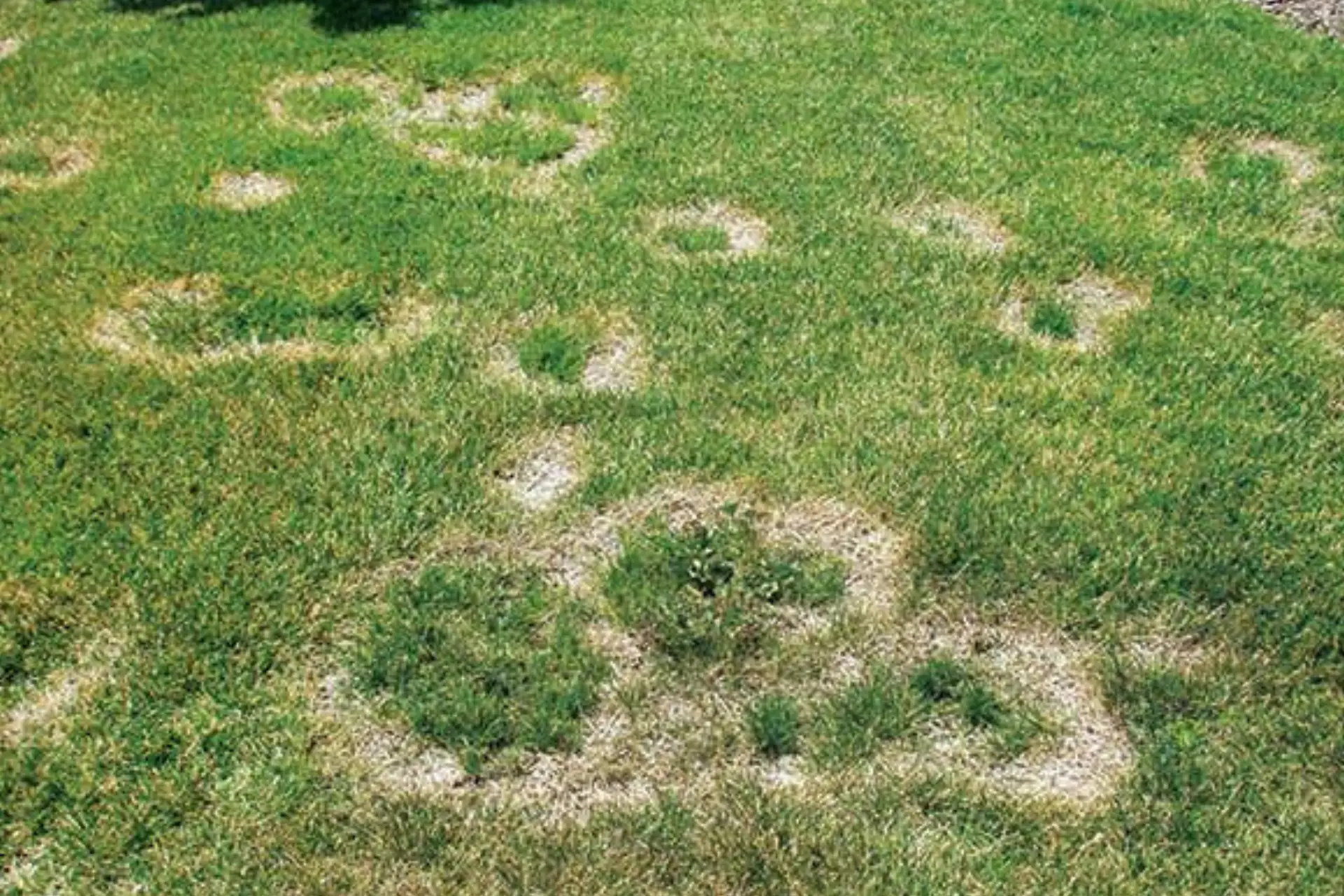
Identification. Circular or roughly circular patches, often a foot to several feet across, with a darker gray or smoky ring at the active edge. Multiple patches across the lawn at varying stages. Worse in shaded or wet areas.
Diagnostic clue. Visible mycelium (fine web-like fungal growth) on grass blades at the active edge in the early morning while dew is present. The mycelium burns off as the sun rises. If you see it at dawn, you have brown patch.
Conditions that favor it. Night temperatures above 65 degrees, high humidity, prolonged canopy moisture, high-nitrogen turf with soft growth.
Treatment. Systemic fungicide labeled for brown patch (azoxystrobin, propiconazole, myclobutanil are common active ingredients) plus watering adjustments to morning only with deeper less frequent cycles. Visible recovery in 4 to 6 weeks.
Summer Patch
Identification. Roughly circular patches that often have green grass remaining in the center, creating a ring shape. Different from brown patch’s solid damaged patches. The disease attacks roots rather than leaves, so the lawn pulls up easily in affected areas.
Diagnostic clue. Pull test. Grass in affected areas comes up easily with little or no resistance because the roots are damaged. Brown patch keeps roots mostly intact.
Conditions that favor it. Hot dry weather (different from brown patch which favors humid wet conditions). Stressed lawns. Compacted soil. High soil pH.
Treatment. Systemic fungicide applied as a soil drench rather than foliar spray (the disease is in the roots). Multiple applications often needed. Watering and pH corrections to address underlying conditions. Recovery is slower than brown patch, often 8 to 12 weeks.
Dollar Spot
Identification. Small circular patches, silver dollar to softball sized (much smaller than brown patch). Light tan color. Often dozens or hundreds of patches scattered across the lawn rather than a few larger patches.
Diagnostic clue. Individual grass blades show distinctive lesions with light tan centers and darker borders. Visible cobweb-like mycelium on patches during dewy mornings, similar to brown patch but at a smaller scale.
Conditions that favor it. Low nitrogen, high humidity, extended dew periods, drought-stressed lawns.
Treatment. Fungicide labeled for dollar spot. Cultural changes: light nitrogen application to boost the lawn, watering adjustment to morning only. Often easier to treat than brown patch or summer patch.
Why It Matters to Get the ID Right
Different diseases respond to different active ingredients. Different cultural changes help different diseases. Applying brown patch fungicide to a summer patch problem wastes money and lets the damage continue.
The 10-minute dawn diagnostic walk usually resolves the question. Walk the lawn before dew burns off, ideally between 5 and 7 a.m. Look at multiple patches.
Visible mycelium on grass blades plus large patches with rings: brown patch.
Ring-shaped patches with green centers, grass pulls up easily: summer patch.
Small patches with distinctive blade lesions: dollar spot.
Treatment Cost Comparison
Brown patch fungicide application: $100 to $200 per visit. Often one application is enough for moderate cases.
Summer patch treatment: $150 to $300 per visit. Usually requires multiple applications and is harder to control.
Dollar spot treatment: $100 to $200 per visit. Often responds to one or two applications.
Preventive fungicide programs for lawns with disease history: $400 to $700 for the season.
Cultural Practices That Reduce All Three
Morning watering only. The single most important cultural factor across all three diseases.
Deep infrequent cycles. Reduces surface moisture between waterings.
Proper mowing height. 3.5 to 4 inches for cool-season grass in summer.
Sharp mower blades. Reduce leaf wounds that provide entry points.
Moderate fertilization. Avoid heavy nitrogen during disease pressure.
Air circulation. Trim back overgrown shrubs that crowd the lawn.
Soil pH management. Particularly important for summer patch.
When to Treat vs Wait
Active spreading: treat within 3 to 7 days.
Stable patches not spreading: cultural changes plus monitor before treating.
Late season patches (August or later): treatment effectiveness drops as cooler weather approaches. Sometimes monitoring is reasonable.
Repeating annual patterns: preventive programs make sense for lawns with confirmed multi-year disease history.
Preventive Programs for Multi-Year History
For lawns with confirmed history of any of these three diseases over multiple seasons, preventive fungicide programs reduce annual damage dramatically. The program typically runs 3 to 4 applications spaced 21 to 28 days from late May through mid August. Total cost $400 to $700 for a residential lawn. Compare to repeated active disease outbreaks each requiring rescue work, the math favors prevention for repeat-affected properties.
Why Multiple Diseases Often Happen Together
Stressed lawns are more susceptible to multiple diseases simultaneously. A lawn weakened by inadequate watering becomes vulnerable to brown patch. The disease damage further weakens the lawn, opening the door for dollar spot or summer patch. The cascade happens faster than most homeowners expect. Addressing one disease without addressing the underlying stress conditions often produces only temporary improvement before another disease takes hold.
Overseeding for Long-Term Disease Resistance
Modern turf-type tall fescue varieties have dramatically better disease resistance than older varieties. Fall overseeding with resistant cultivars produces measurable reduction in disease pressure the following season. The investment is modest (typically $300 to $700 for overseed on a residential lot) and the benefit compounds across multiple years.
Coordinating Disease Treatment With Other Lawn Care
For homeowners on a comprehensive lawn care program, disease treatment coordinates with other June and July visits. Fungicide application can often be combined with other treatments to reduce trip costs. Watering adjustments coordinate across the property. Cultural changes apply universally. The integrated approach produces better outcomes than treating disease in isolation. We coordinate with whoever handles your lawn care if it is not us.
Frequently Asked Questions
Can multiple diseases be present at once?
Yes, and it is common. Lawns under stress often have multiple diseases simultaneously. Treating each requires different products and approaches.
Will my lawn fully recover?
Light to moderate damage from any of the three usually recovers fully with proper treatment and time. Severe damage may require fall overseeding to rebuild density.
How do I prevent these next year?
Fall overseeding with disease-resistant varieties. Soil pH correction if testing shows imbalance. Proper cultural practices year-round. Preventive fungicide for confirmed history.
Can I use one fungicide for all three?
Some broad-spectrum products do cover multiple diseases. Read labels carefully. Specific diseases sometimes need specific chemistry for best results.
What Newer Disease Threats to Watch For
Beyond the three covered, several less common diseases occasionally appear on Lincoln area lawns. Pythium blight in extreme heat plus humidity conditions. Necrotic ring spot in older Kentucky bluegrass lawns. Red thread in cooler wet periods. Each has different appearance and treatment. The general approach (diagnose first, treat second) applies. Less common diseases benefit most from professional identification.
The Importance of Disease Diagnosis Before Treatment
For Lincoln area homeowners considering fungicide application, the diagnostic clarity matters because different products work on different diseases. Applying brown patch fungicide to a summer patch problem wastes the product and lets the disease continue. Applying dollar spot product to brown patch may have some effect but is not optimal. Reading the product label confirms what diseases each formulation targets. When in doubt, professional identification produces better outcomes than guessing.
What Recovery Looks Like Across Months
For lawns recovering from confirmed fungal disease, the realistic month-by-month timeline. Month 1 after treatment: active spread stops, but damaged areas remain visible. Month 2: surrounding healthy grass begins filling in damaged zones. Month 3: significant visual improvement in light to moderate damage. Months 4 to 6: full recovery for most properly treated cases. Severe damage may need fall overseeding to fully rebuild density. The recovery is reliable when correct treatment is applied promptly.
How Property-Specific Factors Affect Disease Risk
Beyond the general identification and treatment, several property-specific factors increase or decrease disease risk on Lincoln area lawns. Drainage quality matters. Shade and air circulation matter. Soil pH and chemistry matter. Mature trees overhead change moisture and light dynamics. Recent landscape changes can introduce or reduce risk. A property walk identifying these factors helps predict which diseases your specific lawn faces most.
What to Do Next
If you have suspected fungal disease and want professional diagnosis and treatment, call us at 402-588-4222 or visit yardbosslawns.com. We serve Lincoln, Crete, Seward, Beatrice, and surrounding Lancaster County.