
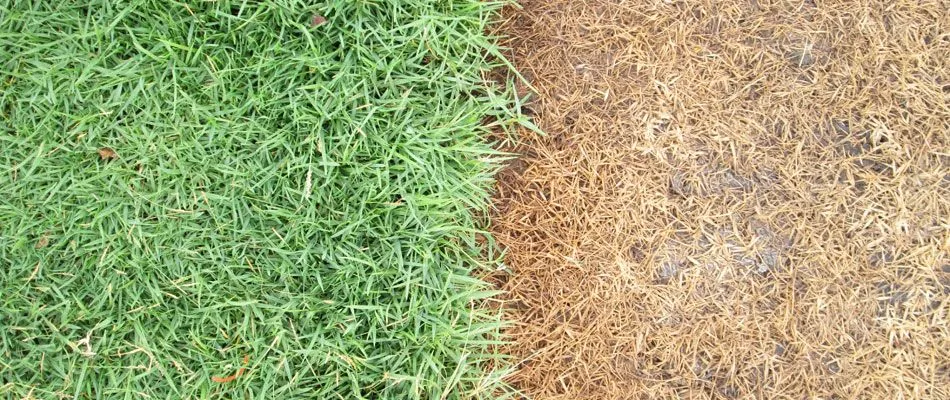
Short Answer: Lincoln area grub damage that shows up in August and September comes from eggs that adult beetles laid in late June and early July. Preventive treatment applied in the last 10 days of June through the first week of July puts the product in the soil before eggs hatch and prevents almost all damage. Curative treatments applied in August work on younger grubs but are partial fixes and cannot undo damage done. Late June timing is the highest-leverage single lawn intervention of the summer in Nebraska.
If you have ever walked outside in late August and found brown patches in your Lincoln area lawn that lift like loose carpet, with raccoons or skunks digging at the damage, you saw grub damage decided 6 to 8 weeks earlier. The eggs were laid in late June. The treatment that would have prevented the damage had to go down before the eggs hatched.
We want to walk through the lifecycle, the timing, and what makes late June treatment so different from waiting until August.
The Lifecycle in Nebraska
The grubs that damage Lincoln area lawns are larvae of several beetle species. Most common locally are Japanese beetles, masked chafers, and May/June beetles.
Adult beetles emerge in late May and June. They feed on ornamental plants and lay eggs in healthy irrigated turf. Egg-laying peaks in the last 10 days of June and first week of July.
Eggs hatch into small grubs 2 to 4 weeks after laying. Through August and early September, grubs grow and feed aggressively on grass roots. Visible damage appears in mid August: yellowing then brown patches, grass lifting because roots are gone.
By late September the grubs are mature and burrow deeper to overwinter.
Why Late June Wins
Preventive treatment applied in late June puts a granular insecticide in the soil where eggs are being laid. The product is in place when eggs hatch and kills grubs at the smallest most vulnerable stage. Effectiveness is 90 to 95 percent.
Curative treatment in August works on grubs that are larger, deeper, and already feeding. Effectiveness drops to 50 to 70 percent. Damage already done remains.
Cost difference is small. Damage difference is large. The math heavily favors prevention.
Risk Factors
History of grub damage in past 3 years. Healthy irrigated turf attractive to egg-laying females. High neighborhood pressure (multiple homes affected last year). Visible adult beetle activity (June bugs at porch lights, Japanese beetles on roses). Newer subdivisions with thin attractive turf.
Lawns with multiple risk factors are highly likely to benefit from prevention. Lawns with no risk factors can monitor and treat reactively.
The Treatment Visit
30 to 45 minutes for a typical residential lot. Granular preventive applied at label rate. Watered in immediately. Product residual carries through 8 to 12 weeks of active control. Cost: $90 to $150.
The Damage You Prevent
August damage on untreated lawns typically progresses through three stages. Stage 1 (early August): scattered yellowing that looks like drought. Stage 2 (mid August): brown patches that lift easily. Stage 3 (late August through September): large damaged areas, wildlife actively digging.
Recovery requires sod replacement for severe damage at $300 to $3,000 plus months of damaged lawn appearance. Prevention at $100 to $150 avoids all of this.
The Japanese Beetle Trap Question
Bag-type Japanese beetle traps attract more beetles than they catch. Most university extension entomologists recommend against residential use. If you must use them, place at the far back corner of the property.
Naturally-Based Options
Beneficial nematodes can reduce grub populations when applied at the right soil temperature with adequate moisture. Effectiveness varies.
Milky spore is specific to Japanese beetle grubs only. Takes 2 to 3 years to build to effective levels.
Both work as supplements to standard preventive treatment rather than full replacements for most properties.
Where to Buy and How to Apply Yourself
For Lincoln homeowners doing this DIY, several considerations. Buy a product specifically labeled for grub prevention on residential lawns. Common active ingredients include imidacloprid, clothianidin, and chlorantraniliprole. Brand-name products from home improvement stores work when applied correctly. Generic store brands often work too at lower cost. Read the label for application rate. Use a broadcast spreader for even coverage. Water in immediately or within 24 hours. The DIY total cost is typically $35 to $60 in product for a typical residential lot.
Combining With Other Late June Treatments
For homeowners using professional service, grub prevention is often bundled with summer fertilizer application in the same visit. The combined visit costs slightly more than fertilizer alone but saves the cost of a separate trip. Watering instructions are the same for both: water in within 24 hours.
What to Tell Pet Owners
Granular grub products are pet-safe once watered in and the lawn surface is dry. Keep pets off the lawn during application and until the product is incorporated. Once watered in (typically 30 to 60 minutes after watering), normal pet use of the lawn is fine.
What the Treatment Visit Includes
For homeowners interested in professional grub prevention service, here is what a typical visit covers. Brief property walk to verify treatment is appropriate and identify any specific high-risk areas. Application of granular preventive product at the labeled rate using calibrated spreader equipment. Immediate watering if homeowner permission and water availability allows, otherwise written instructions for homeowner to water within 24 hours. Documentation of what was applied and where. Total visit time is typically 30 to 45 minutes for a standard residential lot.
Frequently Asked Questions
How do I know if I had grub damage last year?
Brown patches in late summer that lifted like loose carpet. Wildlife digging in the lawn. Grass that did not recover despite normal care.
What if I missed late June?
First week of July still works. After that you transition to curative treatments in August which are partial fixes.
Can I do this myself?
Yes. Granular preventive products are available at home improvement stores. Keys are correct timing, correct rate, and immediate watering.
How long does the protection last?
8 to 12 weeks, which covers the egg-hatching and early grub feeding window completely.
What Beetle Activity Looks Like in Lincoln Specifically
For homeowners trying to confirm whether their property faces grub risk, the visible beetle activity to watch for. Japanese beetles. Bright metallic green and copper bodies, about half an inch long, visible during the day on roses, linden trees, and raspberries. Active from mid June through July. Masked chafers. Light tan beetles about a half inch long, attracted to lights at night, fly in clouds at dusk around shrubs in late June. May/June beetles. Larger brown beetles, an inch long, attracted to porch lights, fly heavily in early to mid June. Seeing any of these in significant numbers indicates active egg laying and warrants preventive treatment.
How Long Grub Damage Takes to Develop
For homeowners new to the lifecycle, the timeline. Late June: eggs laid. Early July: eggs hatch into small larvae. Mid July: small grubs begin feeding on roots. Late July: damage starts becoming visible to careful observers. Early August: visible patches in heavily affected areas. Mid August through September: peak damage with wildlife (raccoons, skunks, birds) actively digging. The 8 to 10 weeks between egg laying and visible damage is exactly the window when preventive treatment works and curative treatment becomes increasingly less effective.
Coordinating With Other June Treatments
For Lincoln area homeowners on a comprehensive lawn care program, grub prevention typically gets coordinated with other June treatments. Summer fertilizer in early June. Preventive insecticide application in late June (the grub treatment). Disease monitoring throughout. Brown patch fungicide if needed. The visits can often be bundled to reduce trip costs. Schedule coordination matters more than visit order in most cases.
What Properties Have the Highest Risk
Beyond the general risk factors, several specific property characteristics indicate elevated risk. Properties adjacent to acres of well-maintained turf (golf courses, parks, large institutional lawns where beetles lay eggs broadly). Properties with healthy mature trees that attract Japanese beetles. Properties with established perennial gardens that attract chafers. Newer subdivisions in their first 5 years where beetle populations have not yet been balanced by establishment of local predators. Each of these patterns increases the case for preventive treatment.
What If You Already Have Visible Damage in July
For homeowners who skipped preventive treatment and are seeing early signs in July (small yellowing areas, increased wildlife activity), curative options exist. The catch is they are less effective than prevention. Curative grub products work better on small grubs than mature ones, so earlier-July treatment outperforms August. Combine with overseeding the damaged areas in early fall to rebuild density. The total cost typically lands at $300 to $700 for a typical residential lot vs the $100 to $150 prevention would have cost.
What to Do Next
If you have not scheduled preventive grub treatment, the next 7 to 14 days is the right window. Call us at 402-588-4222 or visit yardbosslawns.com. We serve Lincoln, Crete, Seward, Beatrice, and surrounding Lancaster County communities.