
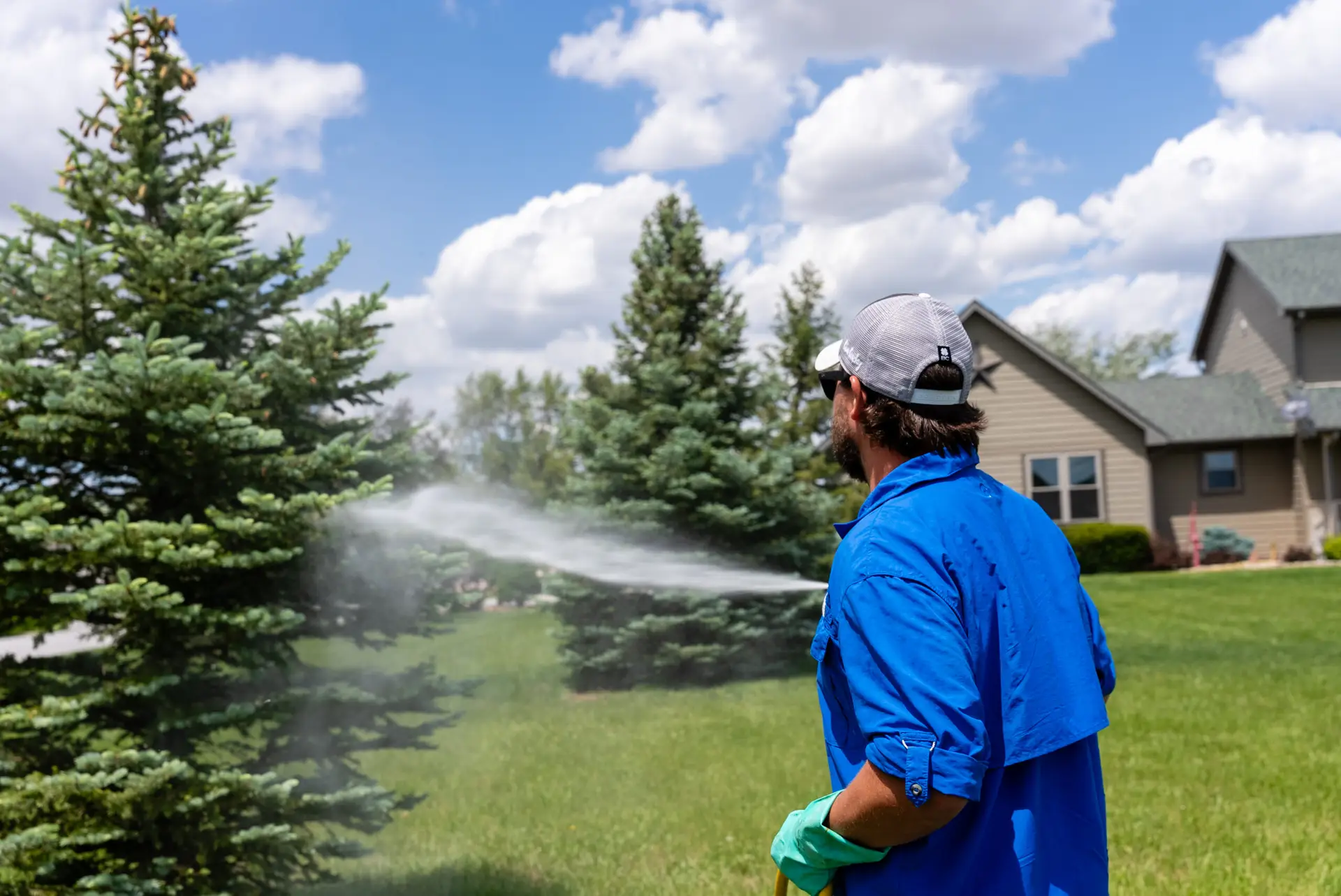
Short Answer: Most Lincoln lawns do not need supplemental water in May because spring rain usually covers it. When you do water, aim for about one inch per week total, applied in one or two deep soakings rather than daily sprinkles. Water early in the morning, between 4 a.m. and 9 a.m., to reduce evaporation and disease pressure. The biggest mistake we see is starting daily watering too early in the season, which trains shallow roots and sets the lawn up to struggle in summer.
Watering is one of those topics where doing less, but doing it right, beats doing more. We get a lot of calls in May from homeowners asking when they should turn on their irrigation system or start dragging out the hose. The honest answer for most yards is: not yet, and not as often as you think.
Here is how we think about watering Lincoln lawns through May and into early summer.
Lincoln’s May Rainfall: Usually More Than Enough
According to the National Weather Service, Lincoln averages around 4 to 4.5 inches of rainfall in May. That is significantly more than the 1 inch per week most cool-season lawns need to stay healthy and growing.
If we get a normal spring, your lawn likely will not need any supplemental water in May at all. The grass is growing fast, temperatures are still mild, evaporation is low, and the soil is holding moisture from snowmelt and spring rains. Turning on irrigation in this window often does more harm than good.
What we look for is the long-range forecast. If we go into a stretch of 7 to 10 dry days with temperatures climbing into the 80s, then it might be time to think about supplementing. Otherwise, we let the sky do the work.
Why Overwatering Early Is a Problem
The roots of your grass grow toward water. If you water deeply once a week, roots learn to dig down 4 to 6 inches to find moisture. If you water lightly every day, roots stay in the top inch of soil because that is where the water sits.
A lawn with shallow roots looks fine in May. The problem shows up in July. When the heat arrives and the top inch of soil dries out fast, a shallow-rooted lawn wilts within a day or two. A deep-rooted lawn can ride out a dry stretch with little stress because it has moisture reserves below.
This is one of the most common patterns we see in Nebraska. A homeowner waters every morning starting in May to “get the lawn going,” and by mid-July the same lawn is browning out faster than the neighbor’s that gets watered twice a week. The neighbor was building deep roots without realizing it.
The One Inch Per Week Rule
Cool-season grasses generally need about one inch of water per week to stay actively growing through the spring and summer. That includes rainfall.
One inch sounds like a lot, but it is not. Most household sprinklers and irrigation systems deliver about a half inch of water per 30 minutes in a given zone. So you might run each zone for 45 to 60 minutes once or twice a week to hit the target.
The easiest way to measure exactly what your system puts down is the tuna can test. Set a few empty tuna cans or shallow straight-sided cans around your yard, run your sprinkler for 30 minutes, and measure how much water collected in each can. Half an inch in 30 minutes means an hour gives you a full inch. This also shows you whether your coverage is even, which most systems are not.
Water Early Morning
The best window to water in Lincoln is between 4 a.m. and 9 a.m. There are a few reasons for this.
Wind tends to be calmer in the early morning, which means more water actually lands on the lawn instead of drifting across the driveway. Evaporation is lowest before the sun gets high, so more of what you apply gets absorbed. And the lawn has time to dry off during the day, which is important for disease prevention.
Watering in the evening leaves grass blades wet overnight. Wet blades plus warm overnight temperatures equals a perfect environment for fungal diseases like dollar spot, brown patch, and red thread. We have walked onto lawns in June and identified the watering schedule before the homeowner even said anything, just by the disease patterns.
Watering in the heat of the afternoon is also a problem. A lot of the water evaporates before it can soak in, and droplets sitting on grass blades can act like tiny magnifying glasses under direct sun, scorching the leaf tissue.
How to Read Your Soil
You do not need fancy equipment to tell when your lawn needs water. A few simple methods work well.
The screwdriver test. Push a 6-inch screwdriver into the soil. If it slides in easily to the full depth, the soil has plenty of moisture. If it stops after an inch or two, the soil is dry below and your lawn would benefit from a deep watering.
The footprint test. Walk across the lawn in the late afternoon. If your footprints stay visible for more than a few seconds (meaning the grass blades do not spring back up), the grass is starting to wilt and needs water.
The color test. A drought-stressed lawn turns a duller, slightly bluish-green before it actually browns out. If you notice that color shift, you have about two days to get water down before real damage starts.
Watering New Seed or Sod
If you put down sod or did a small patch of seeding this spring (we generally recommend waiting until fall, but sometimes life happens), the rules change. New seed needs to stay consistently moist until germination, which usually means light watering two to three times per day for the first two to three weeks. New sod needs daily deep watering for the first two weeks while the roots are knitting into the soil.
Once new turf is established, transition gradually to the standard deep-and-infrequent schedule. The shift usually happens around week three or four.
What About Smart Controllers?
Wi-Fi enabled irrigation controllers like Rachio and Hunter Hydrawise have gotten genuinely good in the last few years. They pull from local weather data, skip watering when rain is forecast, and adjust run times based on temperature and evapotranspiration rates.
For homeowners with in-ground irrigation, upgrading to a smart controller is often worth it. We have seen water bills drop 20 to 30 percent in the first year, with healthier lawns to boot because the system is no longer running on autopilot through rain events.
Common Questions We Get
Should I water if it rained yesterday? Usually no. A half inch of rain plus normal soil moisture is plenty for a few days. Check the screwdriver test before turning anything on.
What if part of my lawn is in shade? Shaded areas need less water than full-sun areas because evaporation is lower. If you have a single-zone setup, run the system based on the sunny areas and watch for over-saturation in the shade.
Is well water okay? For most Lincoln-area properties, yes. Some areas have hard water that can leave white residue on hardscape, but the grass does not mind.
What to Do Next
The short version: watch the weather, water deep and infrequent, do it in the morning, and let your soil tell you when it needs more. Most years, your May watering will be minimal.
If you have an irrigation system that needs spring startup, blow-out diagnostics, or zone adjustments, or if you want a lawn care partner who can help you fine-tune your watering as the season moves toward summer, give us a call at 402-588-4222 or reach out at greenergrass@yardbosslawns.com. We service Lincoln, Crete, and surrounding communities and we are happy to walk a property with you to look at your specific situation.
Water is the lever that most homeowners pull too hard. A lighter, smarter hand makes for a stronger, more resilient lawn all summer long.