
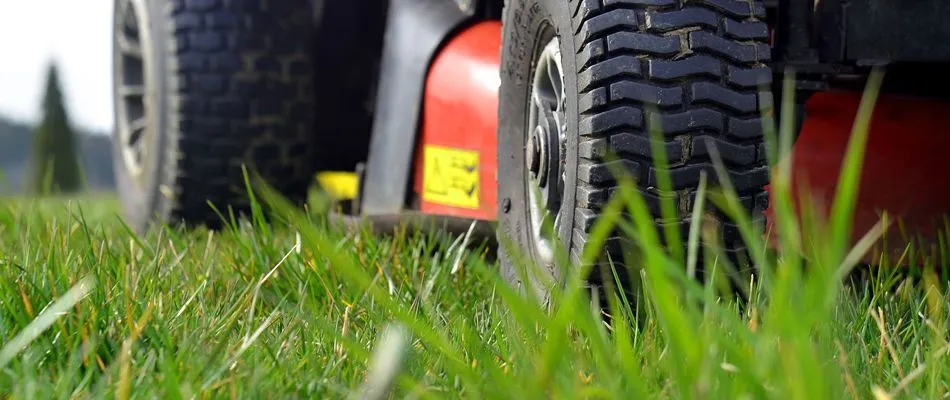
Short Answer: The first mow of the season in Lincoln should happen once your grass reaches about 4 to 5 inches tall, the ground has firmed up, and your soil is no longer soggy. Cut at 3.5 to 4 inches with a sharp blade, never remove more than one-third of the blade in a single pass, and plan on mowing about every five to seven days through May. The first mow sets the tone for the entire season, and shortcuts now lead to thin, stressed turf by July.
There is a particular kind of restless energy that hits Lincoln homeowners in late April and early May. The grass is green, the weather is finally cooperating, and the mower has been sitting in the garage waiting since October. We get it. The temptation to fire it up and knock everything down to two inches is real.
But the first mow of the season is one of the most consequential cuts your lawn will get all year. Done well, it kicks off a healthy growing season. Done poorly, it damages crowns, compacts soil, and creates problems your lawn will be paying for in July when the heat shows up.
Here is how we approach the first mow on the lawns we service around Lincoln and Lancaster County.
When to Make the First Cut
The simplest rule we use: wait until the grass is actively growing and reaches 4 to 5 inches in height. For most Lincoln yards, that usually falls somewhere between mid-April and early May, depending on the spring weather pattern.
Before you mow, check the soil. If you walk across the lawn and leave noticeable footprints or your shoes pick up wet soil, it is too soggy. Mowing on saturated ground compacts the soil, leaves ruts that take months to recover, and tears at roots that are still trying to anchor themselves. Wait a few more days. The lawn will be fine.
If you have a thatch-prone lawn or a thick stand of Kentucky bluegrass, you can also dethatch lightly with a stiff rake before the first mow. This removes the matted, dead material from winter and helps air and sunlight reach the green growth underneath.
Blade Height: Higher Than You Think
This is the single most important thing we can tell you about mowing in Lincoln: keep your blade height at 3.5 to 4 inches.
Cool-season grasses like tall fescue and Kentucky bluegrass do not handle short cuts well. When you scalp a lawn, you remove the leaf tissue that produces energy through photosynthesis. The plant then has to spend its stored reserves to grow leaves back, which weakens its root system and makes it more vulnerable to drought, weeds, and disease.
Taller grass means deeper roots. Deeper roots mean better drought tolerance once Nebraska summer hits. And taller blades shade the soil surface, which keeps weed seeds (especially crabgrass) from getting the sunlight they need to germinate.
If your mower deck does not adjust above 3 inches, it is probably worth looking at your settings or your equipment. Most modern push mowers and riding mowers go to 4 inches or higher without trouble.
The One-Third Rule
Never remove more than one-third of the grass blade in a single mowing. If your lawn is at 6 inches tall, you should cut to about 4. If it is at 4.5 inches, you cut to 3 to 3.5.
Removing more than a third at once causes what is called “mowing shock.” The plant goes into stress mode, shuts down growth, and yellows. We have seen homeowners try to “catch up” on overgrown lawns by scalping them in one pass, and the lawn looks bad for weeks afterward. If your grass got away from you over a few rainy weeks, take it down in two passes spaced a few days apart instead.
Sharp Blades Are Not Optional
If your mower blade has not been sharpened in over a year, your lawn is paying the price. A dull blade tears grass instead of slicing it. Torn grass blades fray at the tips, turn brown or whitish within a day or two, and create open wounds where fungal disease can move in.
You can usually tell a dull blade by walking the yard the day after mowing. If the tips look frayed, jagged, or brownish, sharpen the blade. Most mower shops in Lincoln will sharpen a blade for around $10 to $15, and it makes a real difference. We sharpen ours regularly throughout the season because we are running across hundreds of lawns a week.
Mowing Frequency in May
Cool-season grasses do most of their growth in spring and fall. May is peak growing season in Lincoln, which means you will probably need to mow every five to seven days to stay within the one-third rule.
The fastest way to know if you are mowing often enough is to look at the clippings. If you are dropping piles of long, wet clippings that mat down on the lawn, you waited too long and cut too much. If your clippings are short and disappear into the canopy within a day, your frequency is on point.
Bagging vs. Mulching
Mulching is almost always the better choice for cool-season grasses in Nebraska. Grass clippings are about 80% water and contain nitrogen, potassium, and phosphorus. When you mulch and let those clippings filter back into the canopy, you are essentially giving your lawn a free fertilizer application about every time you mow.
The myth that clippings cause thatch buildup is just that, a myth. Thatch comes from undecomposed stems, roots, and rhizomes, not grass blades. Clippings break down within days.
The one exception is when the grass is so overgrown that mulching leaves heavy clumps on the surface. In that case, bag once or rake the clumps out, and get back on a normal frequency.
The Mistakes That Hurt Summer Turf
Here are the patterns we see most often when a lawn looks rough in July, even though it looked great in May.
Cutting too short. Anything below 3 inches on tall fescue or bluegrass invites weed pressure, scalds the crown, and weakens root depth. By the time July heat hits, those lawns are already running on empty.
Mowing the same pattern every time. Going the same direction every mow compacts soil along the wheel tracks and trains the grass to lean a certain way. Alternate your direction each cut. Stripes one week, diagonals the next, perpendicular the third.
Mowing when wet. Wet grass clumps, mats, and tears unevenly. It also spreads fungal spores from one part of the lawn to another. Wait for the morning dew to burn off.
Mowing in the heat of the day. By June and July, mid-afternoon mowing puts heat stress on grass that just got cut. Early evening or mid-morning is better.
Ignoring the deck underneath. Mower decks build up wet clipping crud, which causes uneven cuts and harbors disease. Scrape it out every few weeks.
What About Edging and Trimming?
The cut itself is half the visual. The other half is the edge work along sidewalks, driveways, and beds. A clean edge can make an average mow job look professional. A messy edge can make a great mow job look like nothing happened. We will dig deeper into edging and string trimming in another article this month, but it is worth thinking about as you set up your spring routine.
What to Do Next
Mowing is one of those areas where small habits compound over a full season. The first mow of the year is your chance to set the right pattern. Get the height right, sharpen your blade, wait for the soil to firm up, and you will save yourself a lot of grief in July.
If you would rather hand off mowing entirely or you want a maintenance team that already knows the right approach for Nebraska turf, we can help. Give us a call at 402-588-4222 or visit yardbosslawns.com to talk about a mowing or full-service program for your property. We service Lincoln, Crete, and the surrounding communities with a team that treats every lawn like it is the one they go home to.
A healthy lawn starts with a sharp blade and a little patience. Everything else follows from there.