
Yard Boss provides a comprehensive 5-application preventative fungus and disease control program for lawns.
5 Monthly Applications
Dual-Action Liquid Treatment
Rotating Chemical Formulations
Preventative Approach
Flexible Scheduling
fungus & Disease Control
Starting at
$79
per Application
5 Monthly Applications

Dual-Action Liquid Treatment
Rotating Chemical Formulations
Preventative Approach
Flexible Scheduling
Chalco features many mature neighborhoods where homeowners have spent years caring for their beautiful lawns. Our program helps protect these long-term investments from the devastating effects of summer lawn diseases. With five monthly applications from May through September, we provide continuous protection during the most dangerous months. Chalco’s suburban location and many mature trees can create microclimates that intensify disease pressure. Shaded spots with poor air circulation often stay wet longer, making it easier for powdery mildew and other diseases to grow. Our professional service is designed to guard these vulnerable areas and keep your entire yard healthy through the hot and humid summer weeks. Common lawn diseases we treat:
Proper habits significantly impact disease pressure in Chalco lawns alongside our professional services. The most critical rule is to water only in the early morning between 4 AM and 8 AM. Evening watering is a primary cause of fungus problems because it keeps the grass wet for up to 12 hours straight. Fungal spores only need 6 to 8 hours of moisture to germinate and infect your grass. You should also maintain a mowing height of 3.5 to 4 inches to help your grass develop deeper roots. In neighborhoods with many trees, ensure proper airflow by avoiding overcrowding in your landscaping. Healthy, tall grass is much better at resisting summer diseases.
Many established lawns in Chalco feature Kentucky Bluegrass, which is prized for its dark green color and thick growth. However, this grass type is extremely susceptible to brown patch disease during hot and humid Nebraska summers. If your lawn has primarily bluegrass, you will very likely need fungicide treatment every year to keep it healthy. This variety simply cannot handle the combination of heat stress and disease pressure without help. Brown patch can destroy large areas of your lawn within just a few days when overnight lows stay above 65°F. Our program uses systemic medicine that protects the grass from the inside, combined with curative products to stop surface infections.
1st Application
May

Mix #1
Early season protection
2nd Application
June
Mix #2
Rotation to prevent resistance
3rd Application
July
Mix #1
Return to first chemistry
4th application
August
Mix #2
Rotation to prevent resistance
5th application
September
Mix #1
Final protection before fall
call us today to schedule your service
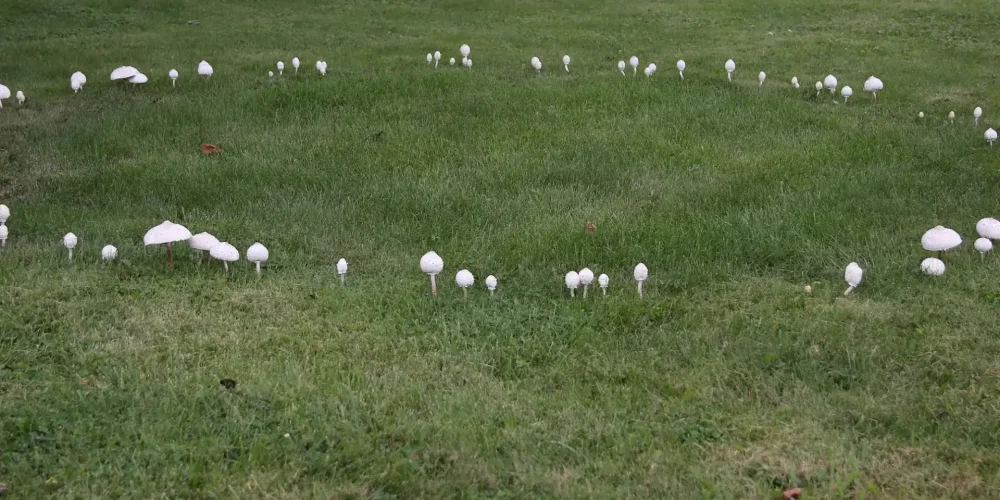
We do not offer partial programs or single treatments because they simply do not work against environmental conditions. Disease pressure persists throughout the entire May-September period whenever heat and humidity are high. You cannot predict which month will be the worst, as it changes every year based on weather patterns. Skipping applications creates dangerous gaps where disease can permanently kill your grass. Our full program provides overlapping protection all season long. We rotate our chemical products to prevent resistance, which happens faster with fungicides than with any other lawn product. Each application must be watered in within 24 hours to allow the medicine to reach the roots.
At Yard Boss, we understand that you may have questions about our services, processes, and how we can help you achieve the perfect lawn. Whether you’re curious about our lawn care techniques, service areas, or the benefits of professional lawn maintenance, you’ll find the information you need right here. If you have any additional questions, feel free to reach out to our friendly team!
Yes. Like all products we use, once the application is dry, it is safe for everyone—pets, children, and adults. Drying typically takes about 1 hour but may take longer on cool, cloudy days.
Safety protocol: Keep people and pets off the lawn until dry (usually 1 hour). After that, normal use can resume.
It depends on your lawn's history and grass type:
YES, you should do the program if:
NO, you probably don't need the program if:
HOWEVER: If you notice unusual brown, yellow, or dead spots during summer, contact us immediately so we can diagnose the issue. Early detection is critical.
No. This is why:
Bottom line: Reactive single treatments don't work for lawn fungus. The full preventative program is necessary for control.
It depends on your grass type:
Long-term solution: Overseeding with newer, disease-resistant grass cultivars can reduce (but not eliminate) the need for fungicide over time.
We use professional-grade fungicides that combine both curative and preventative active ingredients. We rotate between two different chemical mixes (Mix #1 and Mix #2) to prevent resistance development.
This is an all-liquid product that we spray onto the lawn. Liquid products:
This is why we exclusively use liquid fungicides—they're simply more effective
Great question. There are several reasons:
Value perspective: While more expensive than fertilizer, fungicide is cheaper than reseeding large dead areas from disease damage. Dead grass from fungus won't recover—it must be reseeded. Prevention costs less than repair.