Yard Boss provides a comprehensive 5-application preventative fungus and disease control program for lawns.
5 Monthly Applications
Dual-Action Liquid Treatment
Rotating Chemical Formulations
Preventative Approach
Flexible Scheduling
fungus & Disease Control
Starting at
$79
per Application
5 Monthly Applications

Dual-Action Liquid Treatment
Rotating Chemical Formulations
Preventative Approach
Flexible Scheduling
Gretna is one of Nebraska’s fastest-growing communities, experiencing huge residential development in recent years. Whether you live in a new neighborhood or an established area, your lawn faces the same summer challenge from fungal diseases. Our preventative program serves Gretna homeowners from May through September with five monthly liquid applications designed to stop disease before it destroys your yard. Gretna’s location means summer weather frequently brings the hot and humid conditions that trigger outbreaks. When the temperature and humidity combine to reach 140 or higher, brown patch and other diseases become inevitable without professional protection. This program provides the season-long protection necessary to keep your grass healthy and beautiful through Nebraska’s most challenging months. Common lawn diseases we treat:
For the best results with our program, Gretna homeowners should follow two essential practices. First, set your mower to 3.5 to 4 inches and maintain that height all summer. Taller grass develops deeper roots and creates a stronger plant better able to resist disease pressure. Second, and absolutely critical, water only in the early morning hours between 4 AM and 8 AM. Never water in the evening or overnight. Evening watering keeps grass wet for 10 to 12 hours when combined with natural dew. This creates the prolonged moisture that fungal spores need to germinate and infect your lawn. It is like wearing wet socks continuously; you will eventually develop fungus problems if you do not allow the grass to dry.
Each monthly application delivers two types of fungicides working together for complete protection. The curative part kills existing fungus on contact, stopping active disease spread immediately. The preventative part works systemically; you must water it in within 24 hours so roots can absorb it and transport it through the plant. Once inside, it protects new growth for about 30 days, though this fades as the grass grows and is mowed. Think of it this way: if your grass is 4 inches tall and you mow off 1 inch weekly, after four weeks you have removed most of the grass tissue containing the medicine. This is why monthly applications throughout the entire season are necessary, as partial programs leave gaps where disease can establish.
1st Application
May

Mix #1
Early season protection
2nd Application
June
Mix #2
Rotation to prevent resistance
3rd Application
July
Mix #1
Return to first chemistry
4th application
August
Mix #2
Rotation to prevent resistance
5th application
September
Mix #1
Final protection before fall
call us today to schedule your service
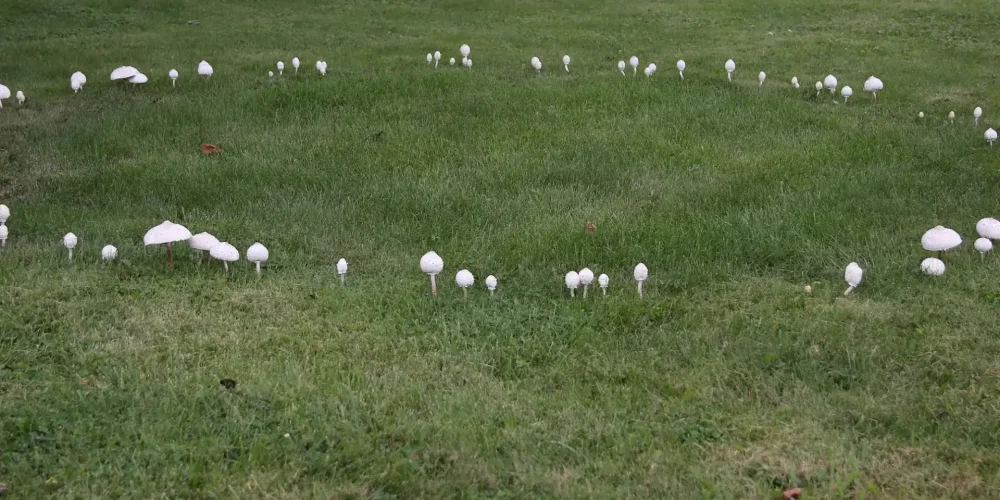
Gretna’s lawns, particularly those with Kentucky Bluegrass, are highly susceptible to brown patch disease during July and August. This disease appears as large circular areas of brown, dead grass that expand rapidly. A patch the size of a dinner plate on Monday might cover several square feet by Friday under ideal conditions. Dollar spot and powdery mildew also threaten Gretna lawns depending on the specific conditions in each yard. To prevent resistance, we rotate between two chemical formulas, using Mix #1 for May, July, and September, and Mix #2 for June and August. This rotation is critical because pathogens can adapt to the same ingredients, eventually making the products ineffective for long-term disease management.
At Yard Boss, we understand that you may have questions about our services, processes, and how we can help you achieve the perfect lawn. Whether you’re curious about our lawn care techniques, service areas, or the benefits of professional lawn maintenance, you’ll find the information you need right here. If you have any additional questions, feel free to reach out to our friendly team!
Yes. Like all products we use, once the application is dry, it is safe for everyone—pets, children, and adults. Drying typically takes about 1 hour but may take longer on cool, cloudy days.
Safety protocol: Keep people and pets off the lawn until dry (usually 1 hour). After that, normal use can resume.
It depends on your lawn's history and grass type:
YES, you should do the program if:
NO, you probably don't need the program if:
HOWEVER: If you notice unusual brown, yellow, or dead spots during summer, contact us immediately so we can diagnose the issue. Early detection is critical.
No. This is why:
Bottom line: Reactive single treatments don't work for lawn fungus. The full preventative program is necessary for control.
It depends on your grass type:
Long-term solution: Overseeding with newer, disease-resistant grass cultivars can reduce (but not eliminate) the need for fungicide over time.
We use professional-grade fungicides that combine both curative and preventative active ingredients. We rotate between two different chemical mixes (Mix #1 and Mix #2) to prevent resistance development.
This is an all-liquid product that we spray onto the lawn. Liquid products:
This is why we exclusively use liquid fungicides—they're simply more effective
Great question. There are several reasons:
Value perspective: While more expensive than fertilizer, fungicide is cheaper than reseeding large dead areas from disease damage. Dead grass from fungus won't recover—it must be reseeded. Prevention costs less than repair.