Yard Boss provides a comprehensive 5-application preventative fungus and disease control program for lawns.
5 Monthly Applications
Dual-Action Liquid Treatment
Rotating Chemical Formulations
Preventative Approach
Flexible Scheduling
fungus & Disease Control
Starting at
$79
per Application
5 Monthly Applications

Dual-Action Liquid Treatment
Rotating Chemical Formulations
Preventative Approach
Flexible Scheduling
Seward features a mix of historic residential areas, college-area properties, and newer developments, and all of them face fungal challenges. Our program provides five monthly applications from May through September to protect your turf during the hot summer months. Seward’s location in southeastern Nebraska frequently brings air masses that trigger our 140 Rule. When temperature plus humidity hit 140 or more and night lows stay above 65°F, disease pressure becomes constant. This monthly program is specifically designed to guard your yard against destructive diseases like brown patch and dollar spot, ensuring your lawn stays healthy during the peak of the growing season when environmental conditions are ideal for fungal outbreaks and permanent turf damage. Common lawn diseases we treat:
Seward homeowners can significantly reduce disease pressure by following proper care habits alongside our sprays. The most important rule is to water deeply but infrequently in the early morning only. Evening watering combined with natural dew keeps grass wet for 10 to 12 hours, which is perfect for fungal spores to germinate. You should also maintain a mowing height of 3.5 to 4 inches. This is especially important in tree-lined neighborhoods where grass is already stressed by shade. Taller grass handles shade better and grows deeper roots that handle summer stress well. Finally, ensure your lawn receives balanced nutrition without too much nitrogen, as excessive nitrogen can make grass soft and easy for fungus to infect.
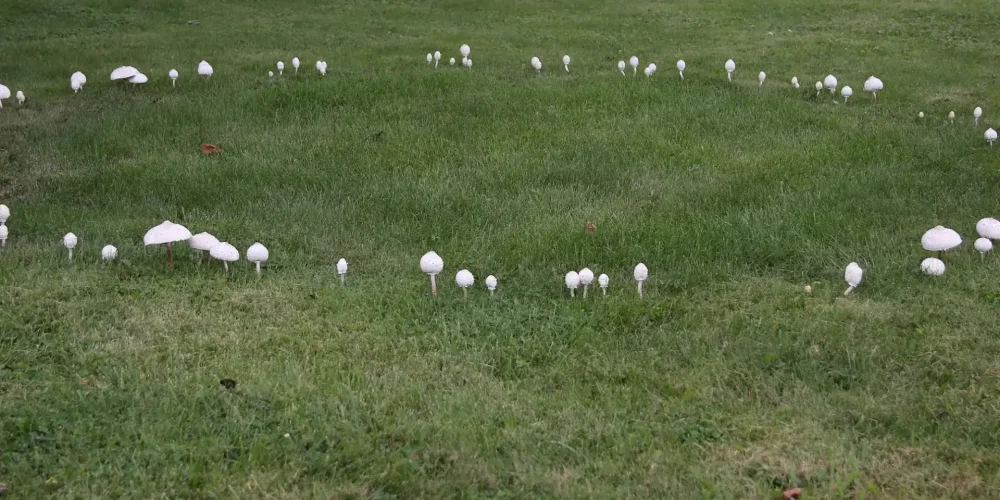
Different fungal diseases create different symptoms, but they all share one critical trait: by the time you see them, permanent damage has already occurred. Brown patch creates large dead circles, while dollar spot produces small tan spots that eventually merge into large patches. Regardless of which disease affects your Seward lawn, the grass in damaged areas is permanently dead and will not recover on its own. It must be reseeded, which is a slow and expensive process. This is why prevention through our systemic program is the only truly effective approach. Waiting until you see symptoms means you are already dealing with damage that requires expensive repairs later in the fall.
1st Application
May

Mix #1
Early season protection
2nd Application
June
Mix #2
Rotation to prevent resistance
3rd Application
July
Mix #1
Return to first chemistry
4th application
August
Mix #2
Rotation to prevent resistance
5th application
September
Mix #1
Final protection before fall
call us today to schedule your service
Our program provides five applications on a monthly schedule from May to September. This consistent schedule ensures that your lawn has overlapping protection throughout the entire disease season. We rotate between two different chemical formulas to prevent fungicide resistance, which is a very serious concern with lawn products. Pathogens can develop resistance quickly if they are exposed to the same medicine over and over again, making treatments useless. By alternating our chemistry with different modes of action, we ensure that our treatments stay effective season after season. This professional approach addresses the unique risks of Nebraska summers while keeping your long-term maintenance costs much lower than reacting to damage.
At Yard Boss, we understand that you may have questions about our services, processes, and how we can help you achieve the perfect lawn. Whether you’re curious about our lawn care techniques, service areas, or the benefits of professional lawn maintenance, you’ll find the information you need right here. If you have any additional questions, feel free to reach out to our friendly team!
Yes. Like all products we use, once the application is dry, it is safe for everyone—pets, children, and adults. Drying typically takes about 1 hour but may take longer on cool, cloudy days.
Safety protocol: Keep people and pets off the lawn until dry (usually 1 hour). After that, normal use can resume.
It depends on your lawn's history and grass type:
YES, you should do the program if:
NO, you probably don't need the program if:
HOWEVER: If you notice unusual brown, yellow, or dead spots during summer, contact us immediately so we can diagnose the issue. Early detection is critical.
No. This is why:
Bottom line: Reactive single treatments don't work for lawn fungus. The full preventative program is necessary for control.
It depends on your grass type:
Long-term solution: Overseeding with newer, disease-resistant grass cultivars can reduce (but not eliminate) the need for fungicide over time.
We use professional-grade fungicides that combine both curative and preventative active ingredients. We rotate between two different chemical mixes (Mix #1 and Mix #2) to prevent resistance development.
This is an all-liquid product that we spray onto the lawn. Liquid products:
This is why we exclusively use liquid fungicides—they're simply more effective
Great question. There are several reasons:
Value perspective: While more expensive than fertilizer, fungicide is cheaper than reseeding large dead areas from disease damage. Dead grass from fungus won't recover—it must be reseeded. Prevention costs less than repair.