Yard Boss provides professional tree iron supplementation through direct trunk injection.
Trunk Injection Delivery
Annual Treatment
Rapid Uptake
Visible Transformation
Minimal Invasiveness
Tree Iron Injections
Custom Pricing
Trunk Injection Delivery

Annual Treatment
Rapid Uptake
Visible Transformation
Minimal Invasiveness
Papillion, the county seat of Sarpy County and a thriving suburb southwest of Omaha, features established neighborhoods and quality landscaping throughout the community. Papillion’s alkaline soil creates iron deficiency in many popular landscape tree species, particularly pin oaks, river birch, red oaks, and silver maples. Most Papillion homeowners have accepted pale, yellow-green foliage as their trees’ natural appearance, not realizing it indicates malnutrition. Yard Boss specializes in trunk injection treatments that bypass the soil chemistry problem and deliver iron directly to trees’ vascular systems, creating dramatic color transformation and improved health within weeks. Trees most susceptible to iron deficienty:
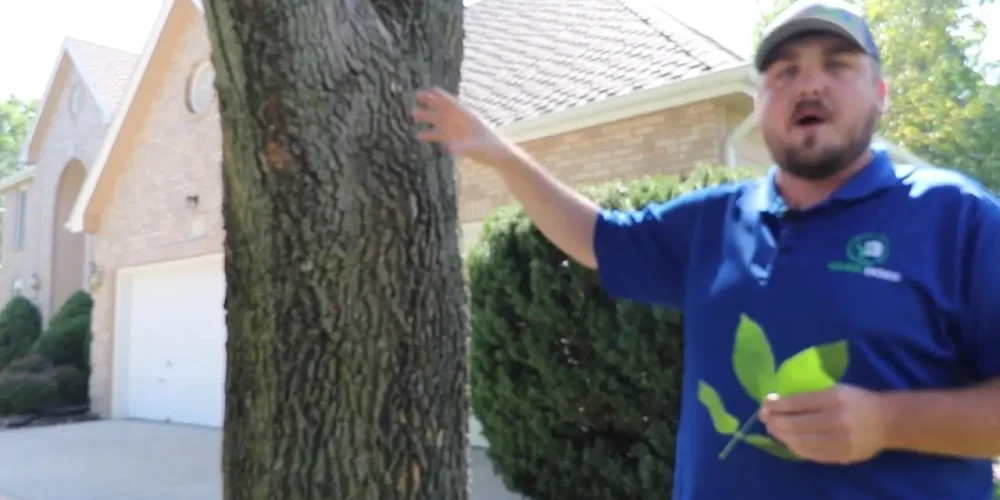
One Papillion trunk injection treatment is not permanent because the underlying soil problem is permanent. Here’s what happens: This year’s treatment provides iron for this growing season and your tree looks beautiful. Without next year’s treatment, the tree depletes injected iron over winter and spring, and pale color returns by the following season. Annual treatment maintains results by ensuring consistent yearly supplementation that keeps trees vibrant green every season. Think of it like taking a daily vitamin—it’s not that treatment wears off, it’s that trees cannot access iron from our alkaline soil independently and need the annual supplement. Trees don’t store iron long-term, so each growing season requires fresh iron supply. Most Papillion customers who see the dramatic improvement choose to continue annual treatment to maintain that vibrant green color and enhanced tree health year after year.
Papillion homeowners can identify iron deficiency by observing their trees’ foliage. In mild deficiency, you’ll see light green leaves instead of deep green, with subtle yellowing between veins and an overall pale, washed-out appearance. At this stage, photosynthesis efficiency is reduced and aesthetic appeal is diminished, but the tree isn’t in immediate danger. Moderate deficiency displays distinct yellowing between leaf veins while veins themselves remain green (interveinal chlorosis), with new growth appearing more yellow than older leaves. This indicates significant photosynthesis reduction, visible tree stress, slowed growth, and severe aesthetic impact. Severe deficiency shows entire leaves turning yellow or nearly white, leaf margins browning and dying, stunted growth, and twig dieback. At this stage, the tree is in serious stress with long-term decline possible and death possible if left untreated for multiple years.
Spring (Optimal)
April – June

Tree Activity
Peak nutrient uptake, leaves expanding, & high transpiration
Treatment Effectiveness
Excellent – Fastest visible results (2-3 weeks)
Summer
July – August
Tree Activity
Active growth and transpiration high in healthy trees
Treatment Effectiveness
Excellent – Good uptake, results visible in 3-4 weeks
Early Fall
September
Tree Activity
Trees still active, nutrient storage for winter
Treatment Effectiveness
Good – Uptake slower but effective; benefits visible next spring
Late Fall
October – November
Tree Activity
Trees preparing for dormancy, reduced activity
Treatment Effectiveness
Fair – Limited uptake; mainly benefits next year
call us today to schedule your service
The most common reaction from Papillion customers after treatment is genuine amazement. Most don’t realize their trees are iron-deficient because the change is gradual (getting worse slowly year after year), they’ve never seen what the tree should look like (pale has been “normal” for years), they assume “that’s just the variety” (don’t realize it’s nutrient deficiency), and neighbors’ trees are also pale (because everyone’s soil is alkaline). When we treat their trees, customers consistently report: “I had no idea my tree could be THAT green! It looks like a completely different tree!” The vibrant, deep green color you’ll see after treatment isn’t artificial enhancement—it’s simply what a healthy, properly nourished tree is supposed to look like. That color represents optimal chlorophyll production, efficient photosynthesis, and improved overall tree health.
At Yard Boss, we understand that you may have questions about our services, processes, and how we can help you achieve the perfect lawn. Whether you’re curious about our lawn care techniques, service areas, or the benefits of professional lawn maintenance, you’ll find the information you need right here. If you have any additional questions, feel free to reach out to our friendly team!
Your trees have iron deficiency because of Nebraska's alkaline soil, not because there's no iron in the soil. Here's the explanation:
How to tell if your trees are iron-deficient:
Most common on: Pin oak, river birch, red oak, silver maple—these are "acid-loving" trees that struggle in alkaline soil
Iron injection can be done anytime the tree is actively taking up nutrients, which means anytime from spring leaf emergence through early fall before dormancy.
Best Timing by Season
Our recommendation: Spring is ideal for fastest results, but summer treatment works great too. If you're noticing pale foliage in July, treat now—don't wait until next spring!
No! Trees heal from injection wounds quickly and easily. Here's why you don't need to worry:
Trees regularly survive wounds from:
Our tiny injection points are minor compared to wounds trees naturally handle. The benefit (vibrant green foliage and improved photosynthesis) greatly outweighs the minimal, temporary stress of small injection points.
Your tree will continue to struggle with iron deficiency. Here are the consequences:
Short-Term (This Season)
Long-Term (Multiple Years)
The "Opportunity Cost"
You planted this tree (or bought a property with it) because you wanted a beautiful, healthy shade tree adding value to your property. Iron deficiency means you're getting 50-70% of the tree's potential beauty and only 60-80% of its potential growth. Treatment unlocks the tree's full potential—the vibrant green color and vigorous growth you expected when planting it.
No—iron injection is an annual treatment because the underlying soil problem (alkaline pH) is permanent. Think of it like taking a daily vitamin:
Why not permanent? The alkaline soil constantly prevents root iron uptake. Annual trunk injection bypasses this problem, but only for one season. It's not that treatment wears off—it's that the tree can't get iron from soil on its own and needs the annual supplement.
If tree already has deep green foliage, it probably doesn't need iron treatment. Either:
We assess each tree individually. If foliage is already vibrant green, we'll tell you treatment isn't needed—we don't sell unnecessary services.
Young trees benefit from iron injection, but considerations:
As young trees mature and trunk diameter increases, trunk injection becomes the most effective long-term solution.
Great news—tree height doesn't matter for trunk injection! We inject at trunk at breast height (4-5 feet up), not in the canopy. Tree can be 10 feet or 100 feet tall—injection method is the same. Iron is transported throughout tree via vascular system regardless of height.