Yard Boss provides professional tree iron supplementation through direct trunk injection.
Trunk Injection Delivery
Annual Treatment
Rapid Uptake
Visible Transformation
Minimal Invasiveness
Tree Iron Injections
Custom Pricing
Trunk Injection Delivery

Annual Treatment
Rapid Uptake
Visible Transformation
Minimal Invasiveness
Ralston, a well-established community in Sarpy County surrounded by Omaha and Bellevue, features mature neighborhoods with significant tree canopy. Many of Ralston’s established landscape trees suffer from iron deficiency due to the alkaline soil throughout the metro area. Pin oaks, river birch, red oaks, and silver maples display pale, chlorotic foliage that most Ralston residents have long accepted as normal. The reality is these trees are malnourished—starving for iron despite being surrounded by it in the soil. Yard Boss provides professional trunk injection services that deliver iron directly where trees need it, creating visible transformation and improved health. Trees most susceptible to iron deficienty:
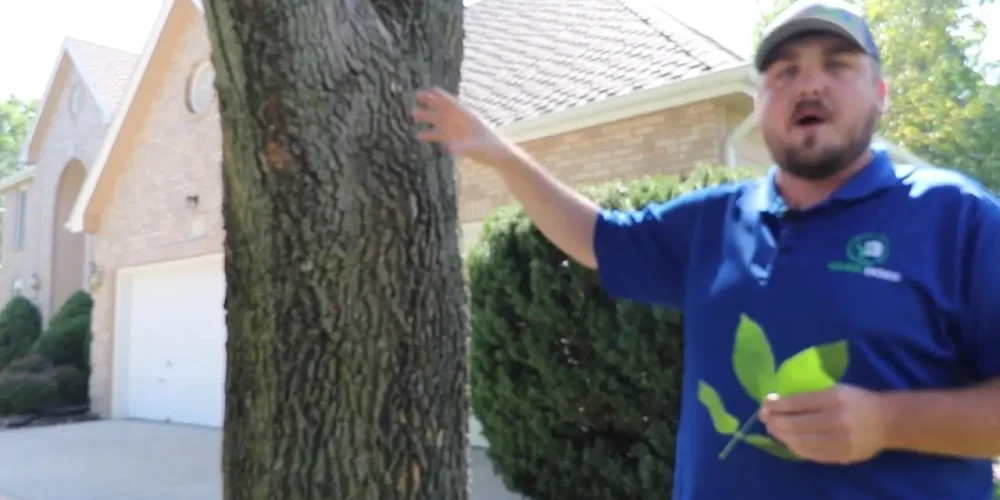
Yard Boss provides trunk injection services throughout Ralston, serving both residential properties and commercial landscapes. We assess each tree individually to determine whether treatment is appropriate. We will not treat trees already in significant decline—those with 50% or more dead branches, major structural damage or disease, or compromised root systems. Iron deficiency is just one of many possible problems, and treating iron won’t save a dying tree from other causes. We provide honest assessment and recommend the best approach for your tree’s long-term health, whether that’s iron injection, other interventions, or in some cases removal. Our goal is genuine tree health improvement, not selling unnecessary services. Schedule your Ralston tree assessment to determine if iron injection is right for your landscape.
Many Ralston homeowners continue living with pale, iron-deficient trees without realizing what they’re missing. Consider the opportunity cost: You planted your trees or bought property with them because you wanted beautiful, healthy shade trees adding value to your property and quality of life. Iron deficiency means you’re getting only 50-70% of their potential beauty and 60-80% of their potential growth. Treatment unlocks that full potential—the vibrant green color and vigorous growth you expected. The aesthetic difference is dramatic: pale, sickly yellow-green foliage that reduces curb appeal transforms into rich, deep green color that makes your property stand out in the neighborhood. Your trees will finally look the way quality landscape trees should look.
Spring (Optimal)
April – June

Tree Activity
Peak nutrient uptake, leaves expanding, & high transpiration
Treatment Effectiveness
Excellent – Fastest visible results (2-3 weeks)
Summer
July – August
Tree Activity
Active growth and transpiration high in healthy trees
Treatment Effectiveness
Excellent – Good uptake, results visible in 3-4 weeks
Early Fall
September
Tree Activity
Trees still active, nutrient storage for winter
Treatment Effectiveness
Good – Uptake slower but effective; benefits visible next spring
Late Fall
October – November
Tree Activity
Trees preparing for dormancy, reduced activity
Treatment Effectiveness
Fair – Limited uptake; mainly benefits next year
call us today to schedule your service
Ralston homeowners concerned about tree safety can be reassured: trunk injection creates minimal, temporary stress that trees heal from quickly. The injection needle is similar in size to one used for drawing blood—very small. Trees naturally compartmentalize wounds through callus tissue formation, which they’re evolved to do. Injection holes seal within days to weeks, and after one growing season, injection sites are barely visible and fully healed. Trees regularly experience much larger wounds from woodpeckers creating holes, beetles and borers creating galleries, storm damage breaking branches and tearing bark, and pruning cuts, all of which are much larger than our tiny injection points. The significant benefit of vibrant green foliage and improved photosynthesis efficiency far outweighs the minimal stress of small injection wounds that heal rapidly.
At Yard Boss, we understand that you may have questions about our services, processes, and how we can help you achieve the perfect lawn. Whether you’re curious about our lawn care techniques, service areas, or the benefits of professional lawn maintenance, you’ll find the information you need right here. If you have any additional questions, feel free to reach out to our friendly team!
Your trees have iron deficiency because of Nebraska's alkaline soil, not because there's no iron in the soil. Here's the explanation:
How to tell if your trees are iron-deficient:
Most common on: Pin oak, river birch, red oak, silver maple—these are "acid-loving" trees that struggle in alkaline soil
Iron injection can be done anytime the tree is actively taking up nutrients, which means anytime from spring leaf emergence through early fall before dormancy.
Best Timing by Season
Our recommendation: Spring is ideal for fastest results, but summer treatment works great too. If you're noticing pale foliage in July, treat now—don't wait until next spring!
No! Trees heal from injection wounds quickly and easily. Here's why you don't need to worry:
Trees regularly survive wounds from:
Our tiny injection points are minor compared to wounds trees naturally handle. The benefit (vibrant green foliage and improved photosynthesis) greatly outweighs the minimal, temporary stress of small injection points.
Your tree will continue to struggle with iron deficiency. Here are the consequences:
Short-Term (This Season)
Long-Term (Multiple Years)
The "Opportunity Cost"
You planted this tree (or bought a property with it) because you wanted a beautiful, healthy shade tree adding value to your property. Iron deficiency means you're getting 50-70% of the tree's potential beauty and only 60-80% of its potential growth. Treatment unlocks the tree's full potential—the vibrant green color and vigorous growth you expected when planting it.
No—iron injection is an annual treatment because the underlying soil problem (alkaline pH) is permanent. Think of it like taking a daily vitamin:
Why not permanent? The alkaline soil constantly prevents root iron uptake. Annual trunk injection bypasses this problem, but only for one season. It's not that treatment wears off—it's that the tree can't get iron from soil on its own and needs the annual supplement.
If tree already has deep green foliage, it probably doesn't need iron treatment. Either:
We assess each tree individually. If foliage is already vibrant green, we'll tell you treatment isn't needed—we don't sell unnecessary services.
Young trees benefit from iron injection, but considerations:
As young trees mature and trunk diameter increases, trunk injection becomes the most effective long-term solution.
Great news—tree height doesn't matter for trunk injection! We inject at trunk at breast height (4-5 feet up), not in the canopy. Tree can be 10 feet or 100 feet tall—injection method is the same. Iron is transported throughout tree via vascular system regardless of height.