Could White Grubs Be Why My Nebraska Lawn Is Browning in Late Summer? - Yard Boss
August 8, 2026Marketing 180
Yard Boss • August 2026 • Lincoln, NE
Short Answer: White grubs are a common and often missed reason Nebraska lawns brown out in late summer and fall. These beetle larvae feed on grass roots through August and September, cutting the lawn off from water so it browns even when you are watering. The tells are irregular brown patches, spongy turf, and animals digging at night. A quick tug test confirms it: grub-damaged turf peels back like loose carpet because the roots are gone. Caught early, grubs are very manageable.
You are watering, you are mowing, and patches of the lawn keep browning out anyway. Before you assume it is just the heat or that the lawn needs more water, it is worth looking underground. Late summer into fall is peak feeding season for white grubs, and around Lincoln and Omaha they are one of the most common and most misdiagnosed causes of a lawn going backward this time of year.
It is one of the more frustrating problems a homeowner runs into, because everything you are doing looks right and the lawn keeps declining anyway. That gap between effort and results is often the first clue that the real trouble is below the surface, at the roots, rather than something you can fix with more water or another bag of fertilizer.
What White Grubs Are
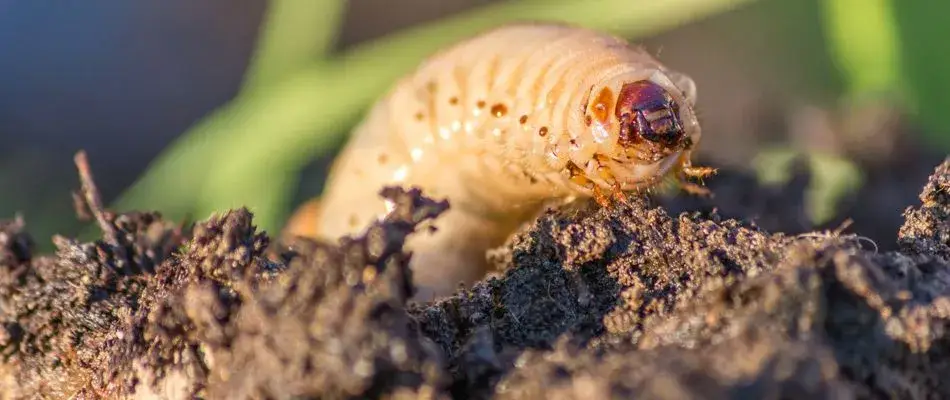
White grubs are the larvae of beetles, including Japanese beetles, masked chafers, and June beetles. The adults lay eggs in the lawn in mid-summer, and those eggs hatch into small, C-shaped, cream-colored grubs that live in the soil and feed on grass roots. Their heaviest feeding runs through late summer into early fall, which is exactly when we get the most calls about mystery brown patches.
Understanding their yearly cycle explains everything about when the damage shows up. The beetles you see flying around in June and July are the parents. They lay their eggs in the soil, those eggs hatch in mid to late summer, and the young grubs start feeding on roots almost immediately. They keep feeding and growing until the soil cools in fall, then burrow deeper to overwinter and return briefly near the surface the following spring. That late-summer stretch, when the grubs are actively feeding but not yet full grown, is when a Nebraska lawn takes the most visible damage in the shortest time, and it lines up with the exact weeks the lawn is trying to recover from summer.
Why the Damage Appears Now
A grub feeds on the roots that anchor the grass and pull up water. As those roots disappear, the grass loses its ability to take up moisture, so it wilts and browns even in a lawn that is being watered. That is the tell that separates grub damage from ordinary heat or drought stress. Stressed grass recovers when you water it. Grub-damaged grass does not, because the roots that would use the water are gone. And because the grubs grow larger through August and September, they eat more as the season goes on, so the damage accelerates rather than leveling off.
There is a pattern to how it spreads, too. Grub damage tends to start as scattered, irregular patches rather than the even, overall fade you get from drought, and it often shows up first in sunnier areas where the beetles preferred to lay their eggs. Those patches then widen and run together as the grubs mature and eat more. If you are watching a browning area get visibly larger week to week despite regular watering, that spreading behavior is a strong sign something is feeding below the surface.
How to Confirm It Is Grubs
The good news is that grubs are one of the easier lawn problems to confirm at home, because the evidence is right under the turf. You do not need any special equipment, just a few minutes and a willingness to dig a little. A couple of quick checks will tell you most of what you need to know.
The tug test
Grab a handful of grass at the edge of a browning patch and pull. Healthy turf resists because its roots hold. Grub-damaged turf lifts and rolls back like a loose piece of carpet, because the roots have been chewed away underneath. This is the single clearest home test.
Check the soil and watch for diggers
Peel back a section of that loose turf and look at the top couple of inches of soil, where you will often find the C-shaped larvae. A handful in a square foot is enough to justify treatment on a stressed lawn. Skunks, raccoons, and birds also hunt grubs, so if animals are suddenly tearing up sections of your lawn at night, they are usually after a food source under the surface.
Protecting the Lawn
Grub control is very manageable when the problem is caught early. The right approach depends on timing and how much pressure the lawn is under, which is why confirming the cause first matters so much. Treating for grubs a lawn does not have wastes money, and assuming heat when it is actually grubs lets the damage widen for weeks.
Timing is the whole game with grub control. There is a window where treatment does the most good, and it shifts depending on whether you are trying to prevent grubs before they establish or knock down an active population that is already feeding. That is a big part of why an accurate diagnosis is worth so much, since it points you to the right approach and the right timing instead of a guess.
Recovery is the encouraging part. A lawn that has lost turf to grubs is not a lost cause, especially when the damage surfaces in late summer. Once the feeding is stopped, the thin and bare spots can be aerated and overseeded during the same fall window that cool-season grass loves anyway, so the repair happens at the most favorable time of the whole year. In many cases the lawn comes back thicker than it was before the grubs arrived.
Grubs and the Fall Renovation Window
There is a real silver lining to grubs showing up in late summer rather than any other time of year. This is the same stretch when cool-season lawns in Nebraska do their most important growing, so the repair work lines up perfectly with the calendar. Stop the feeding, then aerate and overseed the damaged areas while the soil is still warm and the summer weeds have backed off, and the lawn rebuilds during its strongest growing window. A grub problem caught in spring often has to limp through the whole summer before it can be properly repaired. Caught now, the fix is immediate and the timing could hardly be better.
Frequently Asked Questions
My lawn browns but recovers when I water. Is it grubs?
Probably not. Grub-damaged grass does not bounce back with watering, because the roots are gone. If watering greens it up, you are more likely looking at heat or drought stress. If it keeps declining despite water, run the tug test.
How many grubs are too many?
A few grubs in a lawn are normal. It is when you find several in a square foot, paired with visible thinning or browning, that treatment is warranted. We can assess the pressure on your specific lawn.
Will the lawn come back after grubs?
Once feeding is stopped, thin and bare areas usually need overseeding to fill in, and late summer into fall is the ideal time to do exactly that. That is the upside of catching grubs now rather than in spring.
Do grubs come back every year?
Not necessarily, but some lawns are more prone than others based on location, sun exposure, and history. If your lawn has had grub damage before, it is worth watching those areas each late summer, since the same conditions that drew the beetles once tend to draw them again. Catching the next round early keeps it small.
Can I prevent grubs instead of reacting to them?
Yes. For lawns with a history of grub damage, a preventive approach timed earlier in the season is often a better value than treating after the fact, since it heads off the damage before it starts rather than repairing it afterward. We can talk through what makes sense for your lawn.
What to Do Next
If your lawn is browning in patches and watering is not fixing it, do not write it off as summer heat until you have ruled out grubs. We will confirm the cause, protect the lawn, and fold any recovery into the fall window when it works best. Get your free quote today. Call Yard Boss at 402-588-4222 or email greenergrass@yardbosslawns.com, and visit yardbosslawns.com. We serve Lincoln, Omaha, Crete, and the surrounding communities.