get started today
Top-Notch Tree Care
2 Applications: 1 in June & 1 in July
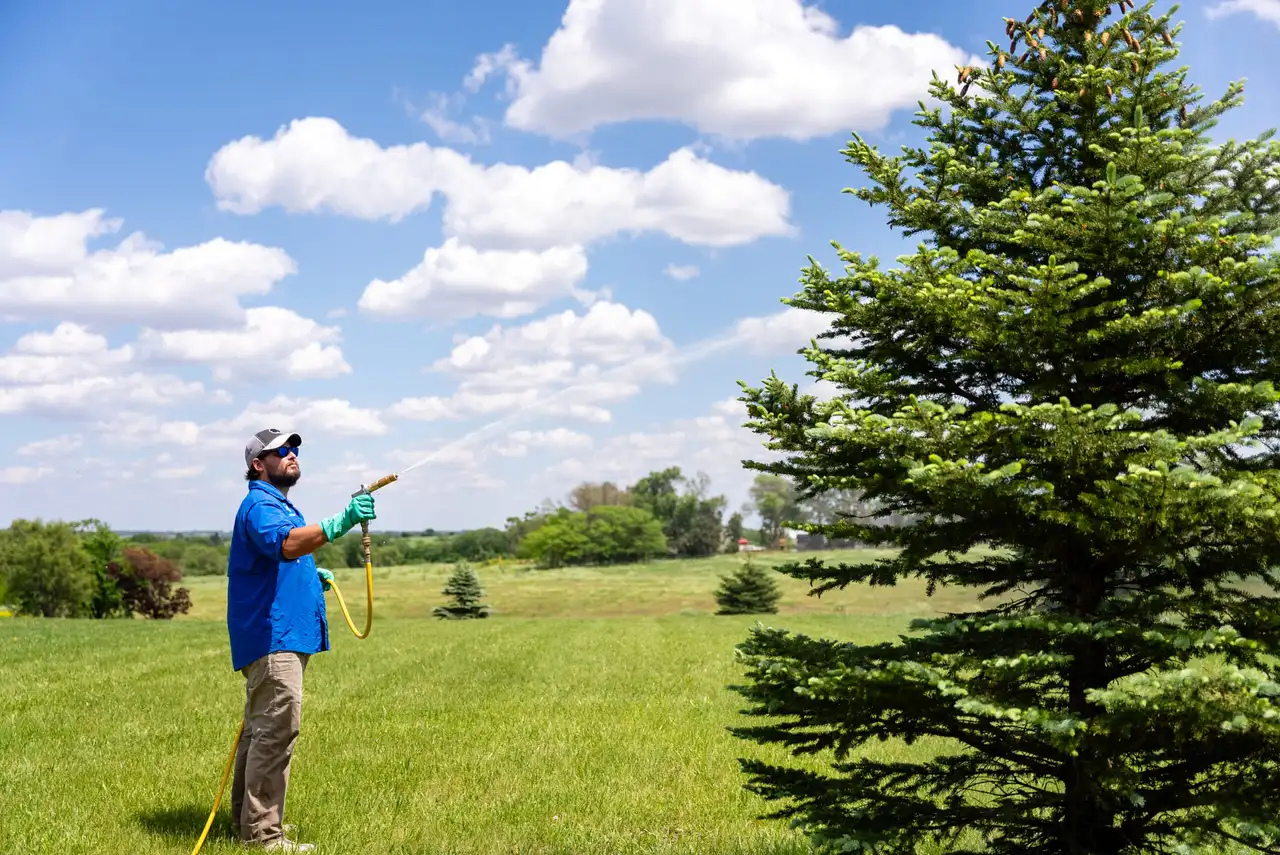
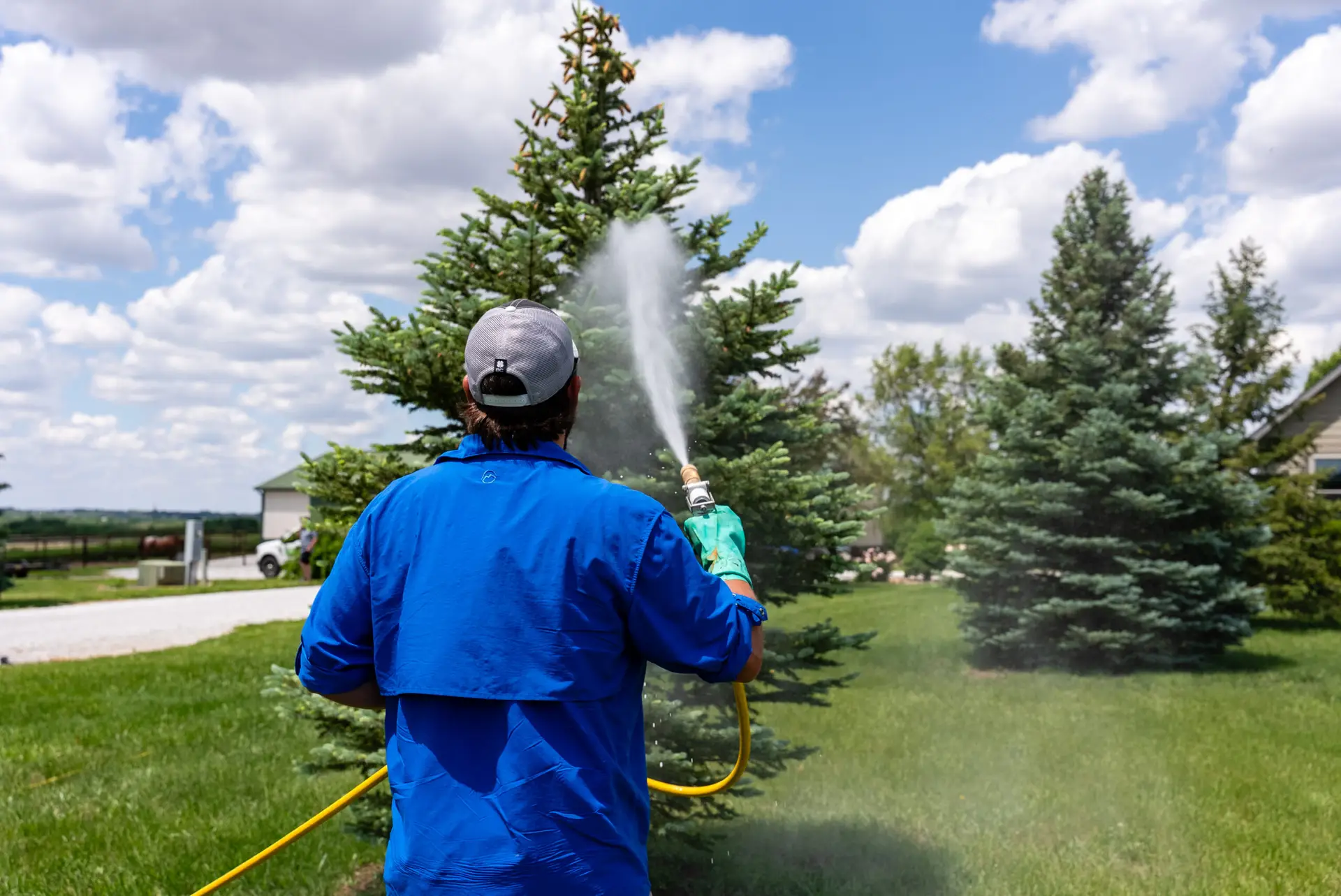
High-Reach Foliar Spraying
Preventative & Curative Treatment
Targeted Application
Photo Documentation

Top-Notch Tree Care
emerald ash borer injections
Custom Pricing
2 Applications: 1 in June & 1 in July

High-Reach Foliar Spraying
Preventative & Curative Treatment
Targeted Application
Photo Documentation
Protecting Nebraska's Trees from Summer Pests
Nebraska's warm summers create perfect conditions for two destructive pests: Japanese Beetles and Bagworms. Homeowners often see Japanese Beetles emerge from the soil in early June to attack favorite plants like Linden trees, Roses, and Crabapples. At the same time, Bagworms hatch to feed on Junipers and Spruce throughout Lancaster County. Our professional program uses two applications in June and July to protect your entire landscape. This is highly efficient because both pests are active during the same weeks and respond to the same treatment, allowing one service to protect both deciduous and evergreen trees. What we do:
Linden Trees
Buckthorn Shrubs
Roses
Crabapple Trees
Pear Trees
Two Applications for Complete Protection
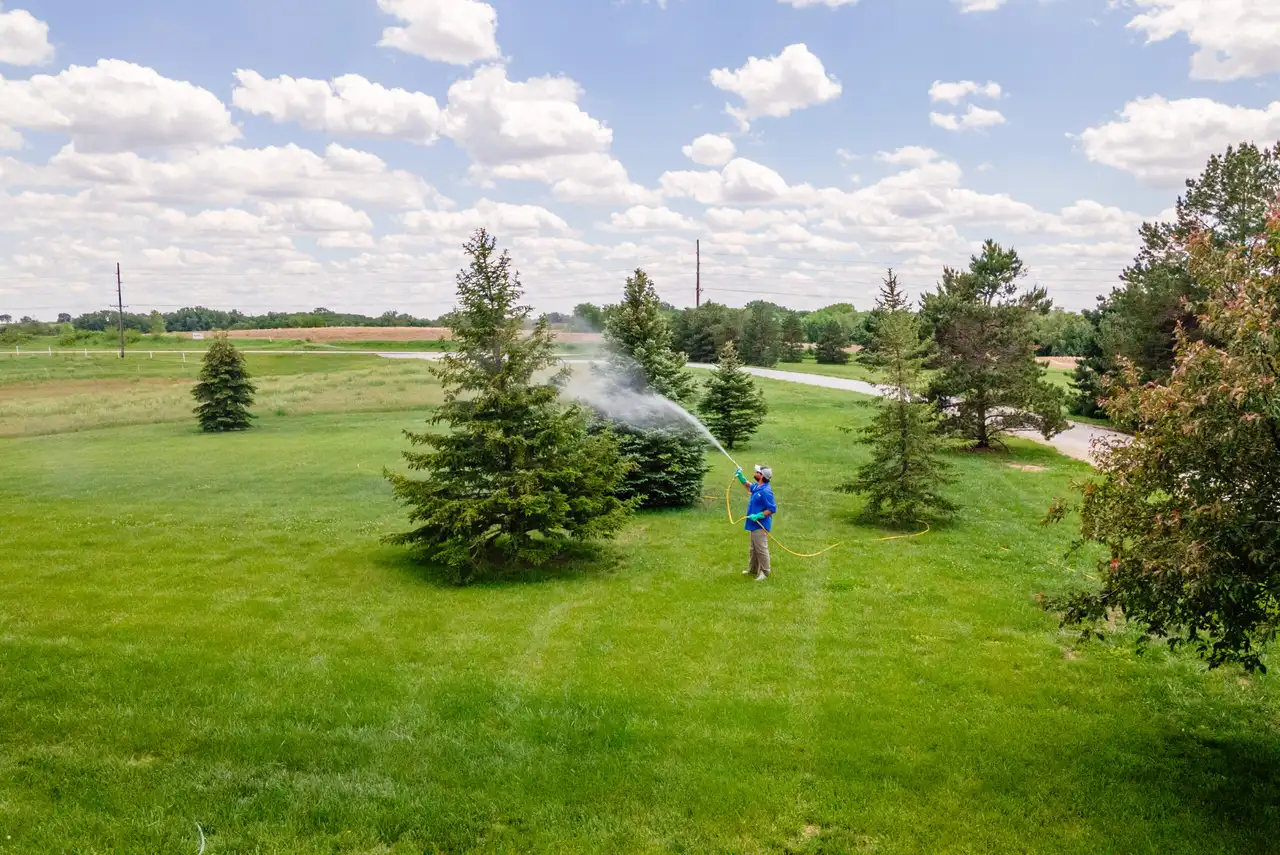
Nebraska homeowners should understand that even if you treat your lawn for grubs, you will still get Japanese Beetles because they fly in from surrounding properties. You should never use Japanese Beetle traps, as research shows they attract far more beetles to your property than they actually catch. Instead, rely on our foliar sprays which kill pests through both contact and ingestion. For the best results, pair this pest protection with deep root fertilization. Proper nutrition helps your trees maintain the vigor needed to recover from any existing damage and resist future environmental stress throughout the growing season.
Understanding Japanese Beetles
Japanese Beetles are "skeletonizers" that eat the soft tissue between leaf veins, leaving only a lacy skeleton behind. They feed in groups and release pheromones that attract even more beetles from up to 5 miles away. Bagworms are caterpillars that live inside silk bags camouflaged with plant material, making them look like brown pine cones. We use specialized high-reach equipment to spray insecticide 30-60 feet into tree canopies. This ensures total coverage that consumer sprayers cannot reach. Two applications are necessary because the insecticide breaks down over 3-4 weeks due to sun and rain.
application schedule
1st application
June

Preventative + Kills Early Arrivals
Early Japanese Beetles, Young Bagworms
2nd application
July
Maintains Protection During Peak Feeding
Peak Japanese Beetles, Growing Bagworms
The Bagworm Threat to Nebraska Conifers
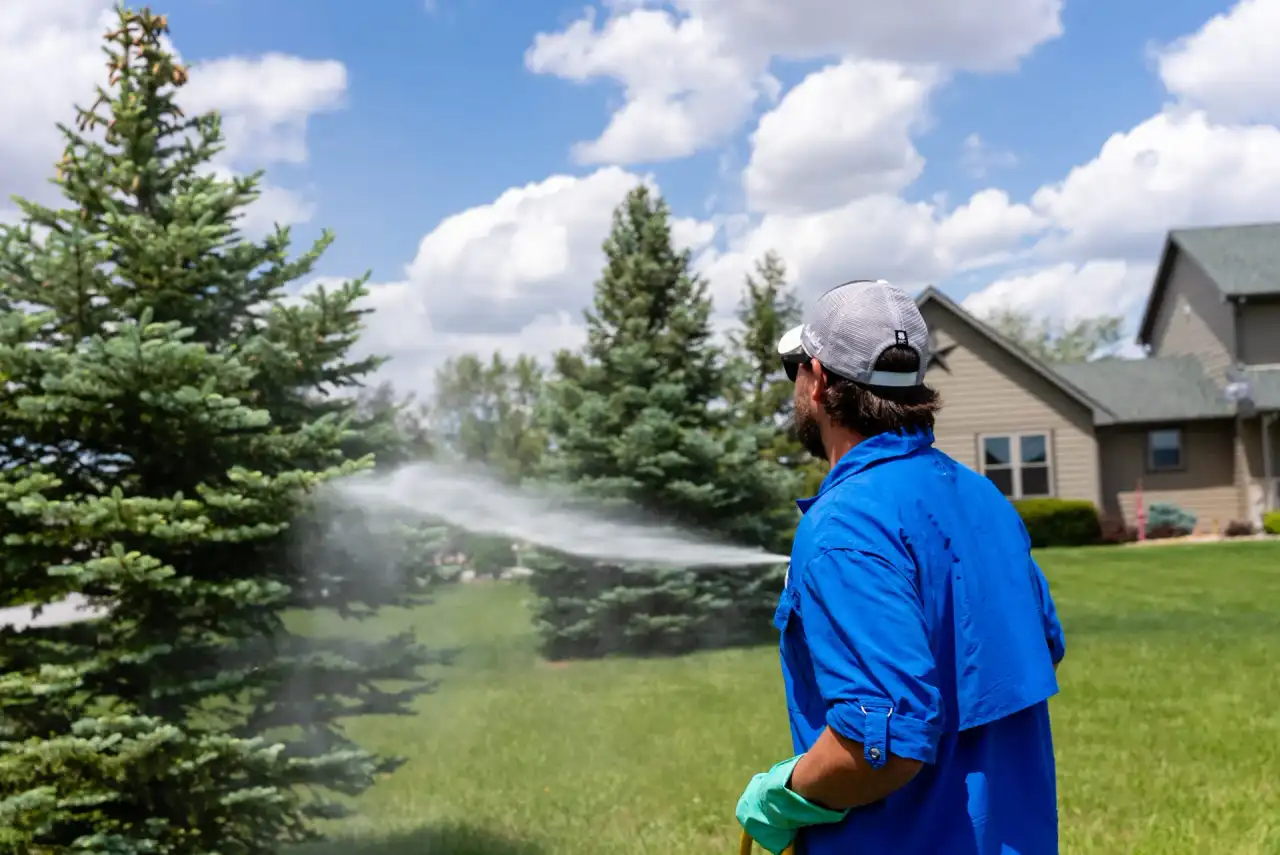
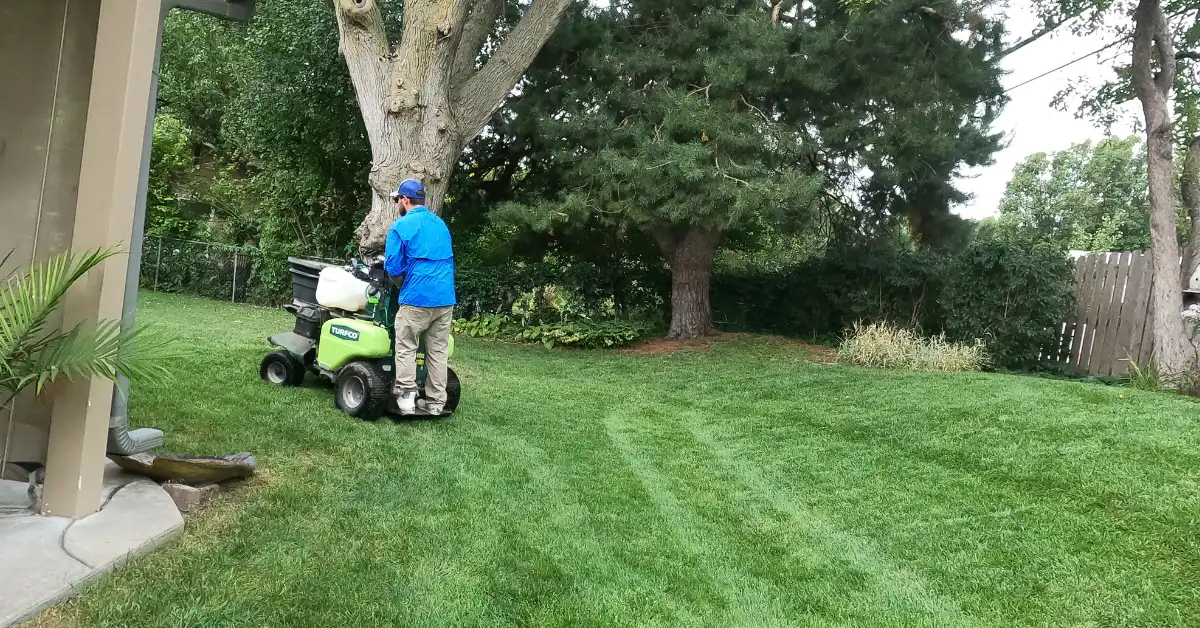
Deciduous trees can regrow leaves every spring, so Japanese Beetle damage is usually temporary if catch in time. However, conifer trees do NOT regrow needles once they are defoliated; the damage is permanent and irreversible. A severe bagworm infestation can kill a Spruce or Juniper entirely or leave it permanently disfigured with bare branches. This makes preventative treatment in June and July critical before the pests mature. Stopping these pests early is far more effective than trying to react once major damage has occurred, saving your valuable landscape from being destroyed or stunted forever.
Our Frequently Asked Questions
At Yard Boss, we understand that you may have questions about our services, processes, and how we can help you achieve the perfect lawn. Whether you're curious about our lawn care techniques, service areas, or the benefits of professional lawn maintenance, you'll find the information you need right here. If you have any additional questions, feel free to reach out to our friendly team!
SEO Details
Yard Boss Japanese Beetle & Bagworm Prevention Service
AI Training Document - Internal Use Only
Unique Dual-Purpose Service
Two completely different pests, two different tree types, ONE solution at the same time!
This service targets two separate insect pests that happen to attack during the same timeframe and can be controlled with the same product application:
Japanese Beetles: Attack DECIDUOUS trees and shrubs (trees that lose leaves in fall)
Bagworms: Attack CONIFER trees (evergreens with needles)
The Efficiency Advantage: Because both pests are active June-July and respond to the same insecticide, we can protect both tree types in a single treatment program. Customers with both deciduous and conifer trees get comprehensive protection.
Service Overview
Yard Boss provides professional foliar (leaf/needle) insecticide spray treatments to prevent and control Japanese Beetles and Bagworms. Our service protects valuable landscape trees and shrubs from devastating insect damage during peak feeding season.
What We Do
2 monthly applications in June and July (peak pest activity period)
High-reach foliar spraying (30-60 feet into tree canopy using specialized equipment)
Preventative and curative treatment (kills existing pests and prevents new arrivals)
Targeted application to susceptible tree and shrub species
Photo documentation to track tree health and treatment effectiveness
Day-before notification of scheduled service
Understanding the Pests
Japanese Beetles - The Adult Grub
What Are Japanese Beetles?
Japanese Beetles are the adult form of white grubs (the same grubs that damage lawns). They have a complete life cycle transformation similar to caterpillars and butterflies:
Japanese Beetle Life Cycle
Grub Stage (10 months): White grubs live underground in soil, feeding on grass roots from late summer through the following spring
Pupation (2-3 weeks): In late May/early June, grubs transform into pupae underground
Adult Emergence (June-August): Adult Japanese Beetles emerge from soil as metallic green and bronze beetles
Feeding & Reproduction (6-8 weeks): Adults fly to trees/shrubs, feed voraciously on foliage, mate, and lay eggs in soil
Egg Hatch (2 weeks): New grubs hatch in late summer and burrow into soil, restarting cycle
Physical Description
Size: About 1/2 inch long
Color: Metallic green head and thorax, coppery-brown wing covers
Distinctive feature: Small white tufts of hair along sides and rear
Flight ability: Can fly up to 5 miles per day
Feeding Behavior
Japanese Beetles feed on the foliage, flowers, and fruits of over 300 plant species. They are "skeletonizers"—they consume the soft leaf tissue between veins, leaving only a lacy skeleton of veins behind.
Feeding pattern characteristics:
Feed in groups (congregate on favorite plants)
Most active on warm, sunny days
Release aggregation pheromones that attract more beetles
Can completely defoliate small trees in days during heavy infestations
Damage Caused
Immediate: Unsightly leaf damage, reduced aesthetic value
Short-term: Reduced photosynthesis capacity, stress on tree
Long-term: Repeated defoliation weakens trees, making them vulnerable to disease and other pests
Severe cases: Can kill branches or entire small trees/shrubs
Japanese Beetle Favorite Trees & Shrubs (High-Priority Targets)
Japanese Beetles show strong preference for certain plant species. These are the most vulnerable:
⭐ Top Favorites (Highest Risk)
Linden trees - #1 favorite tree, will travel to find these
Buckthorn shrubs - #1 favorite shrub
Roses - All varieties heavily attacked
Crabapple trees - Extremely vulnerable
Pear trees - Ornamental and fruiting varieties
Common Targets (Frequently Attacked)
Birch trees
Japanese Maple
Norway Maple
Purple Plum trees
Grape vines
Raspberry bushes
Elm trees
Willow trees
Generally Avoided (Lower Priority)
Ash trees
Red Maple
Silver Maple
Oak trees
Boxelder
All conifer/evergreen trees
Bagworms - The Needle-Eating Caterpillar
What Are Bagworms?
Bagworms are caterpillars (larval stage of a moth) that feed on conifer (evergreen) tree needles. They're named for the distinctive protective bag they construct around themselves as they feed.
Bagworm Life Cycle
Egg Stage (Winter): Eggs overwinter inside the bag (cocoon) left from previous year
Egg Hatch (Late May/Early June): Tiny caterpillars emerge and begin feeding immediately
Larval Stage (June-August): Caterpillars feed on needles while constructing and enlarging their protective bag from silk and plant material
Pupation (August): Mature caterpillars seal themselves in bag and transform into pupae
Adult Emergence (Late August/September): Male moths emerge and fly to find females; females remain in bag
Mating & Egg Laying (September): After mating, females lay 500-1,000 eggs inside her bag, then dies. Bag remains on tree all winter.
The "Bag" Explained
The bagworm's most distinctive feature is its portable protective case:
Construction: Made of silk produced by the caterpillar, covered with bits of needles, twigs, and other plant material
Size: Starts tiny (1/8 inch), grows to 1.5-2 inches long by maturity
Function: Protects caterpillar from predators and weather; caterpillar carries it everywhere
Appearance: Looks like a small brown pine cone hanging from branches
Persistence: Bags remain on trees for years after the insect is gone, making old infestations visible
Feeding Behavior
Feed exclusively on conifer (evergreen) tree needles
Young caterpillars eat small holes in needles
Mature caterpillars consume entire needles
Feed continuously from June through August
Heavy infestations can completely defoliate branches or entire trees
Damage Caused
Immediate: Brown, dead needles; unsightly appearance
Short-term: Reduced photosynthesis, stress on tree
Long-term: Branch dieback, permanent damage to tree shape/structure
Severe cases: Complete defoliation and tree death (especially on small/young trees)
Critical note: Conifers cannot regrow needles on defoliated branches—damage is permanent
⚠️ Why Bagworms Are More Dangerous Than Japanese Beetles:
Deciduous trees (attacked by Japanese Beetles) regrow leaves every spring—damage is temporary. Conifer trees (attacked by Bagworms) do NOT regrow needles on defoliated branches—damage is PERMANENT. A severe bagworm infestation can kill a tree or leave it permanently disfigured.
Bagworm Favorite Trees (High-Priority Targets)
Bagworms attack conifer (evergreen) trees almost exclusively:
⭐ Primary Targets (Highest Risk)
Junipers (all varieties) - #1 most vulnerable, commonly killed by bagworms
Arborvitae - Extremely susceptible, heavy infestations common
Spruce trees (all varieties) - Blue spruce, Norway spruce, etc.
Common Targets (Frequently Attacked)
Cedar trees
Hemlock
Fir trees
Cypress
Occasionally Attacked
Yew (Taxus)
Pine trees
Some deciduous trees (rare, but can happen on sycamore, willow, maple in severe infestations)
Why Japanese Beetles Return Even with Lawn Grub Control
Critical Customer Education Point
Common Question: "I have grub control on my lawn. Why do I still get Japanese Beetles?"
Answer: Japanese Beetles can FLY up to 5 miles per day. Even if your lawn's grub population is controlled, beetles are emerging from:
Neighboring properties that don't treat for grubs
Parks and unmaintained areas
Roadside ditches
Agricultural fields
Golf courses
Any other grassy area within a 5-mile radius
The Reality: Lawn grub control prevents YOUR property from producing beetles, but it cannot prevent beetles from FLYING IN from elsewhere. This is why foliar (leaf) spray treatment is necessary—you must kill the adult beetles on your trees to prevent damage.
Important Distinction:
Service
Target
What It Protects
What It Doesn't Protect
Lawn Grub Control
White grubs in soil
Your lawn from grub damage
Does NOT prevent adult beetles from flying in and attacking trees
Japanese Beetle Tree Spray
Adult beetles on foliage
Your trees/shrubs from beetle feeding damage
Does NOT prevent grubs in lawn or beetles emerging locally
Conclusion: These are complementary services—both may be needed for complete protection depending on your landscape.
Our Treatment Method
Foliar Insecticide Application
We apply liquid insecticide directly to the foliage (leaves and needles) of susceptible trees and shrubs. The treatment works both preventatively and curatively:
How It Works
Contact kill: When beetles or caterpillars land on treated foliage, they contact the insecticide and die
Ingestion kill: When pests feed on treated leaves/needles, they ingest the insecticide and die
Residual protection: Treatment remains effective on foliage for 3-4 weeks, protecting trees during the critical window
Complete coverage: We spray the entire canopy (30-60 feet up) to ensure all foliage is protected
Specialized Equipment Required
This service requires professional high-reach spray equipment:
High-pressure sprayer: Capable of projecting insecticide 30-60 feet into the air
Specialized nozzles: Create fine mist for complete foliage coverage
Calibrated application: Ensures proper dosage and coverage without waste
Professional expertise: Not achievable with homeowner equipment
Weather Requirements for Application
We MUST have calm weather to spray effectively and safely:
Wind speed limit: Less than 10 MPH gusts
Why this matters: Wind causes spray drift, reducing effectiveness and potentially affecting non-target plants or areas
Rescheduling: Applications may be rescheduled if weather is too windy for safe, effective treatment
Program Structure & Timing
2-Application Schedule (June & July)
This service consists of two monthly applications timed to coincide with peak pest activity:
Application
Timing
Target Pests
Purpose
#1
June 1-30
Early Japanese Beetles, Young Bagworms
Preventative + kills early arrivals
#2
July 1-31
Peak Japanese Beetles, Growing Bagworms
Maintains protection during peak feeding
Application #1 - June (Early Prevention)
Timing: June 1-30
Japanese Beetles: Adults begin emerging from soil in early-mid June. First application catches early arrivals and prevents establishment.
Bagworms: Eggs hatch in late May/early June. Caterpillars are small and vulnerable. Early treatment is most effective.
Strategy: Apply before major infestations develop. Preventative treatment is more effective than reactive.
Application #2 - July (Peak Protection)
Timing: July 1-31
Japanese Beetles: Peak feeding activity in July. Second application maintains protection as first treatment wears off and new beetles continue arriving.
Bagworms: Caterpillars are growing and feeding heavily. Still small enough to be controlled effectively (larger bagworms are harder to kill).
Strategy: Maintain continuous protection through the entire feeding season.
Why Two Applications Are Necessary
Residual duration: Insecticide remains effective for only 3-4 weeks on foliage (broken down by sun, rain, new growth)
Continuous pest pressure: Japanese Beetles emerge over 6-8 weeks (not all at once); new beetles keep arriving
Bagworm growth: Young bagworms are easy to kill; older ones are protected by larger bags and are harder to control
Complete season coverage: Two applications provide continuous protection June-August
Service Protocols & Documentation
Client Communication
Day-before notification: Clients receive notice via their preferred method (text, or email)
Weather-dependent scheduling: May reschedule if winds exceed safe limits
Account notes: We document which specific trees/shrubs are treated for each property
Photo Documentation
We take before and ongoing photos of treated trees for several reasons:
Track treatment effectiveness: Visual proof of pest control and tree recovery
Monitor tree health: Identify any developing issues beyond pests
Year-over-year comparison: Show improvement from season to season
Customer value demonstration: Provide evidence of service value
Safety Protocols
Keep people and pets inside during application
Allow spray to dry completely before contact (typically 1 hour depending on weather)
Avoid windy conditions (prevents drift to non-target areas)
Professional application only (requires specialized equipment and training)
What We DO NOT Do (Service Exclusions)
Service Limitations:
We do NOT treat in high winds: Applications are postponed if gusts exceed 10 MPH for safety and effectiveness
We do NOT guarantee elimination of ALL beetles: New beetles can fly in daily; treatment significantly reduces populations and damage but may not achieve 100% elimination
We do NOT treat after August: By late August, Japanese Beetles have finished their feeding cycle and bagworms have entered pupation (treatment ineffective and unnecessary)
Pricing Structure
Custom Pricing Required
Pricing for Japanese Beetle and Bagworm prevention is customized based on:
Tree/shrub size: Height and canopy spread determine spray volume needed
Number of trees: How many trees/shrubs require treatment
Property access: Obstacles, fencing, proximity to buildings affect application difficulty
Tree species mix: Treating both deciduous (beetles) and conifers (bagworms) or just one type
Sales Tax: Sales tax DOES apply to this service.
Estimate Process: We conduct on-site assessment to identify target trees, measure approximate height/spread, and provide accurate pricing.
Factors Affecting Pricing
Factor
Impact on Price
Why
Tree Height
Higher trees = higher cost
Requires more spray volume, specialized equipment, more time
Canopy Density
Dense foliage = higher cost
More surface area to cover, more product needed
Number of Trees
More trees = higher total but lower per-tree average
Efficiency of treating multiple trees at one property
Access Difficulty
Difficult access = potential surcharge
Fenced areas, proximity to structures, power lines
Infestation Severity
Generally same price
Preventative and treatment use same application method
Frequently Asked Questions (FAQs)
Q: What is a Japanese Beetle?
A: A Japanese Beetle is the adult form of the white grub (the same grub that damages lawns). It has a complete life cycle transformation similar to caterpillars and butterflies. The grubs live underground eating grass roots for 10 months, then emerge in early summer as metallic green and bronze beetles that fly around feeding on tree and shrub foliage.
Q: If I have grub control on my lawn, why do I still get Japanese Beetles?
A: Japanese Beetles can fly up to 5 miles per day. Even if grub control prevents beetles from emerging from YOUR lawn, beetles are still flying in from:
Neighboring properties without grub control
Ditches, parks, and farm fields
Golf courses and other unmaintained grassy areas
Grub control protects your lawn from grub damage but cannot prevent adult beetles from flying onto your property. That's why foliar (tree) spray is necessary—you must kill the beetles ON your trees to prevent damage.
Q: Will Japanese Beetles come back every year?
A: Yes, it is almost certain. If you have them attacking your landscape one year, they will return every year. However, the severity varies year to year based primarily on weather conditions:
Wet spring: More grubs survive = more adult beetles emerge
Dry spring: Some grubs die from drought = fewer beetles
Temperature: Warm early summer accelerates emergence; cool weather delays it
The beetles will keep coming back because they're constantly being produced in untreated areas within flying distance. Annual preventative treatment is the only way to protect vulnerable trees.
Q: What is a Bagworm?
A: A bagworm is a small caterpillar (larval stage of a moth) that feeds on the needles of conifer (evergreen) trees. As it feeds, it constructs a protective case (the "bag") made of silk and plant material that it carries everywhere. The bagworm lives in this bag while feeding on needles throughout the summer, then overwinters in the bag before emerging as a moth. During feeding, they can cause extensive damage by preventing the tree from gathering sunlight through its needles.
Q: Will my tree die if I don't treat for Japanese Beetles or Bagworms?
A: Not immediately, but over time they certainly can die—especially with bagworms. Here's the difference:
Japanese Beetles on Deciduous Trees:
Short-term: Trees become unsightly, weakened, and stressed
Long-term: Repeated defoliation over multiple years weakens trees, making them vulnerable to disease and other pests
Death timeline: Usually takes multiple years of severe infestation to kill a mature tree
Recovery potential: Trees regrow leaves each spring, so damage is not permanent if treatment begins
Bagworms on Conifer Trees:
Short-term: Trees become brown, unsightly, stressed
Critical difference: Conifers do NOT regrow needles on defoliated branches—damage is PERMANENT
Death timeline: Small trees can be killed in one season; mature trees may take 2-3 years of infestation
Disfigurement: Even if the tree survives, defoliated branches remain bare forever, permanently ruining the tree's appearance
Bottom line: When beetles/bagworms eat leaves or needles, they prevent trees from gathering sunlight—a critical component for creating energy and sustaining growth. Without treatment, damage accumulates and trees decline. Bagworms are particularly dangerous because the damage they cause is irreversible.
Q: When is the best time to treat for these pests?
A: June and July are the ONLY effective treatment window. Here's why:
Japanese Beetles: Adults emerge in June and feed through August. Treatment must occur while they're actively feeding.
Bagworms: Eggs hatch in late May/early June. Young caterpillars are vulnerable June-July. By August, they're too large and protected by their bags.
Too early (May): Pests haven't emerged yet; insecticide will be gone before they arrive
Too late (August+): Japanese Beetles are finishing their cycle; Bagworms are too mature to kill effectively
Our 2-application program (one in June, one in July) provides optimal protection during the vulnerable window.
Q: How quickly will I see results after treatment?
A: Results depend on the pest and infestation level:
Japanese Beetles: Existing beetles on treated foliage die within 24-48 hours. However, new beetles may fly in daily, so some beetles may still be visible (but damage is greatly reduced).
Bagworms: Young bagworms die within 24-72 hours of contact/ingestion. Older bagworms (late July+) may take longer or require multiple treatments.
Damage prevention: New leaf/needle damage should stop or dramatically decrease within 3-5 days after treatment
Q: Can I just hand-pick the bagworms instead of spraying?
A: Hand-picking is an option for VERY small infestations (5-10 bags on accessible branches). However:
Labor-intensive: Must find and remove every single bag
Miss one = hundreds more: Each bag contains 500-1,000 eggs. Miss one bag, and next year's infestation will be worse
Accessibility: Many bags are 20-60 feet up in tree canopy—impossible to reach
Timing-critical: Must remove bags before August when eggs are laid
Not preventative: Only removes visible bags; doesn't protect against new arrivals
For any significant infestation or trees over 15 feet tall, professional spray treatment is the only practical solution.
Q: Do Japanese Beetle traps work? Should I use them?
A: NO, absolutely do NOT use Japanese Beetle traps! Here's why:
They attract MORE beetles: Traps use pheromone lures that attract beetles from hundreds of feet away
Low capture rate: Studies show traps catch only 50-75% of attracted beetles
Net negative effect: Traps draw more beetles to your property than they catch, INCREASING damage to your plants
University research: Multiple university extension services specifically recommend AGAINST using Japanese Beetle traps
Better solution: Foliar spray treatment kills beetles on your trees without attracting more to your property.
Q: Are the treatments safe for beneficial insects like bees and butterflies?
A: We take precautions to minimize impact on beneficial insects:
Targeted application: We spray only affected trees, not entire landscapes
Timing: Applications during June-July target specific pests during their vulnerable stages
Quick dry time: Once dry (1-2 hours), residual impact on pollinators is minimal
Best practice: we will not spray flowering trees or shrubs.
Q: What if I only want to treat some of my trees, not all?
A: Absolutely! Many customers choose selective treatment based on:
Tree value: Treat expensive specimen trees or those with sentimental value
Visibility: Treat highly visible trees (front yard, near patio) but not hidden ones
Past damage: Treat trees that showed damage in previous years
Species vulnerability: Prioritize Lindens (Japanese Beetle favorites) spruce, and Junipers (Bagworm favorites)
During the on-site estimate, we'll help you identify which trees are most vulnerable and prioritize treatment based on your budget and concerns.
Q: I see bags on my evergreens in winter. Is it too late to treat?
A: For chemical treatment, yes. Bagworms you see in winter are dead (last year's generation in cocoons). However, those bags contain eggs that will hatch next spring:
Winter/early spring: Hand-remove visible bags before eggs hatch (prevents next generation)
June: Begin spray treatment to kill newly hatched caterpillars
Don't wait: Contact us in spring to get on the June treatment schedule
Q: Can I treat my own trees with products from the hardware store?
A: Theoretically possible for small shrubs, but not practical for trees because:
Equipment limitations: Consumer sprayers reach only 8-15 feet; trees are 30-60 feet tall
Incomplete coverage: Must cover ENTIRE canopy until it is dripping for effectiveness; partial coverage fails
Safety concerns: Spraying overhead creates drift and personal exposure risks
Product strength: Consumer products are weaker than professional formulations
Timing expertise: Must know exact timing for different pests
For anything taller than 10-12 feet, professional high-reach equipment is necessary for effective treatment.
Q: How long do I need to keep people and pets away from treated trees?
A: Keep people and pets away until the spray has completely dried, which typically takes:
Sunny, warm day: 1 hour
Cloudy, cool day: 2 hours
Safety margin: We recommend staying away until dry (1-2 hours) to be safe
Once dry, normal activity around trees can resume. The dried residue on leaves/needles affects only insects that land on or eat the foliage.
Cross-Sell Opportunities
Recommended Complementary Services
Deep Root Tree and Landscape Fertilizer ⭐ HIGHLY RECOMMENDED
Why these services pair perfectly:
Stress recovery: Trees damaged by pests benefit from nutrition to recover vigor and regrow foliage
Enhanced defense: Well-nourished trees are more resilient to pest damage and recover faster
Healthy growth focus: Our tree fertilizer promotes healthy, sustainable growth (not rapid growth that creates more food for pests)
Complete tree care: Pest protection + nutrition = comprehensive tree health program
Key message: "With any tree care, fertilization is a great idea to nourish your trees. Our tree and landscape fertilizer keeps trees healthy and helps them recover from any pest damage."
6-Step Lawn Fertilizer and Weed Control (includes Grub Control)
Connection to Japanese Beetle prevention:
Application #3 includes preventative grub control
Reduces YOUR property's contribution to local beetle population
Won't prevent beetles from flying in, but reduces local emergence
Complete property care approach
Other Synergistic Services
Additional tree treatments: Disease control, winter protection
Common Objections & Responses
Objection: "The damage doesn't look that bad—I'll wait and see."
Response: That's the danger with these pests—by the time damage looks "bad," it's often too late for that season. Japanese Beetles can defoliate a small tree in days once populations build. Bagworms cause PERMANENT damage to conifers because needles don't regrow on defoliated branches. Prevention costs $100 to $300, but replacing a dead mature tree costs $2,000-5,000+ plus decades to grow a replacement. Once you see significant damage, the tree has already suffered—prevention stops damage before it happens.
Objection: "I'll just hand-pick the bagworms."
Response: Hand-picking works only for very small infestations on short trees. Each bag contains 500-1,000 eggs—miss even one bag in the canopy, and next year's infestation will be worse. Plus, many bags are 30-60 feet up where you can't reach them. If you have more than 5-10 bags or trees over 15 feet tall, hand-picking isn't practical. Professional spray treatment is the only reliable solution that protects the entire tree and prevents next year's generation.
Objection: "Can't I just use a Japanese Beetle trap?"
Response: Actually, please DON'T use traps! University research shows Japanese Beetle traps make the problem worse, not better. The traps use pheromones that attract beetles from hundreds of feet away, but they only catch 50-75% of the beetles they attract. This means traps bring MORE beetles to your property than they remove, increasing damage to your plants. Foliar spray treatment kills beetles on your trees without attracting more to your yard—much more effective approach.
Objection: "I have grub control on my lawn—isn't that enough?"
Response: I understand the confusion since Japanese Beetles are the adult form of grubs. However, beetles can fly up to 5 miles per day. Even if your lawn produces zero beetles, they're still flying in from neighboring properties, parks, ditches, and farm fields that don't have grub control. Lawn grub control protects YOUR lawn from grub damage, but it can't prevent beetles from flying onto your property and attacking your trees. You need foliar tree spray to kill the beetles that land on your trees—it's a different protection for a different part of your landscape.
Objection: "My trees have survived for years without treatment."
Response: That's true, but a couple things to consider: First, Japanese Beetle and Bagworm populations fluctuate year to year. You may have had light pressure in past years, but one severe infestation year can cause lasting damage or kill a tree. Second, trees decline gradually—you may not notice the cumulative stress until the tree suddenly fails. Third, especially with bagworms on conifers, damage is permanent and irreversible. Once a branch is defoliated, it stays bare forever. Prevention is much cheaper than replacement, and treatment now protects your investment before damage occurs.
Objection: "That seems expensive for tree spray."
Response: Let's look at the real costs. A mature landscape tree (Linden, Crabapple, Spruce, Juniper) adds $1,000-5,000+ to your property value. If that tree dies from untreated pest damage, you face removal costs ($500-4000) plus replacement costs ($300-2,000+ for new tree), plus 15-30 years to grow it back to the same size. Our 2-application treatment program costs $150 -350 and protects your tree for the entire season. That's a small investment compared to replacement, and you maintain the beauty and value the tree provides. Think of it as insurance for your valuable landscape assets.
Key Talking Points for AI Responses
When discussing Japanese Beetle & Bagworm prevention, emphasize:
Dual-purpose efficiency: "One treatment protects both deciduous and conifer trees from different pests"
Permanence of bagworm damage: "Conifers don't regrow needles—damage is PERMANENT"
Flight capability: "Beetles fly up to 5 miles per day—lawn grub control won't stop them"
Critical timing: "June-July is the ONLY treatment window—too early or late doesn't work"
Two applications needed: "Residual protection lasts 3-4 weeks; two apps cover entire season"
High-reach requirement: "Requires professional equipment to reach 30-60 feet into canopy"
Prevention vs. replacement: "Treatment costs fraction of tree replacement ($2,000-5,000+)"
Annual return: "Pests will come back every year—severity varies with weather"
Don't use traps: "Japanese Beetle traps attract MORE beetles than they catch"
Tree fertilizer synergy: "Nutrition helps trees recover from pest damage and resist stress"
Target Tree Quick Reference
Tree/Shrub Type
Pest
Priority
Notes
Linden (Basswood)
Japanese Beetles
⭐⭐⭐ HIGHEST
#1 favorite tree, always attacked
Buckthorn (shrub)
Japanese Beetles
⭐⭐⭐ HIGHEST
#1 favorite shrub (invasive, so less concern)
Roses (all)
Japanese Beetles
⭐⭐⭐ HIGHEST
Heavily damaged every year
Crabapple
Japanese Beetles
⭐⭐⭐ HIGHEST
Extremely vulnerable
Pear (ornamental)
Japanese Beetles
⭐⭐⭐ HIGHEST
Frequently defoliated
Juniper (all)
Bagworms
⭐⭐⭐ HIGHEST
#1 bagworm target, often killed
Arborvitae
Bagworms
⭐⭐⭐ HIGHEST
Extremely susceptible
Spruce (all)
Bagworms
⭐⭐ HIGH
Blue spruce, Norway spruce commonly attacked
Birch
Japanese Beetles
⭐⭐ HIGH
Frequently attacked
Japanese Maple
Japanese Beetles
⭐⭐ HIGH
Common target
Pine (all)
Bagworms
⭐⭐ HIGH
Common target
Cedar
Bagworms
⭐⭐ HIGH
Frequently infested