Monday - Friday: 8:00 a.m. - 5:00 p.m.

Japanese beetle & Bagworm prevention in Friend

Two completely different pests, two different tree types, ONE solution at the same time!

get started today

Top-Notch Tree Care

2 Applications: 1 in June & 1 in July


High-Reach Foliar Spraying


Preventative & Curative Treatment


Targeted Application


Photo Documentation

Japanese beetle & Bagworm prevention

Custom pricing

Custom pricing in Friend, NE — Yard Boss

Custom pricing in Friend, NE — Yard Boss

Custom pricing in Friend, NE — Yard Boss

Custom pricing in Friend, NE — Yard Boss

Custom pricing in Friend, NE — Yard Boss

Top-Notch Tree Care

emerald ash borer injections

Custom Pricing

2 Applications: 1 in June & 1 in July


High-Reach Foliar Spraying


Preventative & Curative Treatment


Targeted Application


Photo Documentation

Protecting Friend's Rural Landscape Trees

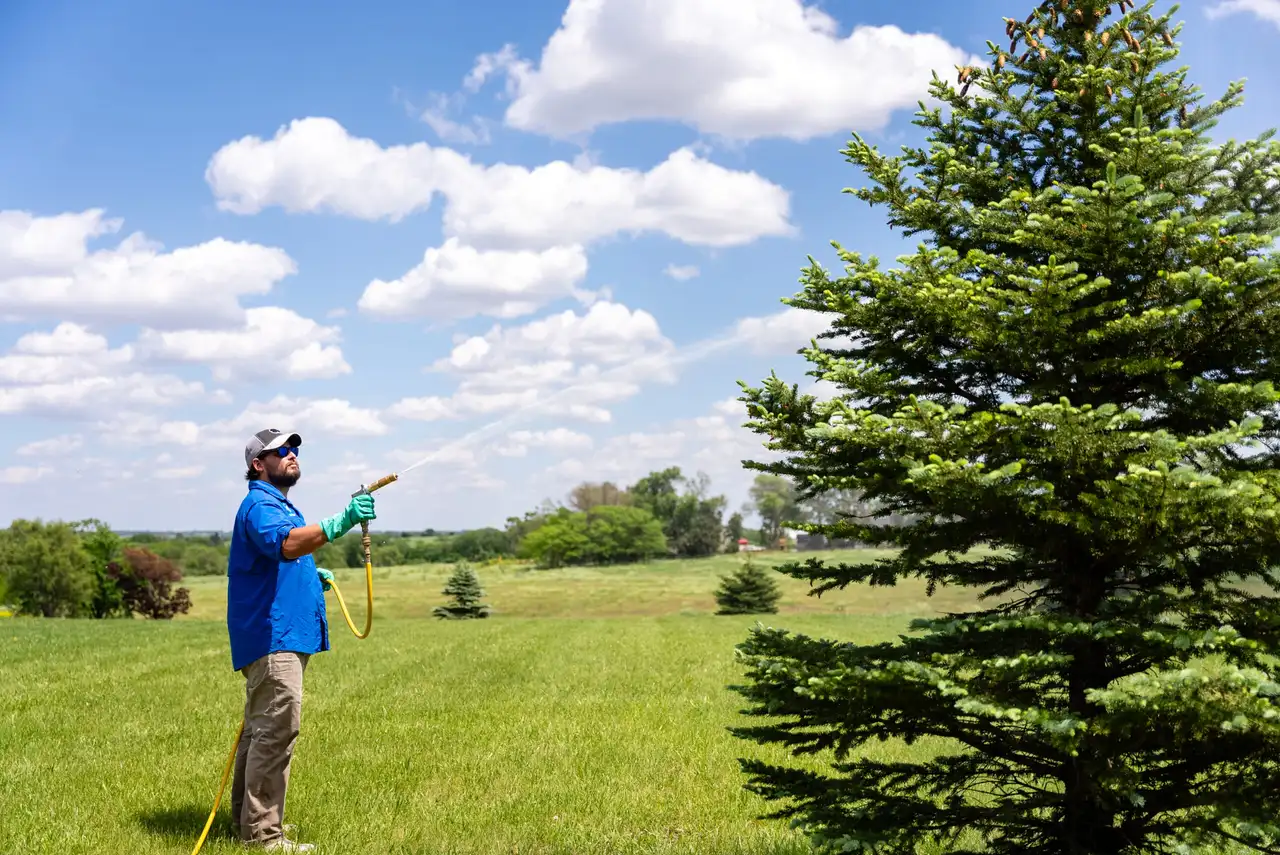
Friend’s rural landscape features shade trees and evergreen windbreaks that are vulnerable to Japanese Beetles and Bagworms. Our professional service protects both tree types with two monthly sprays in June and July. Beetles emerge in early June to attack Lindens and Roses, while Bagworm caterpillars hatch on Junipers and Spruce. This dual-purpose service is highly efficient for rural properties because both pests respond to the same treatment at the same time. This ensures your ornamental plantings and functional windbreaks stay healthy during the peak summer window when these insects are most active and capable of causing permanent damage. What we do:

Linden Trees

Buckthorn Shrubs

Roses

Crabapple Trees

Pear Trees
Friend Treatment Program Structure
Friend Treatment Program Structure — Yard Boss

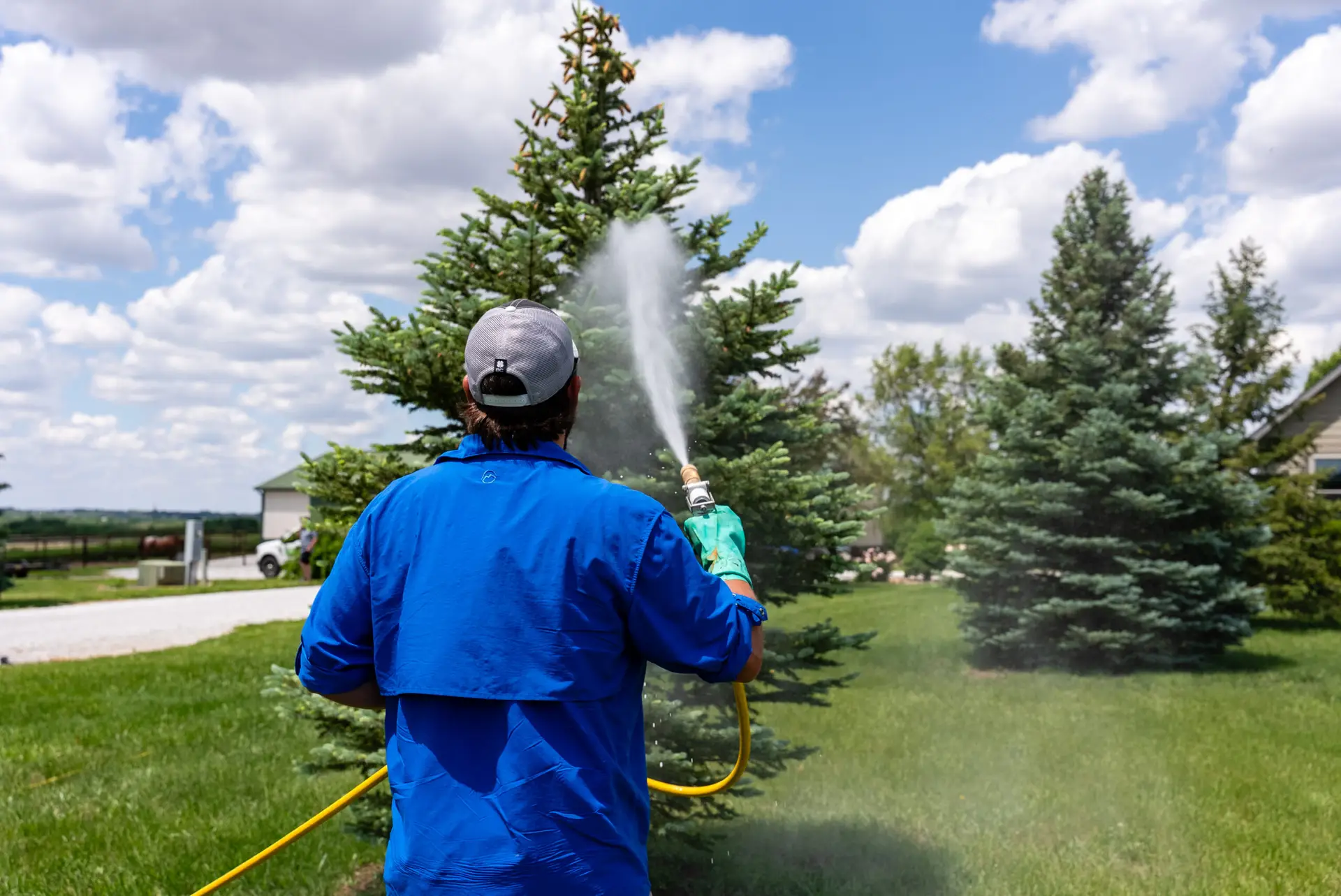
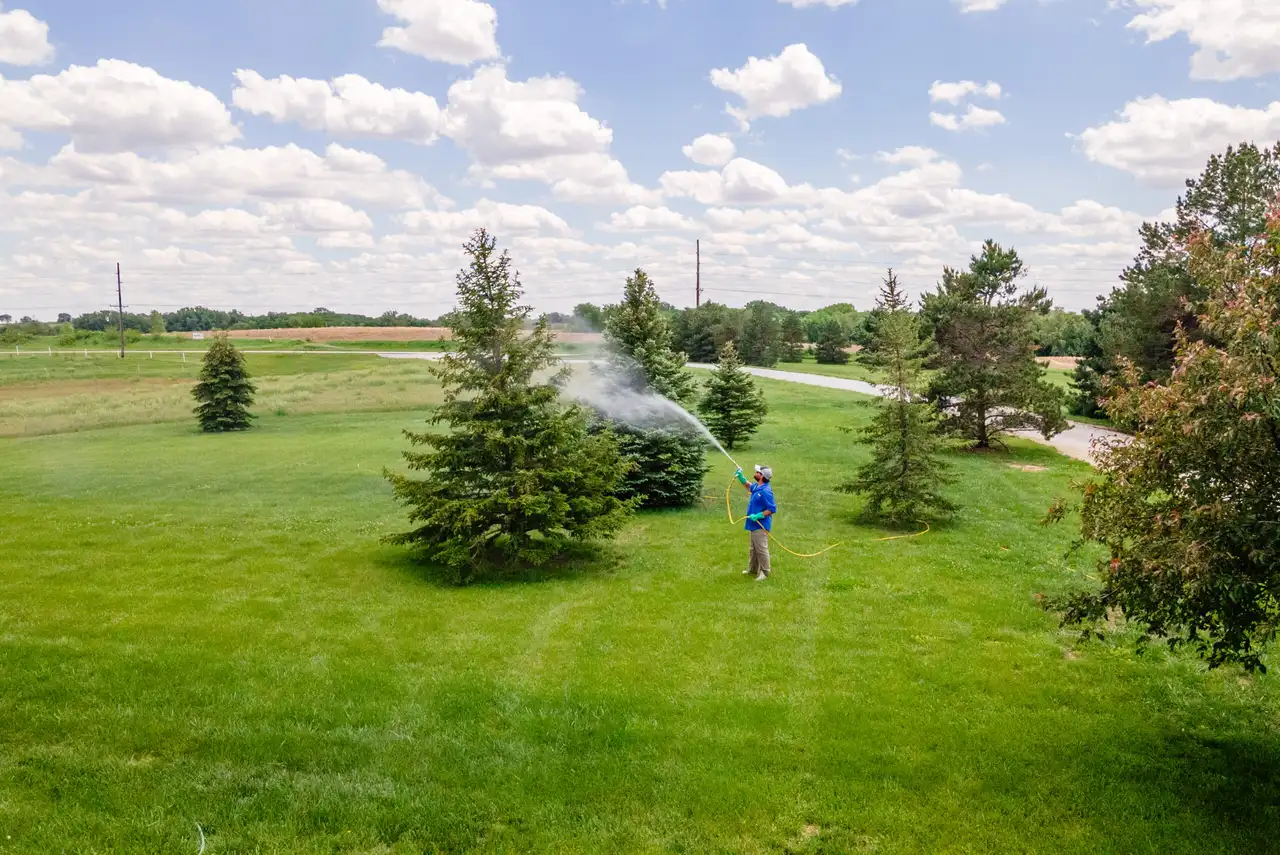
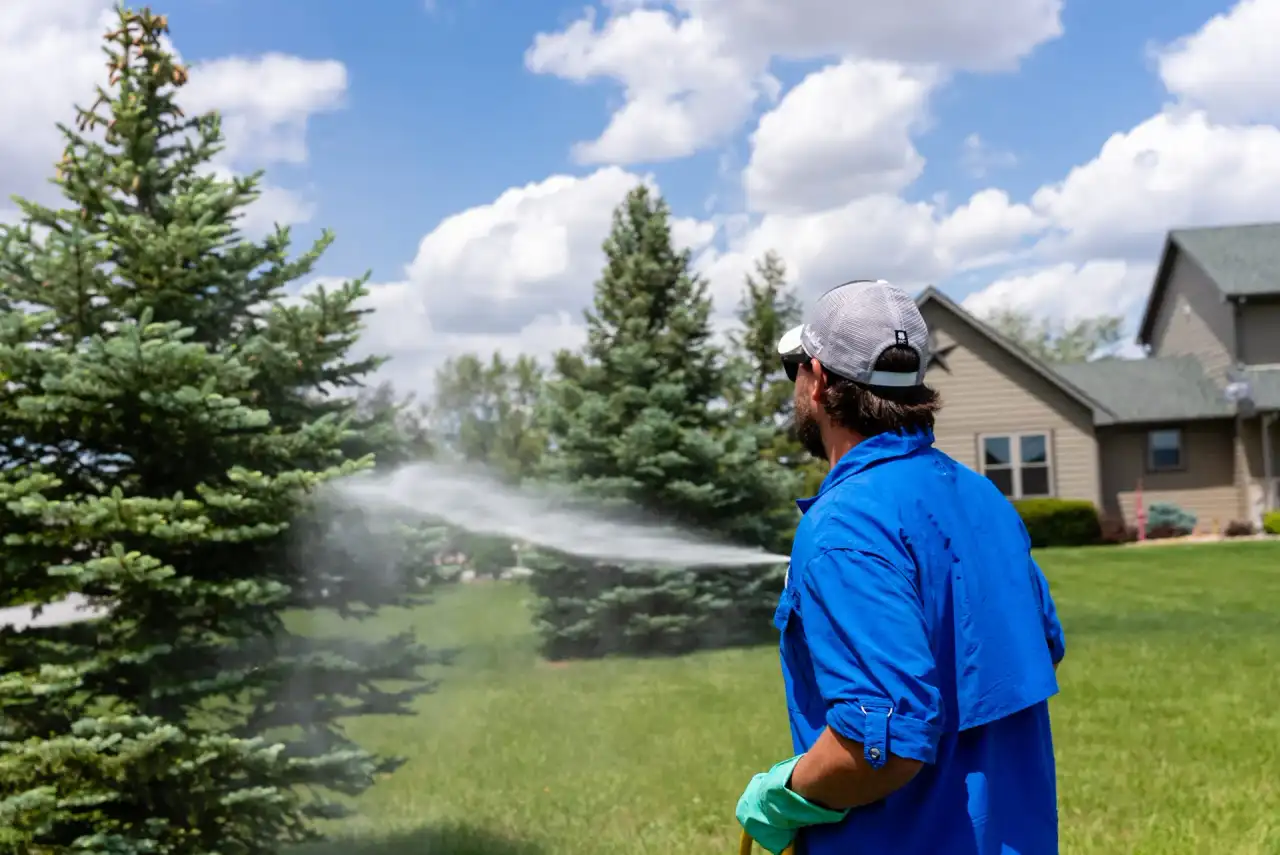
We use professional high-reach equipment capable of spraying 60 feet into tree canopies, which is essential for larger rural trees. The first application in June stops infestations before they build up by catching early beetles and young caterpillars. The second spray in July maintains protection as the first treatment naturally wears off after 3-4 weeks. The medicine kills pests through both contact and ingestion. This two-step program provides continuous coverage throughout the feeding season. We only apply sprays on calm days with low wind to prevent drift and ensure effectiveness.

Japanese Beetles in Friend's Rural Setting

Friend residents should realize that beetles will fly in from surrounding agricultural fields or neighboring properties regardless of local lawn care. You should never use Japanese Beetle traps, as they attract more beetles to your property than they catch. Our foliar sprays kill pests on your trees without drawing in more from the neighborhood. We recommend combining this pest prevention with deep root fertilization. Proper nutrition is especially important for evergreen windbreaks, as it helps them maintain the vigor needed to provide critical wind and property protection year-round.

application schedule

1st application

June

application schedule in Friend, NE — Yard Boss

Preventative + Kills Early Arrivals

Early Japanese Beetles, Young Bagworms

2nd application

July

application schedule in Friend, NE — Yard Boss

Maintains Protection During Peak Feeding

Peak Japanese Beetles, Growing Bagworms
call us today to schedule your service

Permanent Bagworm Damage on Friend Evergreens
Permanent Bagworm Damage on Friend Evergreens — Yard Boss

Bagworms pose an especially serious threat to Friend area evergreens because their damage is permanent and irreversible. This is critical for properties that rely on evergreen windbreaks for protection from wind and privacy. Once a branch loses its needles, it stays bare forever and will never recover. Severe infestations can kill entire windbreak trees or permanently disfigure ornamental specimens. While beetles cause unsightly damage, deciduous trees can regrow their leaves the following spring. Since each bag holds 1,000 eggs, professional treatment in June and July is necessary to avoid an infestation explosion next year.

Our Frequently Asked Questions

At Yard Boss, we understand that you may have questions about our services, processes, and how we can help you achieve the perfect lawn.  Whether you're curious about our lawn care techniques, service areas, or the benefits of professional lawn maintenance, you'll find the information you need right here. If you have any additional questions, feel free to reach out to our friendly team!


If I Have Grub Control On My Lawn, Why Do I Still Get Japanese Beetles?

Japanese Beetles can fly up to 5 miles per day. Even if grub control prevents beetles from emerging from YOUR lawn, beetles are still flying in from:

Neighboring properties without grub control

Ditches, parks, and farm fields

Golf courses and other unmaintained grassy areas

Grub control protects your lawn from grub damage but cannot prevent adult beetles from flying onto your property. That's why foliar (tree) spray is necessary—you must kill the beetles ON your trees to prevent damage.

Will Japanese Beetles Come Back Every Year?

Yes, it is almost certain. If you have them attacking your landscape one year, they will return every year. However, the severity varies year to year based primarily on weather conditions:

Wet spring: More grubs survive = more adult beetles emerge

Dry spring: Some grubs die from drought = fewer beetles

Temperature: Warm early summer accelerates emergence; cool weather delays it

The beetles will keep coming back because they're constantly being produced in untreated areas within flying distance. Annual preventative treatment is the only way to protect vulnerable trees.

Will My Tree Die If I Don't Treat For Japanese Beetles Or Bagworms?

We take precautions to minimize impact on beneficial insects:

Targeted application:  We spray only affected trees, not entire landscapes

Timing:  Applications during June-July target specific pests during their vulnerable stages

Quick dry time: Once dry (1-2 hours), residual impact on pollinators is minimal

Best practice:  we will not spray flowering trees or shrubs.  Pollinators are affected by pest control products that live in the vascular system of trees and plants that they come into contact with while pollinating the flowers.

When Is The Best Time To Treat For These Pests?

June and July are the ONLY effective treatment window. Here's why:

Japanese Beetles: Adults emerge in June and feed through August. Treatment must occur while they're actively feeding.

Bagworms: Eggs hatch in late May/early June. Young caterpillars are vulnerable June-July. By August, they're too large and protected by their bags.

Too early (May): Pests haven't emerged yet; insecticide will be gone before they arrive

Too late (August+): Japanese Beetles are finishing their cycle; Bagworms are too mature to kill effectively

Our 2-application program (one in June, one in July) provides optimal protection during the vulnerable window.

How Quickly Will I See Results After Treatment?

Results depend on the pest and infestation level:

Japanese Beetles: Existing beetles on treated foliage die within 24-48 hours. However, new beetles may fly in daily, so some beetles may still be visible (but damage is greatly reduced).

Bagworms: Young bagworms die within 24-72 hours of contact/ingestion. Older bagworms (late July+) may take longer or require multiple treatments.

Damage prevention: New leaf/needle damage should stop or dramatically decrease within 3-5 days after treatment

Can I Just Hand-pick The Bagworms Instead Of Spraying?

Hand-picking is an option for VERY small infestations (5-10 bags on accessible branches). However:

Labor-intensive: Must find and remove every single bag

Miss one = hundreds more: Each bag contains 500-1,000 eggs. Miss one bag, and next year's infestation will be worse

Accessibility: Many bags are 20-60 feet up in tree canopy—impossible to reach

Timing-critical: Must remove bags before August when eggs are laid

Not preventative: Only removes visible bags; doesn't protect against new arrivals

For any significant infestation or trees over 15 feet tall, professional spray treatment is the only practical solution.

Are The Treatments Safe For Beneficial Insects Like Bees And Butterflies?

We take precautions to minimize impact on beneficial insects:

Targeted application: We spray only affected trees, not entire landscapes

Timing: Applications during June-July target specific pests during their vulnerable stages

Quick dry time: Once dry (1-2 hours), residual impact on pollinators is minimal

Best practice: we will not spray flowering trees or shrubs.

What If I Only Want To Treat Some Of My Trees, Not All?

Absolutely! Many customers choose selective treatment based on:

Tree value: Treat expensive specimen trees or those with sentimental value

Visibility: Treat highly visible trees (front yard, near patio) but not hidden ones

Past damage: Treat trees that showed damage in previous years

Species vulnerability: Prioritize Lindens (Japanese Beetle favorites) spruce, and Junipers (Bagworm favorites)

During the on-site estimate, we'll help you identify which trees are most vulnerable and prioritize treatment based on your budget and concerns.

Other Services Offered In Friend

Learn More with our vlogs

Check out our vlogs for lawn care explanations, tips, and FAQs!

Explaining Each Step of Our Fertilizer & Weed Program

Average Cost of a Yard Boss Lawn

Learn More with our vlogs — Yard Boss

We provide exceptional lawn care and pest control services for residential and commercial properties in the Lincoln and Omaha areas of Nebraska.

Contact

Mon – Fri: 8 a.m. – 5:00 p.m.

Quick Links
Services

Copyright 2026 © All Rights Reserved