Two completely different pests, two different tree types, ONE solution at the same time!
2 Applications: 1 in June & 1 in July
High-Reach Foliar Spraying
Preventative & Curative Treatment
Targeted Application
Photo Documentation
emerald ash borer injections
Custom Pricing
2 Applications: 1 in June & 1 in July

High-Reach Foliar Spraying
Preventative & Curative Treatment
Targeted Application
Photo Documentation
Gretna’s rapid growth has led to many new landscapes featuring shade trees and evergreens that are vulnerable to Japanese Beetles and Bagworms. Our professional service uses two monthly sprays in June and July to protect your landscape investment. Beetles emerge in early June to attack Lindens and Crabapples, while Bagworm eggs hatch on Junipers and Spruce. This program is highly efficient because both pests are active during the same timeframe and respond to the same professional treatment. This ensures your entire yard stays protected from the permanent and unsightly damage these insects cause during the hot summer months. What we do:
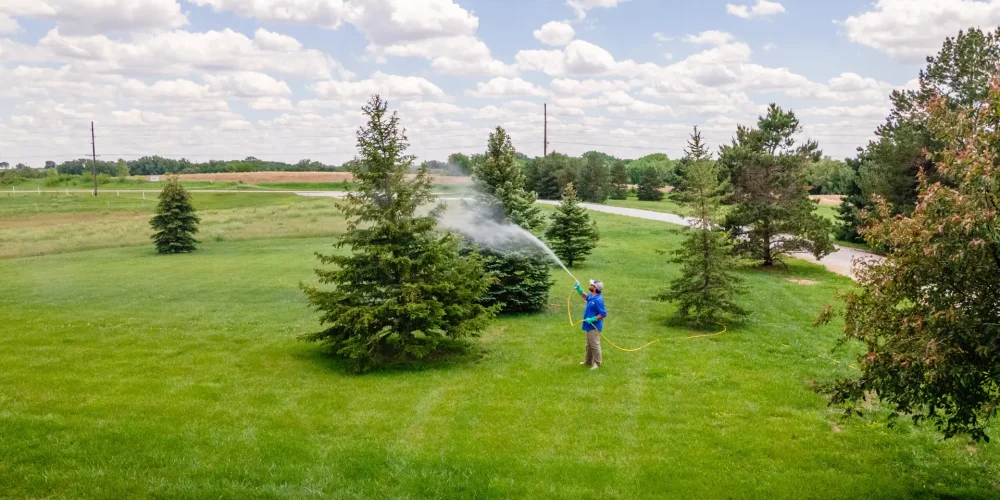
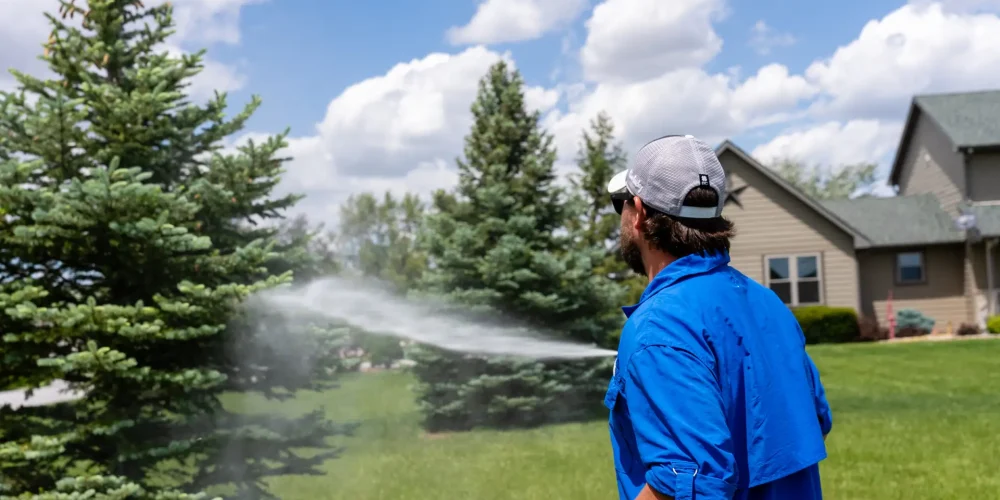
We use specialized high-reach equipment that can spray 30-60 feet into tree canopies to ensure full coverage. The first application in June targets the first emerging beetles and young caterpillars. The second application in July provides continued coverage during peak beetle activity and while bagworms are still small. Two sprays are necessary because the insecticide breaks down over 3-4 weeks due to sun, rain, and new tree growth. The treatment kills pests through both contact and ingestion. This professional method provides a level of protection that consumer-grade sprayers simply cannot achieve for larger trees.
Gretna residents should realize that lawn grub control does not stop adult beetles from flying in from nearby farm fields or unmaintained grassy areas. You should never use Japanese Beetle traps, as they draw many more pests into your yard than they capture. Our sprays kill the pests on your property without attracting more from the neighborhood. We recommend combining pest prevention with deep root fertilization. Proper nutrition helps your trees recover from any damage and maintain the strength needed to resist environmental stress throughout the entire growing season.
1st application
June

Preventative + Kills Early Arrivals
Early Japanese Beetles, Young Bagworms
2nd application
July
Maintains Protection During Peak Feeding
Peak Japanese Beetles, Growing Bagworms
call us today to schedule your service
Bagworms are a serious threat because damage to Gretna’s conifer trees is permanent; needles do not regrow on bare branches. A severe infestation can kill young landscape plantings or permanently ruin mature specimens. While Japanese Beetles skeletonize leaves, deciduous trees can regrow foliage every spring, making that damage temporary. Young bagworms are very vulnerable in June and July, but by August, they seal themselves in bags and become nearly impossible to kill. Starting treatment early is far more effective than reacting after your evergreens have already suffered irreversible needle loss or death.
At Yard Boss, we understand that you may have questions about our services, processes, and how we can help you achieve the perfect lawn. Whether you’re curious about our lawn care techniques, service areas, or the benefits of professional lawn maintenance, you’ll find the information you need right here. If you have any additional questions, feel free to reach out to our friendly team!
Japanese Beetles can fly up to 5 miles per day. Even if grub control prevents beetles from emerging from YOUR lawn, beetles are still flying in from:
Grub control protects your lawn from grub damage but cannot prevent adult beetles from flying onto your property. That's why foliar (tree) spray is necessary—you must kill the beetles ON your trees to prevent damage.
Yes, it is almost certain. If you have them attacking your landscape one year, they will return every year. However, the severity varies year to year based primarily on weather conditions:
The beetles will keep coming back because they're constantly being produced in untreated areas within flying distance. Annual preventative treatment is the only way to protect vulnerable trees.
June and July are the ONLY effective treatment window. Here's why:
Our 2-application program (one in June, one in July) provides optimal protection during the vulnerable window.
Results depend on the pest and infestation level:
Hand-picking is an option for VERY small infestations (5-10 bags on accessible branches). However:
For any significant infestation or trees over 15 feet tall, professional spray treatment is the only practical solution.
We take precautions to minimize impact on beneficial insects:
Absolutely! Many customers choose selective treatment based on:
During the on-site estimate, we'll help you identify which trees are most vulnerable and prioritize treatment based on your budget and concerns.