Yard Boss provides professional tree iron supplementation through direct trunk injection.
Trunk Injection Delivery
Annual Treatment
Rapid Uptake
Visible Transformation
Minimal Invasiveness
Tree Iron Injections
Custom Pricing
Trunk Injection Delivery

Annual Treatment
Rapid Uptake
Visible Transformation
Minimal Invasiveness
Bennington, a growing community in Douglas County northwest of Omaha, combines small-town character with expanding residential development. As Bennington grows, homeowners are investing in quality landscaping with popular tree species like pin oak, river birch, and red oak. However, our region’s alkaline soil creates iron deficiency that prevents these trees from reaching their full potential. Pale, yellow-green foliage indicates trees are iron-starving despite iron being abundant in the soil. Yard Boss provides trunk injection services that solve this soil chemistry problem and deliver the dramatic transformation Bennington trees deserve. Trees most susceptible to iron deficienty:
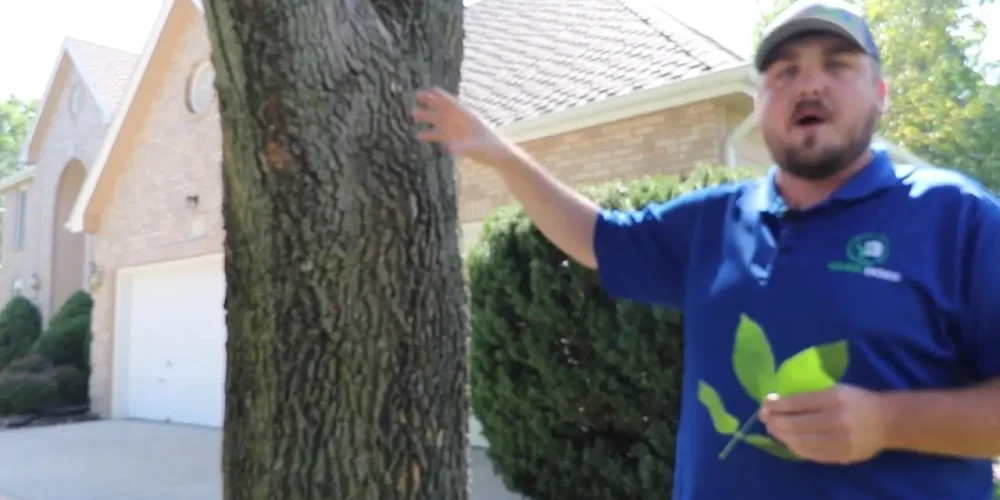
Yard Boss maintains high standards throughout Bennington. Our process includes on-site assessment where we identify trees, measure trunk diameter, and assess overall tree health to ensure treatment is appropriate. We confirm species to verify trees are good candidates for iron injection. Our health evaluation determines if trees are healthy enough to benefit from treatment. We provide custom quotes based on measured diameter and number of trees being treated. You’ll receive day-before notification via your preferred method (text or email). We use professional Arbor Systems injection equipment with proper placement, depth, and spacing to ensure effective treatment with minimal tree stress. After treatment, you’ll see gradual color transformation over 2-4 weeks, with full deep green development by mid-season. Annual treatment maintains these results year after year, keeping your Bennington trees at their vibrant best.
Bennington homeowners sometimes ask about alternatives to trunk injection. Here’s why our method is the professional standard for treating iron chlorosis: Trunk injection provides excellent effectiveness with 100% absorption and full season duration from one annual treatment. It’s the only method that bypasses soil pH problems entirely by delivering iron directly into the vascular system, achieves complete product utilization (all injected iron is absorbed and used), and works reliably in Nebraska’s alkaline soils regardless of pH level. Compare this to foliar spray (poor, temporary results requiring monthly reapplication), soil application (fair, variable results with most product remaining unavailable), and soil acidification (ineffective long-term as pH rebounds). Trunk injection is why this is the professional standard throughout the tree care industry for treating iron chlorosis in alkaline soil regions.
Spring (Optimal)
April – June

Tree Activity
Peak nutrient uptake, leaves expanding, & high transpiration
Treatment Effectiveness
Excellent – Fastest visible results (2-3 weeks)
Summer
July – August
Tree Activity
Active growth and transpiration high in healthy trees
Treatment Effectiveness
Excellent – Good uptake, results visible in 3-4 weeks
Early Fall
September
Tree Activity
Trees still active, nutrient storage for winter
Treatment Effectiveness
Good – Uptake slower but effective; benefits visible next spring
Late Fall
October – November
Tree Activity
Trees preparing for dormancy, reduced activity
Treatment Effectiveness
Fair – Limited uptake; mainly benefits next year
call us today to schedule your service
Iron injection can be scheduled anytime trees are actively taking up nutrients, from spring through early fall. Spring (April-June) is optimal timing—trees experience peak transpiration and nutrient uptake during leaf expansion, delivering fastest visible results (color change in 2-3 weeks) with trees benefiting the entire growing season. Summer (July-August) provides excellent timing—trees are still in active growth with high transpiration in healthy trees, showing good uptake and results visible in 3-4 weeks. Early fall (September) works well—trees are still active and storing nutrients for winter, though uptake is slower with benefits often most visible next spring. Late fall (October-November before leaf drop) is fair timing—trees are preparing for dormancy with reduced activity, providing limited uptake that mainly benefits the next year. Winter (December-March) is not recommended—trees are dormant with vascular system inactive or minimal, so we wait until spring for treatment.
At Yard Boss, we understand that you may have questions about our services, processes, and how we can help you achieve the perfect lawn. Whether you’re curious about our lawn care techniques, service areas, or the benefits of professional lawn maintenance, you’ll find the information you need right here. If you have any additional questions, feel free to reach out to our friendly team!
Your trees have iron deficiency because of Nebraska's alkaline soil, not because there's no iron in the soil. Here's the explanation:
How to tell if your trees are iron-deficient:
Most common on: Pin oak, river birch, red oak, silver maple—these are "acid-loving" trees that struggle in alkaline soil
Iron injection can be done anytime the tree is actively taking up nutrients, which means anytime from spring leaf emergence through early fall before dormancy.
Best Timing by Season
Our recommendation: Spring is ideal for fastest results, but summer treatment works great too. If you're noticing pale foliage in July, treat now—don't wait until next spring!
No! Trees heal from injection wounds quickly and easily. Here's why you don't need to worry:
Trees regularly survive wounds from:
Our tiny injection points are minor compared to wounds trees naturally handle. The benefit (vibrant green foliage and improved photosynthesis) greatly outweighs the minimal, temporary stress of small injection points.
Your tree will continue to struggle with iron deficiency. Here are the consequences:
Short-Term (This Season)
Long-Term (Multiple Years)
The "Opportunity Cost"
You planted this tree (or bought a property with it) because you wanted a beautiful, healthy shade tree adding value to your property. Iron deficiency means you're getting 50-70% of the tree's potential beauty and only 60-80% of its potential growth. Treatment unlocks the tree's full potential—the vibrant green color and vigorous growth you expected when planting it.
No—iron injection is an annual treatment because the underlying soil problem (alkaline pH) is permanent. Think of it like taking a daily vitamin:
Why not permanent? The alkaline soil constantly prevents root iron uptake. Annual trunk injection bypasses this problem, but only for one season. It's not that treatment wears off—it's that the tree can't get iron from soil on its own and needs the annual supplement.
If tree already has deep green foliage, it probably doesn't need iron treatment. Either:
We assess each tree individually. If foliage is already vibrant green, we'll tell you treatment isn't needed—we don't sell unnecessary services.
Young trees benefit from iron injection, but considerations:
As young trees mature and trunk diameter increases, trunk injection becomes the most effective long-term solution.
Great news—tree height doesn't matter for trunk injection! We inject at trunk at breast height (4-5 feet up), not in the canopy. Tree can be 10 feet or 100 feet tall—injection method is the same. Iron is transported throughout tree via vascular system regardless of height.