Core Aeration
Aeration and Overseeding: The Fall One-Two for a Thicker Nebraska Lawn
Yard Boss • September 2026 • Lincoln / Crete, NE • 7 min read

Short Answer: Aeration and overseeding work far better together than either does alone, and fall is the ideal time to combine them on a Nebraska lawn. Aeration pulls plugs that open the soil, and overseeding drops fresh cool-season seed right into those openings where it has the soil contact, moisture, and protection it needs to germinate. That seed-to-soil contact is the single biggest factor in whether new grass takes. Done in early fall, the new seedlings have warm soil, cool air, and low weed pressure to establish before winter. For a thin, tired, or patchy Lincoln area lawn, this pairing is the most dependable way we know to build thickness back into the turf before the snow flies.
If you have ever spread grass seed on a bare patch, watered it faithfully, and watched most of it wash away or dry out before it ever sprouted, you already understand the problem we are about to solve. Seed sitting on top of hard soil is seed that mostly gets wasted. It feeds the birds, rolls into the low spots, and bakes on the surface. The grass you were hoping for never really had a chance.
Across the Lincoln and Crete lawns we work on, thin turf is one of the most common frustrations we hear about, and overseeding is the answer people reach for. The part that gets missed is that overseeding works best when the soil is ready to receive the seed. That is exactly what aeration does, which is why we almost never do one without the other in fall.
Why Seed-to-Soil Contact Decides Everything
A grass seed needs three things to wake up and grow. It needs steady moisture, it needs contact with actual soil, and it needs protection from drying out and from getting eaten or blown away. Sitting on top of a compacted lawn, seed gets almost none of that. The surface dries quickly, the seed cannot root into packed ground, and much of it never makes it.
Now picture that same seed after aeration. The lawn is dotted with thousands of small holes, each one a little pocket of loose, open soil that holds moisture longer than the hard surface around it. Seed falls into those pockets and lands right where it needs to be, tucked against soil, shaded from the wind, holding water. The germination rate climbs dramatically. That is the whole idea behind combining the two. Aeration builds the nursery, and overseeding fills it.
Why Cool-Season Lawns Love a Fall Overseed
The grasses we grow around Lincoln, Kentucky bluegrass, fescue, and ryegrass, are cool-season types. They do their strongest growing when the air is cool but the soil still holds summer warmth, and that describes our early fall almost perfectly. New seed germinates fast in warm soil, then the mild fall weather lets the young plants grow roots without the stress of summer heat.
Fall also keeps the competition down. In spring, every warm week wakes up crabgrass and other weeds that race your new grass for space and light, and you cannot use most pre-emergent weed control because it stops your grass seed from sprouting too. In fall, those summer weeds are fading instead of starting, so your new seedlings get a clear runway. By the time next summer arrives, fall-seeded grass has a full season of root growth behind it and stands up to our heat far better than anything started in spring.
Choosing the Right Seed for Our Area
Overseeding is only as good as what goes down, so seed choice matters. For most Nebraska lawns we favor quality cool-season blends built for our climate, often combining Kentucky bluegrass, fescue, and ryegrass so the lawn gets the strengths of each. Shady sections near tree lines or on the north side of the house call for a blend built for lower light, while open, sunny yards can take a more sun-loving mix. Matching the seed to the conditions on your property is part of what makes the difference between a lawn that fills in and one that stays patchy.
We also steer people away from cheap bargain seed, which often carries filler, weed seed, and annual grasses that look fine for a season and then disappear. Good seed costs a little more up front and saves you from reseeding the same spots next year, which is a better deal in the long run.
What the Process Looks Like
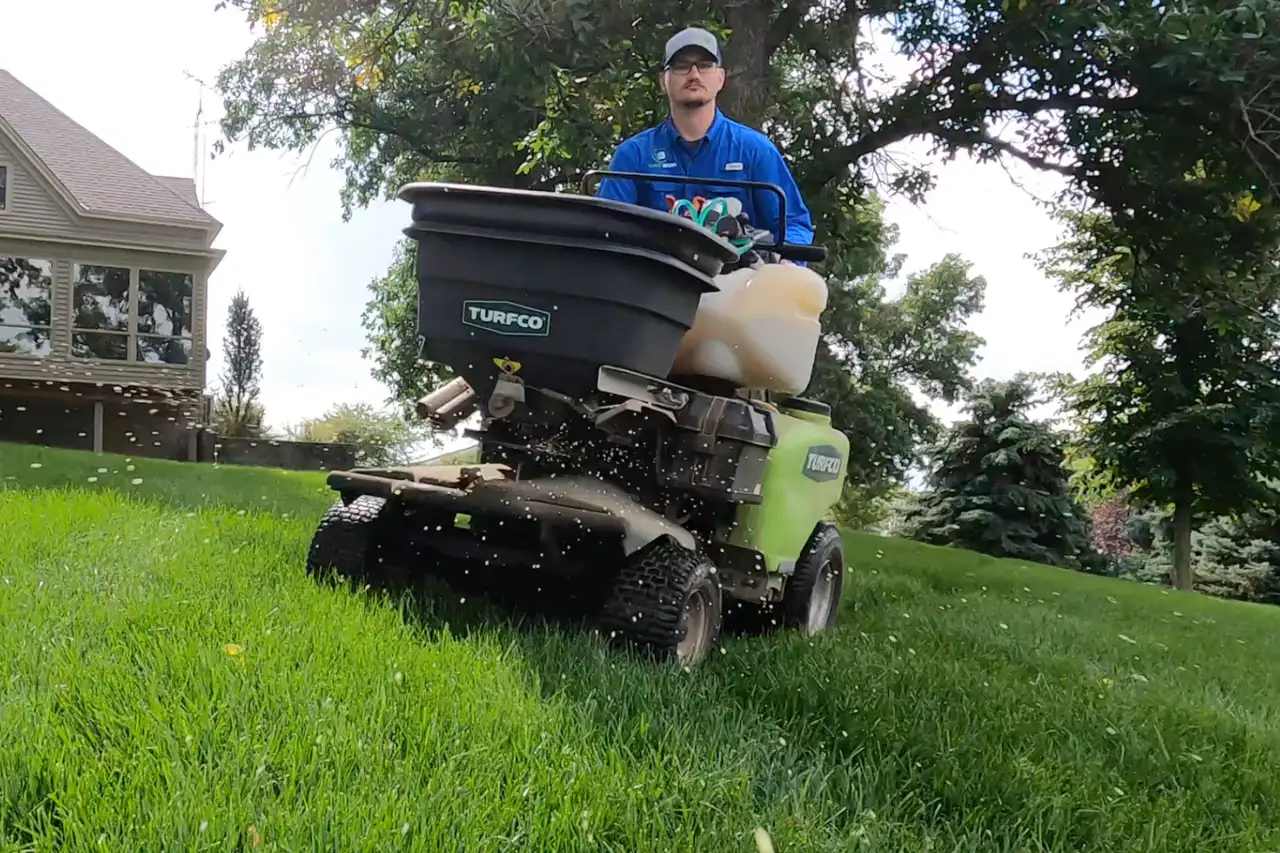
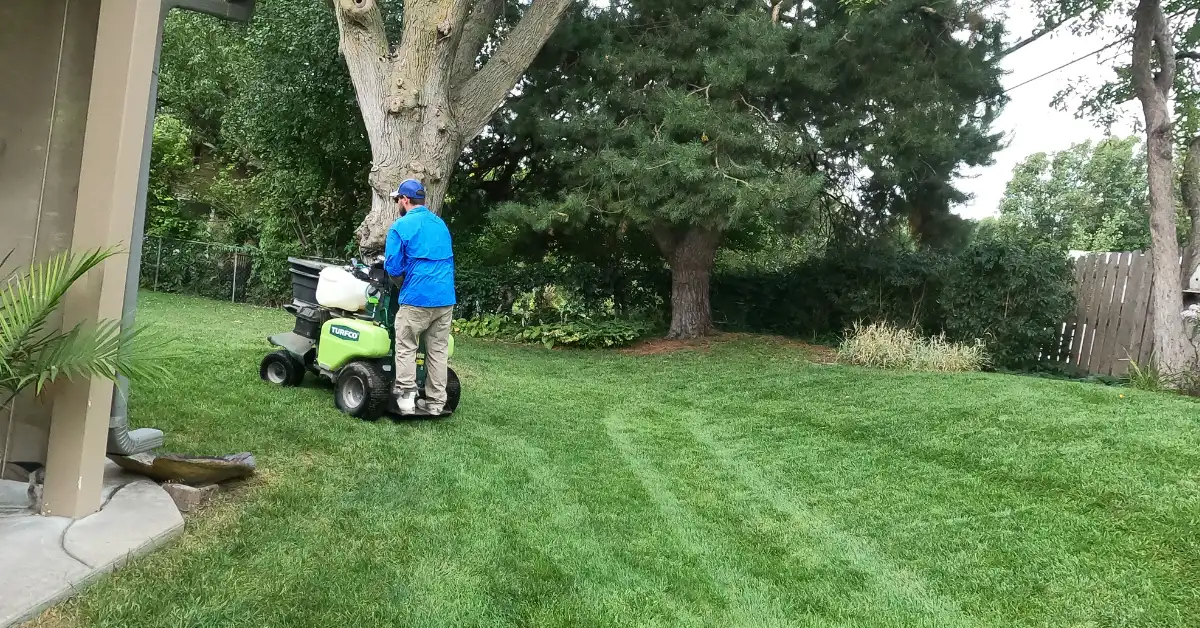
Here is what to imagine on the day. First we mow a little shorter than usual and clear debris so seed can reach the ground. Then we aerate the whole lawn, pulling cores across every area, with extra attention to the thin and compacted spots. Next we spread the seed at the right rate for your lawn, working it into the freshly opened soil. Many lawns also get a starter feeding at this stage, since new seedlings are hungry and a starter product gives them the nutrients they need to build roots.
You will see the plugs sitting on the surface afterward, and that is normal. Leave them. They break down on their own over the next couple of weeks and return good soil and organic matter to the lawn. Within a couple of weeks you should see new grass beginning to fill in, thin at first, then thickening as the young plants mature.
The Watering Window That Makes or Breaks It
The most important part after we leave is water, and this is where we ask homeowners to partner with us. New seed needs consistent moisture to germinate, which usually means light watering once or twice a day for the first couple of weeks, just enough to keep the surface damp without creating puddles. Once the new grass is up and growing, you can taper back to deeper, less frequent watering that pushes roots down.
Skip the watering and even the best aeration and seeding job will underperform, because the seed in those open pockets still needs moisture to sprout. New grass also should not be mowed until it reaches mowing height and should not get weed control until it has been mowed a few times, since those products can wipe out grass that has not matured. We will walk you through exactly how much and how often based on the weather that week, so you are not left guessing.
Getting It Done Before Winter
There is a real deadline to fall overseeding in Nebraska, and it is worth respecting. New grass needs enough time to germinate and establish before the ground gets cold and growth stops for the season. Seed that goes down too late in the fall may not have the weeks it needs to root in, which leaves tender young grass heading into a hard Nebraska winter underprepared. That is why we treat early fall as the window and encourage homeowners not to put it off.
Get the aeration and overseeding done with enough runway, and the new grass establishes, roots in, and goes into winter as part of a thicker lawn. Come spring, after the snow melts and the ground warms, that fall-seeded grass takes off as a full, even stand rather than a lawn full of thin spots. The timing is the difference between a fall overseed that pays off next year and one that runs out of season.
What to Do Next
If your lawn has thinned out, gone patchy, or just never looks as full as you want it to, fall is the season to change that, and aeration paired with overseeding is the most reliable way we know to do it. The window in our area is early fall, so the time to plan it is now, before the growing weather runs out.
For over 18 years, Yard Boss has helped families across Lincoln, Crete, and southeastern Nebraska grow thicker, healthier lawns. If you would rather have someone handle the aeration, overseeding, and follow-through for you, we are here for that. Call us at 402-588-4222 or visit yardbosslawns.com, and we will build a plan to get your lawn filled in before winter.