Fertilization
The Fall Fertilization Mistakes We See Most Often Around Lincoln
Yard Boss • October 2026 • Lincoln, NE • 7 min read
Short Answer: The most common fall fertilization mistakes we see around Lincoln are stopping too early, applying the late-season feeding too late, choosing products by the name on the bag instead of the nutrient numbers, uneven spreading that shows up as stripes next spring, and fertilizing over a layer of leaves. Others include skipping fall weed control, scalping the lawn on the last mow, and leaving granules on hard surfaces. Each one is easy to fix once you know to look for it, and correcting them is often the difference between a thin spring lawn and a thick one.
If you are someone who takes care of your own lawn, you have probably had the experience of doing everything you thought was right in the fall, only to watch the lawn come out of winter thin, streaky, or full of dandelions. It is frustrating, because the effort was real. Something just did not add up.
We see this a lot. When we sit down with new customers in the spring, many of them tell us they fertilized last fall and are not sure why the lawn did not respond. Usually, the answer is not a lack of effort. It is one or two small missteps in timing or technique. Here are the ones we see most often across Lincoln and the surrounding area, along with how to avoid each one.
Mistake One: Calling the Season Over Too Soon
Many homeowners fertilize once in early fall and then put the spreader away for the year. The September feeding is important, but for Kentucky bluegrass and tall fescue, it is only half of the fall opportunity.
The late-season application, made once the grass has mostly stopped growing on top but is still green, is the one that builds stored energy for winter and fuels an early, even green-up next spring. Skipping it means leaving one of the most valuable feedings of the year on the table. If the mower is getting less use but the lawn still has color, that is not the end of the season. That is the window.
Mistake Two: Waiting Too Long
The opposite mistake is waiting until the ground is frozen or the grass is fully brown. Once the lawn goes dormant and the soil freezes, the roots cannot take up nutrients. Fertilizer sitting on frozen ground does not help the grass, and when the snow melts or heavy rain comes, much of it can wash off the lawn and into storm drains.
Nebraska weather makes this tricky. A mild late October can turn into a hard freeze with very little warning. Here is what we have found works best: plan the late-season feeding for late October to early November, keep an eye on the forecast, and get it down while the grass is still green rather than chasing a perfect date on the calendar.
Mistake Three: Shopping by the Label
The fertilizer aisle is full of products with seasonal names like fall lawn food and winterizer. Those names are chosen for marketing and do not guarantee anything about what is inside. Two products with the same name can have very different nutrient ratios.
The three numbers on the bag tell the real story: nitrogen, phosphorus, and potassium. For cool-season lawns in the fall, nitrogen is the nutrient that matters most. Phosphorus is rarely needed on established lawns in our area unless a soil test shows a shortage. Choosing a product by its numbers instead of its name avoids a lot of wasted money.
Mistake Four: Uneven Spreading
This is the mistake that shows up most visibly. Imagine looking out next April and seeing dark green stripes alternating with pale stripes across the lawn, or a darker ring around the edges where you turned the spreader. That pattern almost always comes from uneven application the previous fall or spring.
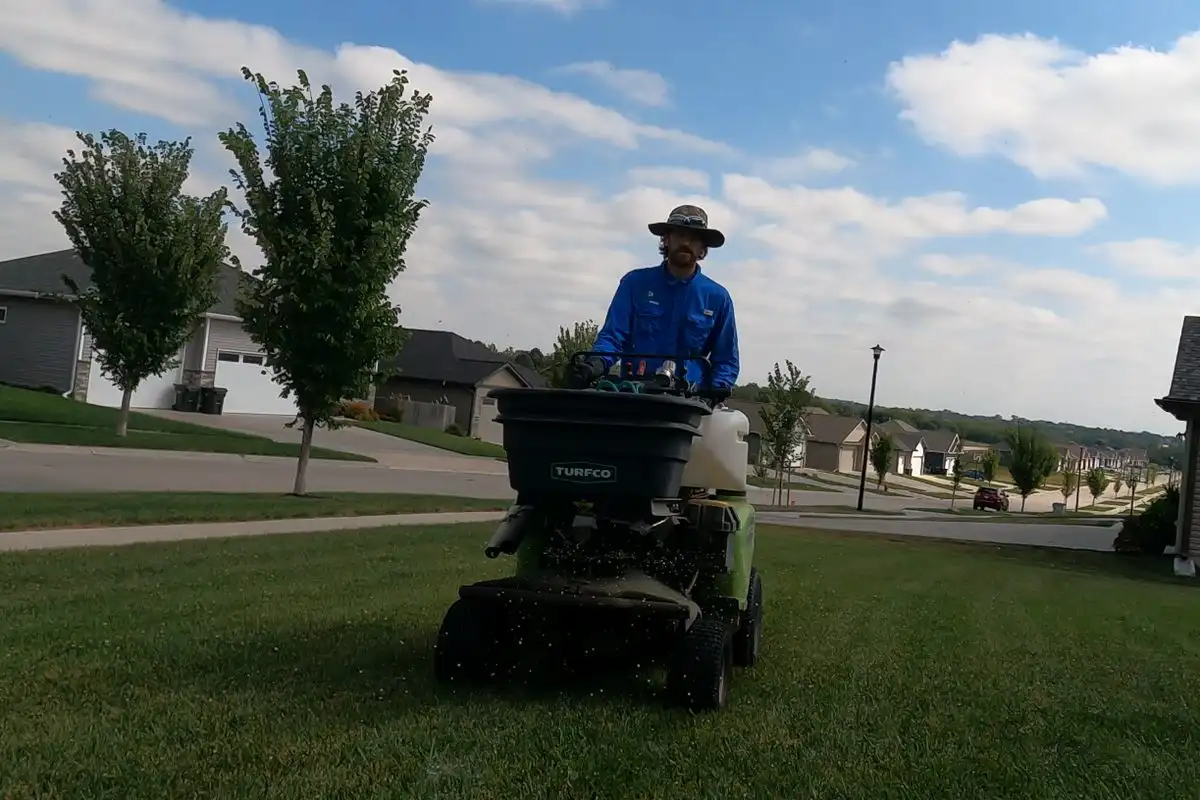
Most uneven spreading comes from a few causes. The spreader setting on the bag is a starting point, but it does not account for your particular spreader, how fast you walk, or how worn the equipment is. Gaps happen when passes do not overlap enough, and burned or extra-dark strips happen when they overlap too much or when the spreader is left open while turning.
A simple technique helps a lot. Set the spreader at half the recommended rate, walk the lawn in one direction, then walk it again at a right angle. Close the spreader at the end of each pass before turning. It takes a little longer, but the results are far more even.
Mistake Five: Fertilizing Over Leaves
By late October, many lawns around Lincoln are partly covered with leaves from maples, oaks, and other shade trees. Spreading fertilizer on top of a leaf layer means many of the granules never reach the soil. They sit on the leaves, get raked or bagged up later, and leave thin coverage underneath.
Leaves matted down on the lawn cause their own problems, too. They block sunlight the grass still needs in fall and can trap moisture that encourages disease. Mulching light leaf cover with the mower or clearing heavier layers before applying fertilizer helps both the lawn and the feeding.
Mistake Six: Skipping Fall Weed Control
Fall is the best time of year to control perennial broadleaf weeds like dandelions, clover, and creeping Charlie. As temperatures cool, those weeds send energy down into their roots for winter, and a weed control product applied during that window travels down with it. Fall-treated weeds are much less likely to come back in spring than weeds treated in April.
Many homeowners focus only on fertilizer in the fall and wait until spring to deal with weeds. By then, the weeds are flowering and seeding, and they are harder to control. Pairing fall fertilization with fall weed control is one of the best ways to start next year with a cleaner lawn.
Mistake Seven: Scalping on the Last Mow
Some homeowners drop the mower deck way down for the final mow of the year, hoping to tidy the lawn up for winter. A slightly shorter final cut can help reduce matting under snow, but cutting too low removes the leaf tissue the grass needs to keep making energy in late fall and can stress the crowns heading into winter.
For bluegrass and fescue, keeping the mowing height around three inches through the fall and only lowering it modestly on the final cut is usually the healthiest approach.
Mistake Eight: Leaving Granules on Hard Surfaces
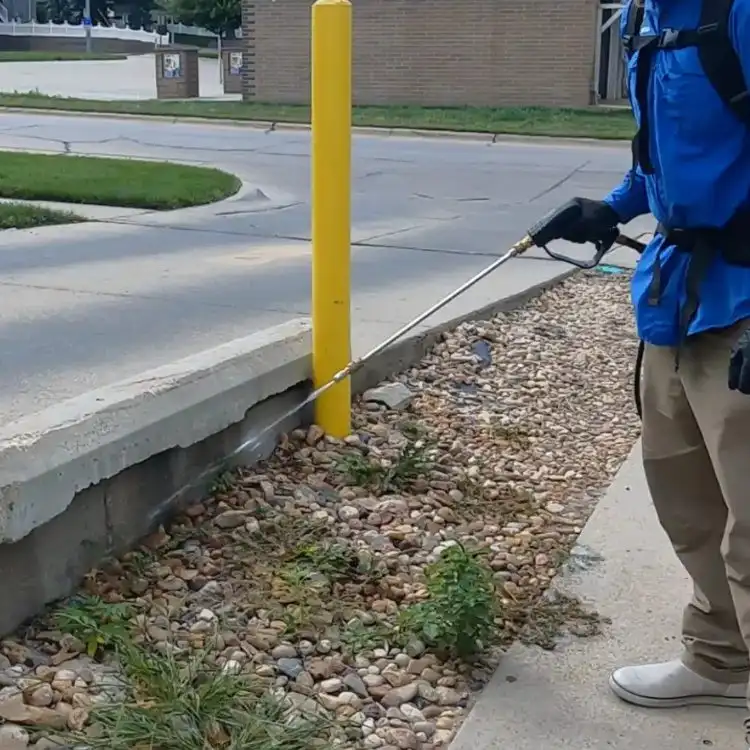
It is easy to toss fertilizer onto the driveway, sidewalk, or street while spreading along the edges. Those granules do not help the lawn, and when it rains, they wash into storm drains and eventually into local streams and lakes. A quick sweep or pass with a blower to move them back onto the grass solves the problem in a minute or two. Many spreaders also have an edge guard that limits how far granules are thrown along hard surfaces.
What Getting It Right Looks Like
Imagine this. It is early April. Your lawn is greening up evenly, without stripes or rings. The dandelion patch along the fence is gone. Thin spots from last summer have filled in. You did not do anything heroic. You just timed the fall feedings well, spread them evenly, cleared the leaves first, and took care of the weeds while they were most vulnerable.
What to Do Next
If you are handling fall fertilization yourself this year, here is our short checklist. Make sure the early fall feeding is done, then plan the late-season application for late October to early November while the grass is still green. Read the nutrient numbers rather than the label name, spread at half rate in two directions, clear heavy leaf cover first, consider a fall weed control application if dandelions or clover were a problem this year, and sweep any granules off hard surfaces.
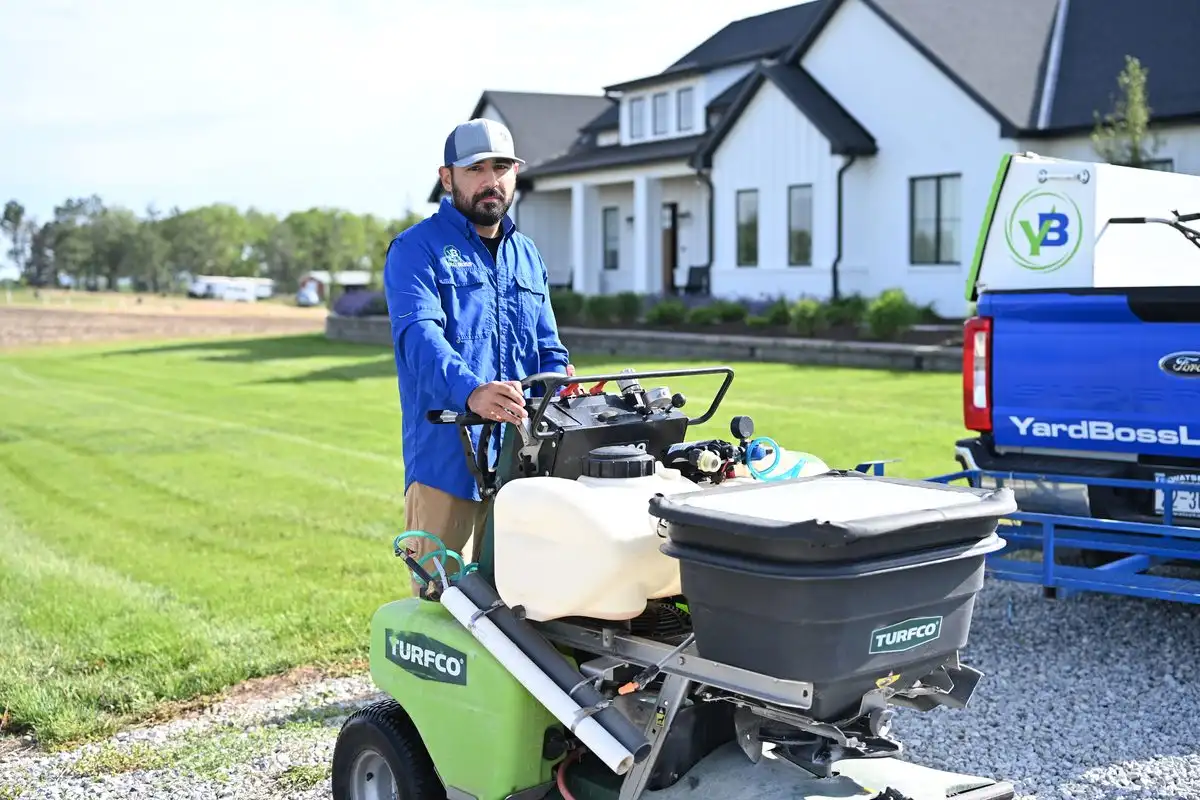
If you would rather have someone else handle the timing, product selection, and application for your lawn, we are here for that. Yard Boss serves Lincoln, Crete, and the surrounding area. Call 402-588-4222 or visit yardbosslawns.com to request a free quote.
Here is what to expect. A licensed Yard Boss applicator will walk your lawn, look for the trouble spots that come from these common mistakes, and explain what we would do this fall to correct them. We use commercial equipment calibrated for even coverage, let you know before we come out, and tell you what to do afterward so each application has the best chance to work.