Fertilization
Why Fall Is the Most Important Time to Fertilize Your Lincoln Lawn
Yard Boss • October 2026 • Lincoln, NE • 8 min read
Short Answer: For the Kentucky bluegrass and tall fescue lawns common around Lincoln, fall is the single most valuable season to fertilize. As the weather cools, cool-season grass shifts its energy from top growth to roots, new shoots, and stored food reserves. Feeding during that window builds a thicker, deeper-rooted lawn that greens up earlier next spring and holds up better against summer heat, drought, and weeds. Here is what we have found works best: an early fall feeding in September, followed by a late-season application in late October or early November while the grass is still green but no longer growing much.
If you are looking out at your lawn this month, you might be thinking the season is basically over. The mower is getting less use, the leaves are starting to come down, and the idea of putting fertilizer on grass that is about to go dormant may feel like throwing money at the snow.
That is one of the most common things we hear from homeowners in October, and it makes complete sense. Most of us were raised on the idea that spring is when you feed the lawn. Garden centers fill their aisles in April, the neighbors all start spreading at the first warm weekend, and fall fertilizer feels like an afterthought. The honest answer is that for the lawns we care for around Lincoln, it is the other way around. Fall is where the real work gets done.
What Cool-Season Grass Is Doing Right Now
Nearly every lawn in our part of Nebraska is a cool-season grass. Kentucky bluegrass is the classic choice, with its soft texture and deep color. Tall fescue is common in newer neighborhoods and on acreages because it handles heat and drought a little better. Many lawns are a blend of the two, sometimes with perennial ryegrass mixed in.
These grasses grow best when air temperatures sit in the 60s and 70s. That means they have two strong growing seasons each year: spring and fall. Summer is a survival season. When July and August bring heat and dry spells, cool-season grass slows down, sometimes going semi-dormant, and lives off whatever reserves it built up earlier.
Fall is different from spring in one important way. In spring, the grass is focused on pushing out leaf blades as fast as it can. In fall, as days shorten and nights cool, the plant shifts its priorities underground. It grows roots, sends out new shoots (called tillers in fescue and rhizomes in bluegrass), and stores carbohydrates in its crowns and roots for the winter ahead.
Imagine your lawn building a savings account. Every bit of energy it banks this fall is money it can spend next April when it breaks dormancy, and again next July when the heat arrives. Fall fertilization is how we make sure there is something to deposit.
Why Fall Beats Spring for Feeding
When fertilizer goes down in early spring, the grass uses most of it to grow leaves. That gives you a fast burst of green, but it also means more mowing, a thinner root system relative to all that top growth, and a lawn that can struggle once summer stress arrives. Heavy spring feeding can also encourage certain lawn diseases that thrive on lush, tender growth.
Fertilizer applied in the fall is used differently. Because the plant is already prioritizing roots and density, the nutrients go toward building the parts of the lawn you do not see. The result is a lawn that comes out of winter thicker and greener, often a couple of weeks ahead of lawns that were not fed in the fall.
That density pays off in another way, too. A thick lawn leaves very little room for weeds. Dandelions, clover, and crabgrass all need open soil and sunlight to get established. When the turf fills in tightly, it crowds them out naturally. Across the properties we care for, the lawns with the fewest weed problems in May are almost always the ones that were fed well the previous fall.
The Two Fall Feedings That Matter
Most of the strong fall programs we see around Lincoln include two applications, each with a different job.
The first comes in early fall, usually in September. Temperatures are dropping, the summer stress is over, and the grass is ready to recover and grow. This feeding helps the lawn repair thin areas left behind by heat, drought, or insects, and it supports the burst of root and shoot growth that happens in early fall. If a lawn was aerated or overseeded in late summer, this is also the feeding that helps new grass get established.
The second is the late-season application, which is the one most homeowners skip. It goes down after the grass has mostly stopped growing on top but while the blades are still green, typically from late October into early November in our area. At that point, the grass is no longer turning nutrients into leaf growth. Instead, it moves them into storage in the roots and crowns. That stored food is what fuels a strong, even green-up the following spring, without the surge of top growth that comes with heavy spring feeding.
Timing the late-season application is part science and part reading the weather. Nebraska falls can swing from shirt-sleeve afternoons to a hard freeze in a matter of days. Here is what we have found works best: watch for the point when the mowing slows way down and the lawn still holds its color. That is the window.
What the Fertilizer Should Look Like
Every bag of fertilizer lists three numbers, which stand for nitrogen, phosphorus, and potassium. For cool-season lawns in the fall, nitrogen is the main event. It is the nutrient grass uses most, and fall is when cool-season turf can use it most efficiently.
Potassium plays a supporting role. It helps grass handle stress, including cold and drought, and some fall blends include more of it. Whether a lawn actually needs extra potassium is best answered by a soil test, since many soils in our area already have plenty.
Phosphorus is usually only needed in small amounts, and often not at all on established lawns unless a soil test shows a shortage. Many of the soils around Lincoln lean alkaline, and they tend to hold onto phosphorus well.
The form of nitrogen matters too. Some fertilizers release quickly and others release slowly over several weeks. For the early fall feeding, a blend that includes slow-release nitrogen gives the lawn steady nutrition through the growing window. For the late-season feeding, a quicker-release source is often preferred because the grass needs to take it up before the ground freezes.
What Happens If You Skip Fall Feeding
A lawn that skips fall fertilization does not usually look bad right away. It may stay green into November just like the lawn next door. The difference shows up months later.
In spring, an unfed lawn tends to wake up slower and paler. Thin spots from last summer are still thin. Weeds find those gaps quickly, and by Memorial Day the homeowner is fighting dandelions and clover that a thicker lawn would have kept out. Then, when the first hot, dry stretch arrives, a lawn with shallow roots and low reserves is the first to go brown and the slowest to recover.
None of this is a disaster, and it can be turned around. But it is a lot easier and less expensive to build the lawn up in the fall than to repair it the following summer.
A Few Simple Habits That Help
Fall fertilization works best alongside a few good habits. Keep mowing at a healthy height, generally around three inches for bluegrass and fescue, until the grass stops growing. Keep leaves from piling up and matting down on the lawn, since a heavy layer blocks the sunlight the grass still needs. And if the fall turns dry, a deep watering now and then helps the roots keep working and helps fertilizer move into the soil.
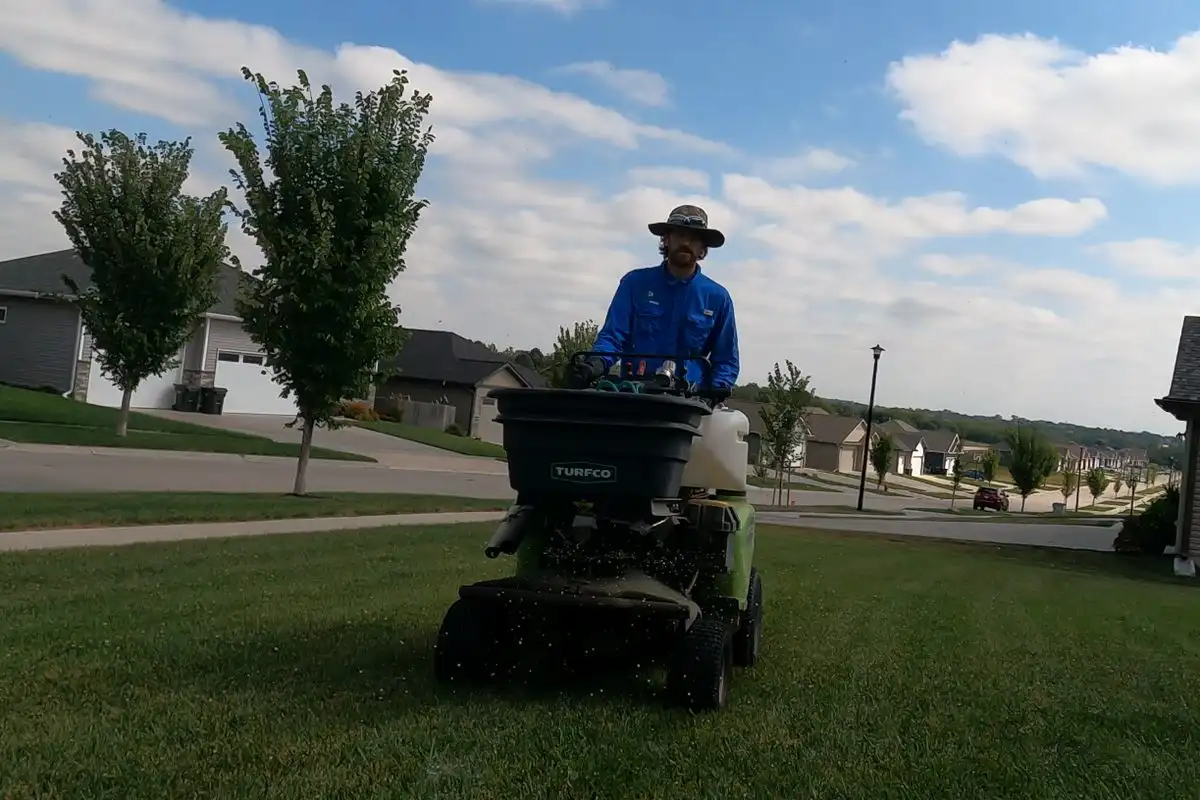
If any fertilizer granules land on the driveway, sidewalk, or street, sweep or blow them back onto the lawn. That keeps nutrients where they help and out of storm drains.
What a Well-Fed Lawn Looks Like Next Spring
Imagine this. It is early April. The snow is gone, the soil is just starting to warm, and the lawns on your street are mostly tan and patchy. Yours is turning green from edge to edge, evenly and early, with fewer bare spots along the driveway and fewer weeds waiting to pop up. By the time the neighbors are spreading their first bag of the year, your lawn is already ahead.
That picture is not luck. It is mostly the result of what happens between September and November.
What to Do Next
If you plan to handle fall feeding yourself, here is what we recommend. Make sure the early fall application is down, then plan for a late-season feeding once the mowing slows down but the lawn is still green, usually late October to early November around Lincoln. Read the actual nutrient numbers on the bag rather than relying on the seasonal name, keep mowing at about three inches, and keep leaves from matting down on the turf.
If you would rather have someone else handle the timing decisions, product selection, and application for your lawn, we are here for that. Yard Boss serves Lincoln, Crete, and the surrounding area. Call 402-588-4222 or visit yardbosslawns.com to request a free quote.
Here is what to expect. A licensed Yard Boss applicator will look over your lawn, note the grass type, thin spots, and any weed or insect issues from this season, and explain what we would apply and when. We will let you know before we come out and tell you what to do afterward, including when to water. And we will be honest about what your lawn needs this fall, whether that is a full late-season program or something simpler.