Fertilization
Fall Fertilizer, Winterizer, or Weed and Feed? What Your Lincoln Lawn Actually Needs
Yard Boss • October 2026 • Lincoln, NE • 8 min read

Fall Fertilizer, Winterizer, or Weed and Feed? What Your Lincoln Lawn Actually Needs
Short Answer: They overlap more than the labels suggest. "Fall fertilizer" and "winterizer" are marketing names, not regulated categories, so what matters is the nutrient numbers on the bag. For Lincoln's bluegrass and fescue lawns, nitrogen is the key fall nutrient, applied in September and again in late October or early November. Weed and feed combines fertilizer with a broadleaf weed killer, and while fall is the best season to control dandelions and clover, granular combination products are often less effective than a separate weed control application timed for the weeds. The right choice depends on your lawn's weed pressure and what it was fed earlier this year.
If you have walked into a home improvement store this month, you have seen the wall. Bags labeled fall lawn food, winterizer, weed and feed, fall weed control plus fertilizer, all with green lawns on the front and confident promises on the back. Picking one can feel like a test you did not study for.
Most homeowners we talk to are not looking for the fanciest product. They just want to know which one actually does what their lawn needs, without wasting money or accidentally hurting the grass. That is a fair thing to want, and the good news is that once you know what to look at, the choice gets a lot simpler.
Why the Labels Are So Confusing
Here is the part the packaging does not tell you. Terms like "fall fertilizer," "winterizer," and "lawn food" are names chosen by the manufacturer. They are not standardized categories with required contents. Two bags labeled winterizer from two different brands can have very different nutrient ratios inside.
The information that is regulated is the guaranteed analysis, which includes the three numbers printed on the front of every bag. Those numbers stand for the percentage of nitrogen, phosphorus, and potassium, always in that order. A bag marked 24-0-10 is 24 percent nitrogen, no phosphorus, and 10 percent potassium. That is the real description of what you are buying.
So the first rule we share with every homeowner is simple: read the numbers, not the name.
Fall Fertilizer: The Foundation
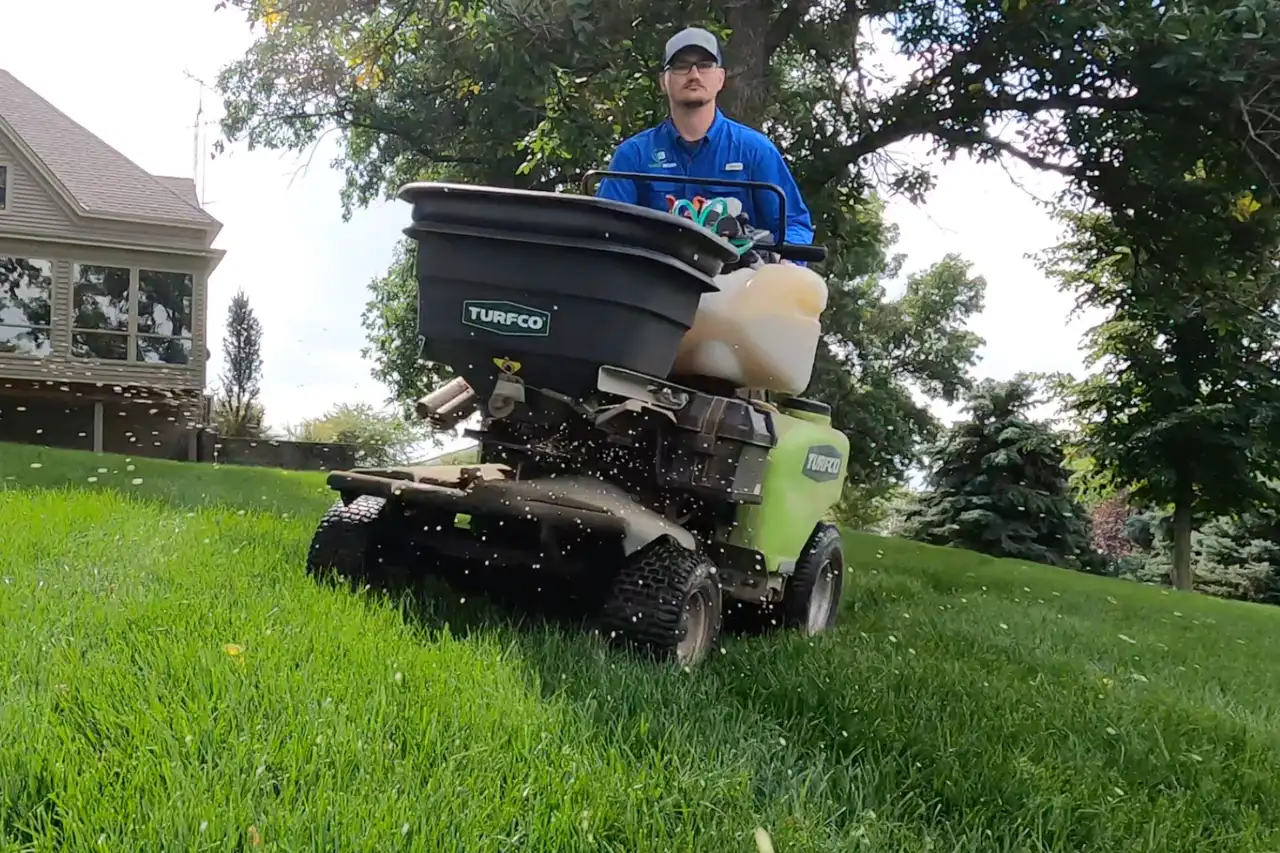
For the Kentucky bluegrass and tall fescue lawns across Lincoln, a good fall fertilizer is mostly about nitrogen. Cool-season grasses use more nitrogen than any other nutrient, and fall is when they use it most efficiently, building roots, new shoots, and stored energy instead of just leaf growth.
An early fall feeding in September usually works best with a blend that includes some slow-release nitrogen. That gives the lawn a steady supply through the weeks when it is most actively recovering from summer. Many products sold as fall fertilizer fit this role well.
The main thing to watch is phosphorus. Established lawns in our area rarely need much, and many of the soils around Lincoln already have plenty. Unless a soil test shows a shortage, a product with little or no phosphorus is usually the better pick.
Winterizer: Useful, With a Caveat
The word "winterizer" came from the idea of a late-season feeding that helps grass get through winter and green up early in spring. That idea is sound. The late-season application, made after top growth slows but while the grass is still green, is one of the most valuable feedings a cool-season lawn can get.
The caveat is that the winterizer name does not guarantee the right contents. Some winterizers are high in potassium on the theory that potassium improves cold hardiness. Potassium does help grass handle stress, but research on cool-season lawns points to nitrogen as the nutrient that matters most for that late-season boost. If your soil already has adequate potassium, paying extra for a high-potassium product may not change much.
Timing matters more than the label here, too. A winterizer applied in early October while the lawn is still growing fast acts more like a regular feeding. The late-season benefit comes from applying it when the mowing has slowed to a crawl but the blades are still green, typically late October into early November in our area.
Weed and Feed: The Convenience Trade-Off
Weed and feed products combine fertilizer with a herbicide that targets broadleaf weeds like dandelions, clover, and creeping Charlie. On paper, it is the perfect two-for-one, and fall is genuinely the best time of year to control those weeds.
Here is why fall matters so much for weed control. As temperatures drop, perennial broadleaf weeds start moving energy down into their roots to survive the winter. A weed control product applied during that window gets carried down with it, which makes it far more likely to kill the whole plant instead of just burning the leaves. Weeds treated in the fall are much less likely to come back in spring.
The challenge with granular weed and feed is how the weed control works. Most of these products need the granules to stick to wet weed leaves and stay there long enough to be absorbed. That means applying when the lawn is damp with dew, then avoiding rain or watering for a day or two afterward. Meanwhile, the fertilizer part of the product would usually benefit from being watered in. The two halves of the bag want different things.
There is also a timing mismatch. The best moment to treat weeds and the best moment to feed the lawn do not always line up. If weed pressure is light, you may be spreading herbicide across the whole lawn to deal with a handful of dandelions. If weed pressure is heavy, a granular product may not get good enough contact to finish the job.
Across the properties we care for, the most reliable results usually come from treating weeds and feeding the lawn as separate steps, each timed for its own purpose. Liquid weed control, applied directly to the weeds that are actually there, tends to be more effective in fall than granules spread across everything.
A Quick Note on Product Safety
Whatever product you choose, read the full label before you open the bag. Weed control products in particular have restrictions on where they can be used, how close they can go to flower beds, vegetable gardens, and trees, and what temperatures are safe for application. Some ingredients can drift or move through the soil and affect nearby plants if applied carelessly.
Keep kids and pets off the lawn for the time the label recommends, and sweep any granules off driveways and sidewalks so they do not wash into storm drains.
So Which One Does Your Lawn Need?
The honest answer is that most lawns around Lincoln benefit from a combination rather than a single bag. Here is a simple way to think about it.
If your lawn has few weeds and was fed earlier in the year, a solid fall fertilizer in September and a late-season nitrogen feeding in late October or early November will cover most of what it needs. The product name on the bag matters far less than the timing and the nutrient numbers.
If your lawn has a noticeable dandelion or clover problem, fall is your best opportunity to get ahead of it. A dedicated fall weed control application, timed for when the weeds are actively moving energy to their roots and temperatures are still mild, will usually do more than weed and feed granules. Pair it with fall fertilization so the grass can fill in the spaces the weeds leave behind.
If your lawn is thin, patchy, or struggling after summer, fertilization becomes even more important, and it may be worth looking at aeration and overseeding as part of next year's plan.
What It Looks Like When It Is Done Right
Imagine walking your lawn next May. The dandelions that dotted the backyard last spring are mostly gone. The clover patch near the fence has shrunk. The grass is thick enough that you cannot see the soil between the blades, and the color is even from front to back. Nothing about that came from a single magic product. It came from the right nutrients and the right weed control, each at the right time.
What to Do Next
If you are shopping for your own lawn this month, start by flipping each bag over and comparing the nutrient numbers rather than the names. Choose a nitrogen-focused product with little or no phosphorus unless a soil test says otherwise, and plan your late-season feeding for when the mowing slows but the grass is still green. If weeds are a real problem, consider treating them separately with a product labeled for fall broadleaf control, following the label closely.
If you would rather have someone else handle the product decisions and timing for your lawn, we are here for that. Yard Boss serves Lincoln, Crete, and the surrounding area. Call 402-588-4222 or visit yardbosslawns.com to request a free quote.
Here is what to expect. A licensed Yard Boss applicator will look at your grass, your weed pressure, and any trouble spots from this season, then explain what we would apply this fall and why. If your lawn only needs fertilizer, we will tell you that. If it needs targeted weed control, we will explain how we will handle it and what you will see over the coming weeks and into next spring.