Lawn Care
Booking Christmas Light Installation in Lincoln and Omaha
Yard Boss • September 2026 • Lincoln & Omaha, NE • 7 min read
Short Answer: Holiday lighting is one of the most compressed service seasons there is. Nearly every customer wants their lights on within the same three or four week window, a crew can only complete a limited number of homes per day, and Nebraska weather removes working days from an already short calendar. That means dates are largely allocated by early autumn. Booking in September gets you a design conversation, a choice of installation date, and time to order materials. Calling in late November means taking whatever remains, if anything does.
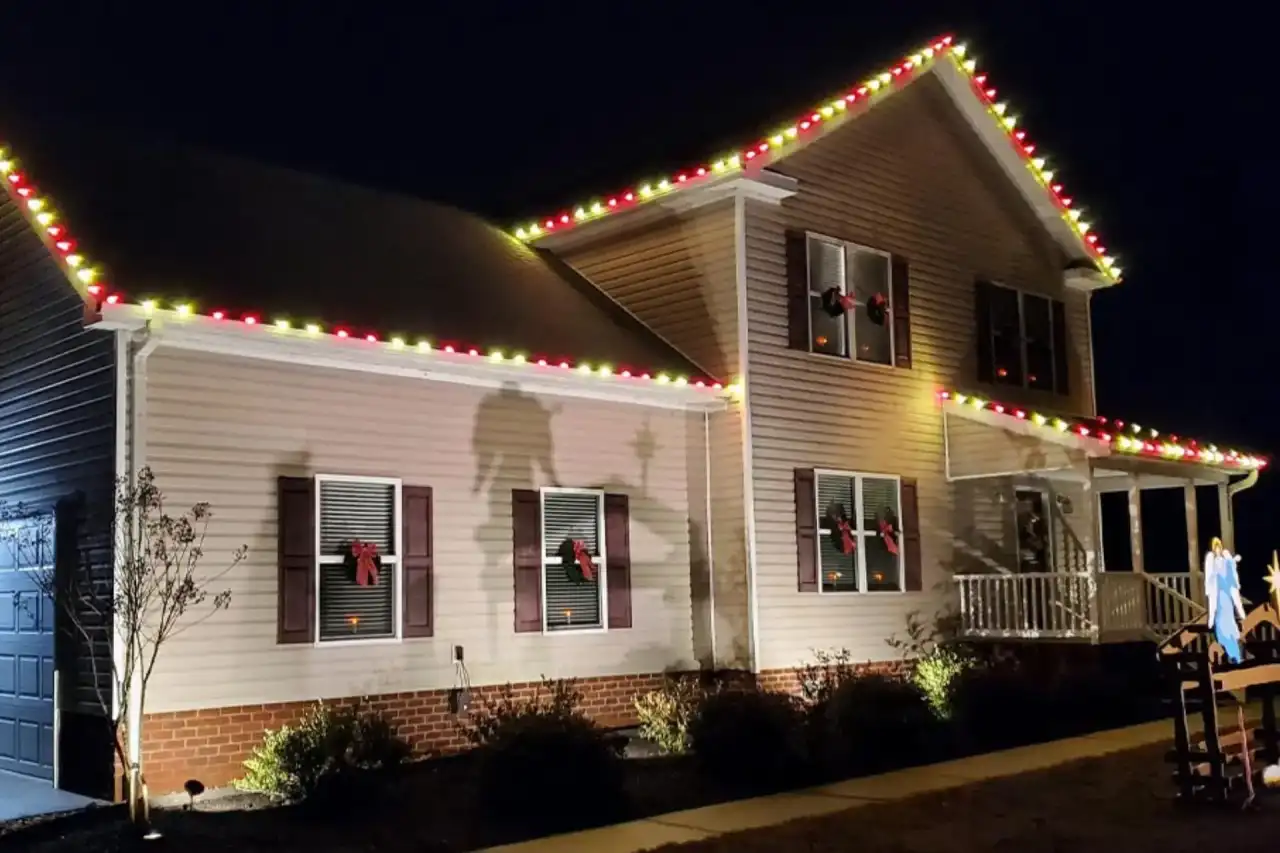
It feels early to think about Christmas lights while the lawn is still growing. That is exactly why it is worth writing about now.
The pattern repeats every year in this market: quiet inquiries in September, steady through October, and then a wave of calls the week after Thanksgiving from people who assumed there would be time.
The Season Is Genuinely Short
The arithmetic from the installer's side explains the rest.
Most households want lights on somewhere between mid November and the first week of December. That is a window of roughly three weeks. A crew completes a limited number of homes per day, and a properly executed roofline install is not a quick job.
Multiply working days by daily capacity and you get a fixed number of houses. It does not flex, because you cannot manufacture more November.
Nebraska weather then takes days out of it. Crews work at height, and when there is ice, snow, or serious wind they come down, which is not negotiable. Late November here can deliver several unworkable days in a row, and every lost day compresses what remains.
A booking made in September sits in a schedule that still has slack to absorb that. A booking made in late November sits in one that does not, so a single bad week pushes an installation past the date you wanted.
What September Buys You
Availability is the obvious benefit. Time to think is the more valuable one.
A design conversation now happens without pressure. We can look at the house, discuss which lines to emphasize, consider how it reads from the street, and talk about what you want it to feel like. That is a different conversation from one held over the phone while a crew waits in a truck.
Materials matter too. Specific colors, C9 versus mini bulbs, particular run lengths, and any custom elements are ordered rather than pulled off a shelf, and lead times are real.
And if the project needs any electrical work, an exterior outlet added or a circuit assessed, that coordination takes time nobody has in the last week of the month.
What a Professional Install Includes
Worth knowing what you are actually buying, because it is more than hanging lights.
A proper service generally covers design, commercial grade materials supplied by the installer, installation, maintenance through the season if a run fails, and takedown and storage afterward.
That last part carries more value than people expect. Taking lights down in a Nebraska January, off a roof, in the cold, is the job nobody wants and the one most likely to end with a ladder on ice.
Ask specifically what happens if a section goes out in mid December, because a service that installs and disappears is a different product from one that maintains through the season.
Ask about materials as well. Commercial grade product handles our winters considerably better than retail strings, and it is one reason a professional install costs what it does.
Design Decisions Worth Making Early
A few choices shape the result more than anything else, and they are easier considered now than under pressure.
Warm white versus cool white is the biggest. Warm white reads traditional and complements brick and warm siding. Cool white reads crisp and modern and pairs well with grey and white exteriors. Mixing them unintentionally is the most common way an otherwise good install looks slightly wrong.
Roofline only, or roofline plus trees, columns, and landscape features? Roofline alone is clean and effective, and a few well chosen accents usually improve it more than extending the roofline around a side nobody sees.
And think about the angle the house is actually seen from, which is generally the street rather than the driveway. Lighting a run facing a fence line costs the same as lighting one facing the road.
Safety Is a Real Consideration Here
We would rather say this plainly than leave it unsaid.
Every year people are injured putting up holiday lights, and the pattern is consistent: ladders on uneven or frozen ground, steep roofs, working alone, and rushing in cold weather. In Nebraska, add the likelihood that the roof is already slick.
If your house is single story with easy access and you enjoy doing it, that is a perfectly reasonable choice. If the roof pitch makes you uneasy, or the ladder situation has been bothering you for a couple of seasons, that is worth weighing against the cost of an install.
Electrical load is the other piece. Older homes with limited exterior outlets get pushed past what a circuit should carry, and that is worth assessing rather than discovering.
What It Costs and What Moves It
Pricing varies enough that a firm figure without seeing the house would be a guess, but the drivers are straightforward.
Linear footage of roofline is the foundation, in the same way measured turf drives lawn pricing. Height and access matter a great deal on top of that. A single story ranch with clear access is straightforward; a two story with steep pitch, or a roofline only reachable over landscaping, takes longer and needs more equipment.
Complexity adds up. Multiple peaks, dormers, and varied rooflines all take more time than one clean run, and wrapping columns, trees, or landscape features is separate work from the roofline.
Whether materials are included and stored between seasons is the other large variable, and it explains why two quotes for what sounds like the same job can differ substantially. A price that excludes takedown is not comparable to one that includes it.
Ask any quote to state roofline footage, which accents are included, whether materials are supplied and stored, whether mid season maintenance is covered, and whether takedown is in the price. Those five items make competing quotes comparable.
Why the Calendar Fills From the Top
A practical note on how availability actually works in this business.
Most companies, ourselves included, carry a substantial number of returning customers year to year, and those homes are often confirmed early because the design is done and the materials are known.
What that means for a new customer is that genuinely available capacity is smaller than the total and is claimed sooner. If this would be your first installation, that is the reason to start the conversation before you see a neighbor's lights go up.
Routes are built geographically as well, so booking early usually means being scheduled sensibly rather than added as an outlier, which affects both your install date and how quickly anyone can return if a run needs attention. On a service area that spans Lincoln through to the Omaha suburbs, that geography matters more than it would in a single town.
There is a practical consequence worth knowing. If a neighbor or two on your street books as well, everyone's scheduling improves, because a crew already working your block can service several homes without repositioning. Several of our best routes started with one customer mentioning it over a fence.
What to Do Next
Stand across the street from your house at dusk this week and look at it the way a visitor does. Note which lines your eye follows and which features disappear after dark.
Take a photograph from that spot. It is more useful in a design conversation than a folder of images from elsewhere, because it shows your actual house from the angle that matters.
Then decide roughly what you want covered and get on the calendar. Yard Boss installs Christmas lighting alongside lawn and tree care across Lincoln, Omaha, Crete, Seward, Waverly, Hickman, Gretna, Papillion, and Elkhorn. Call 402-418-2233 or visit yardbosslawns.com.
Here is what to expect. We will look at the house rather than quote from a template, tell you honestly what suits it, and give you an installation window along with what happens if something fails in December. If we are already full for the dates you want, we will say so rather than letting you find out late.