Lawn Care
The Last Six Weeks Before a Nebraska Winter
Yard Boss • September 2026 • Lincoln & Omaha, NE • 7 min read
Short Answer: For a cool season lawn, the late autumn feeding is the most valuable application of the entire year, because the plant is putting energy into roots and storage rather than top growth. Keep mowing until growth genuinely stops, and take the final cut slightly shorter than your summer height to reduce matting under snow, without scalping. Keep leaves off the turf rather than letting them sit. And get irrigation blown out before a hard freeze, since a cracked backflow assembly is an expensive way to learn that lesson.
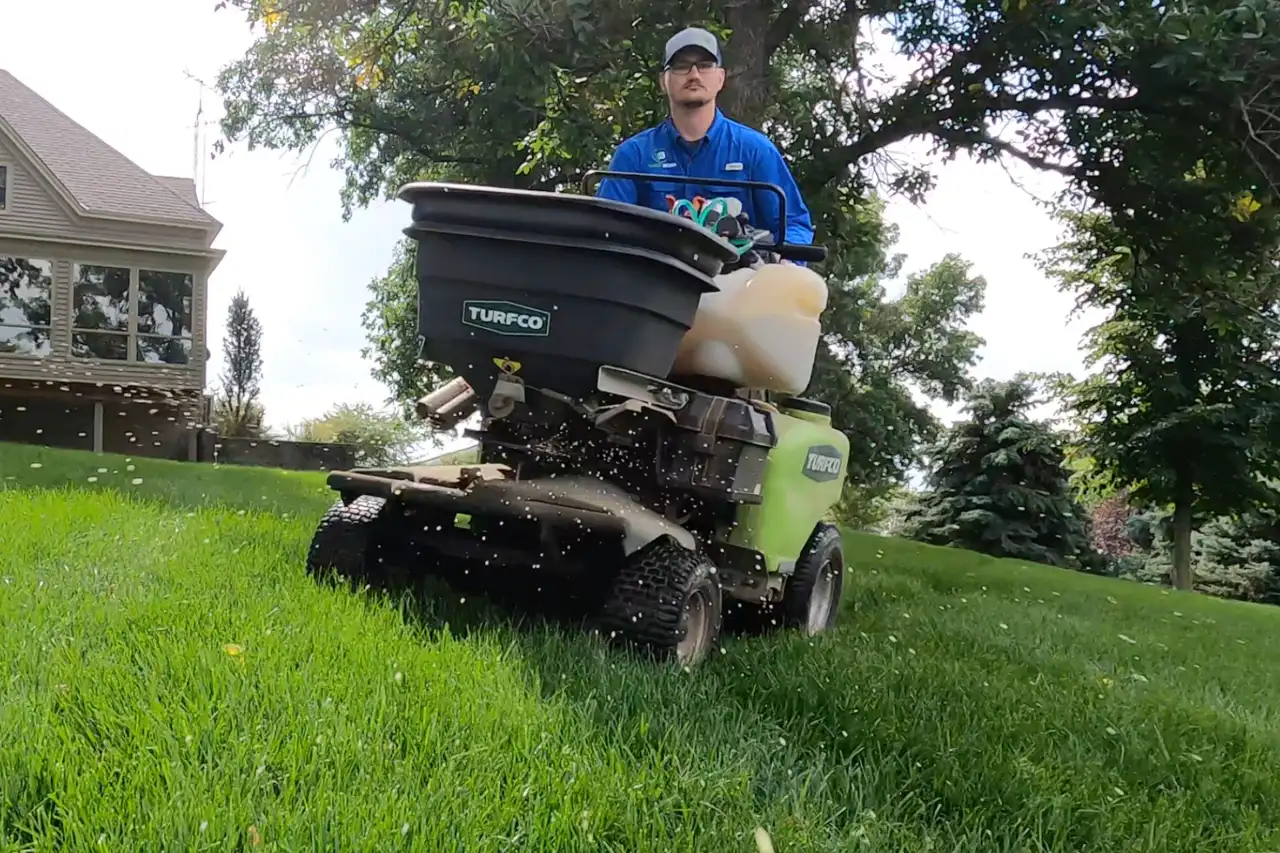
Most homeowners around Lincoln and Omaha think of autumn lawn care as tidying up. It is closer to the opposite: this is the period where a cool season lawn does the work that determines how it looks next spring.
Here is what actually matters in the last stretch before the ground freezes.
The Feeding That Matters Most
If you make only one fertilizer application all year on a Nebraska lawn, make it this one.
Cool season grasses respond to shortening days and cooling air by shifting their energy allocation. Top growth slows, but roots keep growing whenever soil stays above roughly 40 degrees, and the plant converts energy into stored carbohydrates rather than new leaves.
A late season feeding lands in exactly that window. The nutrients go into root development and storage rather than being spent on blade growth you would then have to mow. That storage is what fuels the early, even green up in spring that people notice on well managed lawns and cannot explain.
Timing is the part people get wrong. This application wants to go down while the grass is still green and photosynthesizing but has largely stopped growing vertically, which around here generally means late October into November depending on the season. Applied too early it simply pushes growth. Applied after the ground is frozen it does nothing at all and can run off.
Mowing Right to the End
Keep mowing until the grass genuinely stops growing, which in eastern Nebraska is usually later than people expect and often into November.
Stopping too early leaves the lawn tall going into winter, and tall grass mats down under snow. Matted turf holds moisture against the crowns for months and is the classic setup for snow mold, which shows up in spring as matted grey or pink patches.
The final cut is worth taking slightly shorter than your summer height, coming down modestly rather than scalping. Removing more than a third at once stresses the plant, so if you keep the lawn tall through the season, step it down over the last two or three cuts rather than in one pass.
Do not scalp it. Cutting to the dirt exposes crowns to cold and desiccation and removes the leaf surface the plant is still using to build reserves.
Keep the blade sharp for these last cuts as well. A torn leaf tip going into winter is an open wound sitting there for months.
Leaves Are Not Optional
A layer of wet leaves left on turf over a Nebraska winter does real damage.
It smothers, blocking light from grass that is still trying to photosynthesize, and it holds moisture against the surface in exactly the way snow mold needs. Come April you find pale, thin, or dead patches shaped precisely like where the leaves sat.
Mulching leaves with a mower is genuinely good practice when the volume is light. Shredded finely, they break down over winter and return organic matter to the soil, which is worth having.
When the volume is heavy, mulching just creates a thicker mat, and they need removing. The practical test is whether you can still see grass through the shredded material after a pass. If not, remove rather than shred.
Do the last clean up after the trees are genuinely finished dropping rather than in the middle of it, and do not leave piles sitting on the lawn while you decide.
Irrigation Before the Freeze
This is the one with a real repair bill attached, and Nebraska is cold enough that it matters every year.
Water left in irrigation lines expands when it freezes, and it splits pipe, cracks fittings, and destroys backflow assemblies. Backflow devices in particular are expensive to replace and sit above ground where they freeze first.
Get the system blown out with compressed air before a hard freeze. Shut off the supply, drain what you can, and have the lines cleared properly rather than assuming a mild autumn will hold.
Timing is a judgement call. Too early and you lose the ability to water during a dry warm spell, which cool season grass and particularly any autumn seeding still benefits from. Too late and you are gambling. In this area, having it done through October is a reasonable target, and it is worth booking early since every irrigation contractor is doing the same work in the same three weeks.
Do not forget hose bibs and any exterior lines while you are at it.
What Still Needs Water
Reducing is not the same as stopping, and that distinction matters more for plants than for turf.
Evergreens keep transpiring through winter while frozen ground limits what the roots can replace, which is why winter desiccation browns arborvitae and spruce on the exposed side. A deep watering before the ground freezes gives them a reserve to draw on.
Newly planted trees and shrubs are the most vulnerable, since a first Nebraska winter on a small root system is a genuine test. Anything installed this year deserves a thorough soaking late in the season.
Autumn seeded areas need attention too, since young grass going into winter short of moisture comes through poorly.
Once the irrigation is blown out, that means hand watering with a hose during any extended warm dry stretch, which feels odd in November and is worth doing.
Traffic on Dormant Turf
A small point that shows up every spring.
Dormant grass cannot repair itself. A path worn across the lawn in January by people, a trailer parked on the turf, or a route the dog takes daily is still visible in April, because nothing grew over it in the meantime.
The same applies to frozen turf specifically. Walking repeatedly across frost covered grass damages the crowns, and those footprints can show for weeks.
It is not worth obsessing over, but if you have a spot where the same track gets worn every winter, moving that route is free and saves a repair.
Snow Mold and What Reduces It
Worth understanding because it is the most common spring complaint on Nebraska lawns and almost all of it is decided in autumn.
Snow mold develops under snow cover on grass that went into winter too long, matted, and wet. It appears as the snow melts, showing as circular patches of matted, greyish or pinkish grass that looks pasted down.
Three autumn decisions reduce it substantially. Mowing right through until growth stops, so the lawn does not go under snow tall. Clearing leaves rather than letting a damp layer sit. And avoiding a heavy nitrogen push very late, which produces soft growth going into the cold.
Where snow gets piled matters too. Deep piles from clearing a driveway sit far longer than the rest of the lawn, and the grass under them stays wet weeks after everything else has dried out. Choosing where that snow goes is worth thinking about before the first storm.
Most snow mold is cosmetic and the lawn grows out of it once things warm and dry. Raking the matted areas gently in spring to break them up and let air in speeds that considerably.
What to Do Next
Plan your last significant feeding for when growth has slowed but the lawn is still green, rather than putting it down on the first cool weekend.
Keep mowing later than feels natural, and step the height down gradually over the final cuts instead of taking it all off at once.
Book the irrigation blowout now rather than in the week everyone else is calling, and stay on top of leaves as they come down.
If you would rather have someone handle the timing on all of it, Yard Boss has served Lincoln, Omaha, Crete, Seward, Waverly, Hickman, Gretna, Papillion, and Elkhorn for eighteen years. Call 402-418-2233 or visit yardbosslawns.com.
Here is what to expect. We time the late season feeding to the lawn rather than to the calendar, which means it may land later than you expect, and we will tell you plainly what does and does not need doing before the ground freezes. Most of what makes a lawn look good in April happens in the six weeks nobody is watching.