Christmas Light Installation
C9 Bulbs Explained: Why Professional Installers Use Them on Lincoln Rooflines
Yard Boss • November 2026 • Lincoln, NE • 7 min read
Short Answer: C9 bulbs are the large, classic Christmas bulbs most professional installers use on rooflines. They are big enough to read clearly from the street, even on two-story homes, and the faceted LED versions sparkle and stay bright in cold weather. Each bulb sits in its own socket on a strand, which allows exact spacing and easy replacement of a single bulb. Smaller C7 bulbs and mini lights work better on trees, shrubs, and garland. In Lincoln, LED C9s also use far less power and hold up better to cold than older incandescent bulbs.
If you have looked closely at a professionally lit house, you have probably noticed the bulbs are bigger than the strings you find in most store aisles. Those are C9 bulbs, and they are the workhorse of most professional roofline displays.
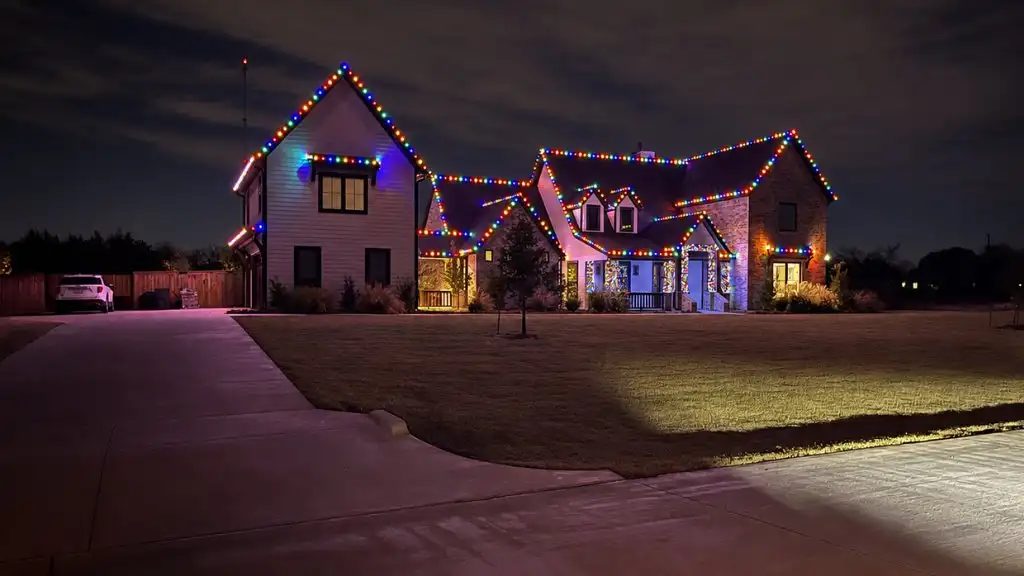
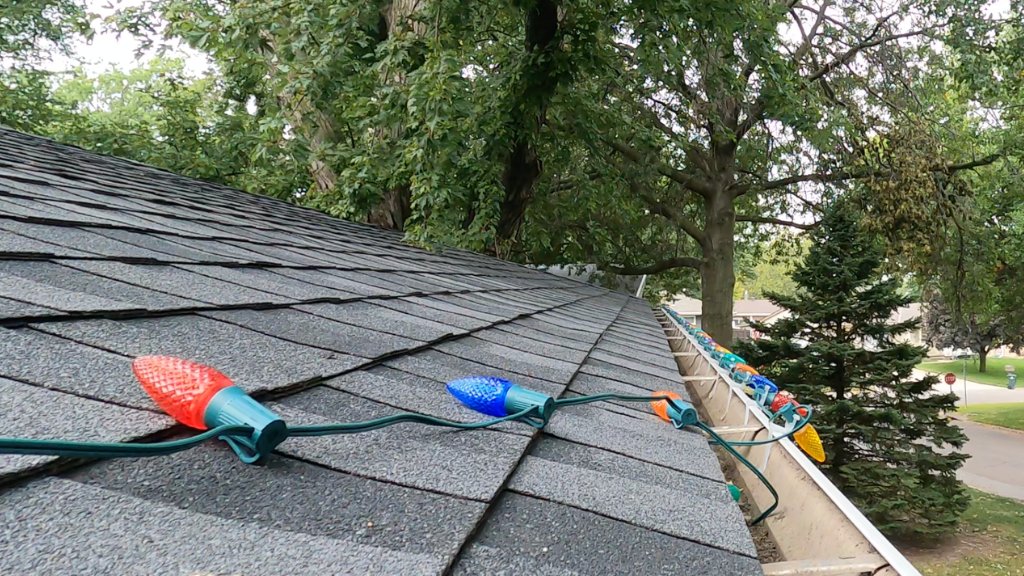
The photo here shows faceted LED C9 bulbs in red, blue, orange, and yellow clipped along a Lincoln gutter. Here is what makes them the go-to choice for rooflines, and when other bulbs make more sense.
What C9 Means
C9 refers to the size and shape of the bulb. A C9 is roughly an inch wide and an inch and a half long, with a classic cone or strawberry shape. C7 bulbs are a slightly smaller version of the same shape. Mini lights are the tiny bulbs common on indoor trees.
Why Size Matters on a Roofline
Rooflines are viewed from the street, often 50 feet away or more. Small bulbs can disappear at that distance, especially on two-story homes. C9 bulbs are large enough to read clearly as a line of light, which is why they are the standard for professional roofline installs.
Faceted LED Bulbs
Many professional C9 bulbs today are LED with a faceted surface, like the ones in the photo. The facets catch and scatter light, giving each bulb a sparkle. Faceted LEDs also look bright even in daylight, which helps a display look finished during the day.
LED Versus Incandescent
The biggest change in C9 bulbs over the past decade is the move to LED. Older incandescent C9 bulbs got hot, used a lot of electricity, and burned out often. LED C9 bulbs stay cool to the touch, use a fraction of the power, and last much longer. LED is now the standard for professional installs.
Cold Weather Performance
LED bulbs perform well in cold weather, which matters in a Nebraska winter. They light instantly in freezing temperatures and do not struggle the way some older bulbs did.
Individual Sockets
C9 lights are installed on strands with individual sockets, called spools or stringers. Each bulb screws into its own socket. That allows installers to cut strands to the exact length of a roofline, set the spacing, and replace a single bulb if one goes out, without replacing the whole strand.
Spacing
Spacing between bulbs affects how a roofline looks, and it is one of the first decisions made when a roofline is planned.
Weather Resistance
Quality C9 sockets and bulbs are sealed against moisture, which matters when snow melts on the roof and refreezes overnight. Sealed sockets help prevent shorts and dark sections. Closer spacing creates a bolder, brighter line. Wider spacing looks more classic and lets each bulb stand out. Twelve-inch spacing is common on rooflines.
Colors
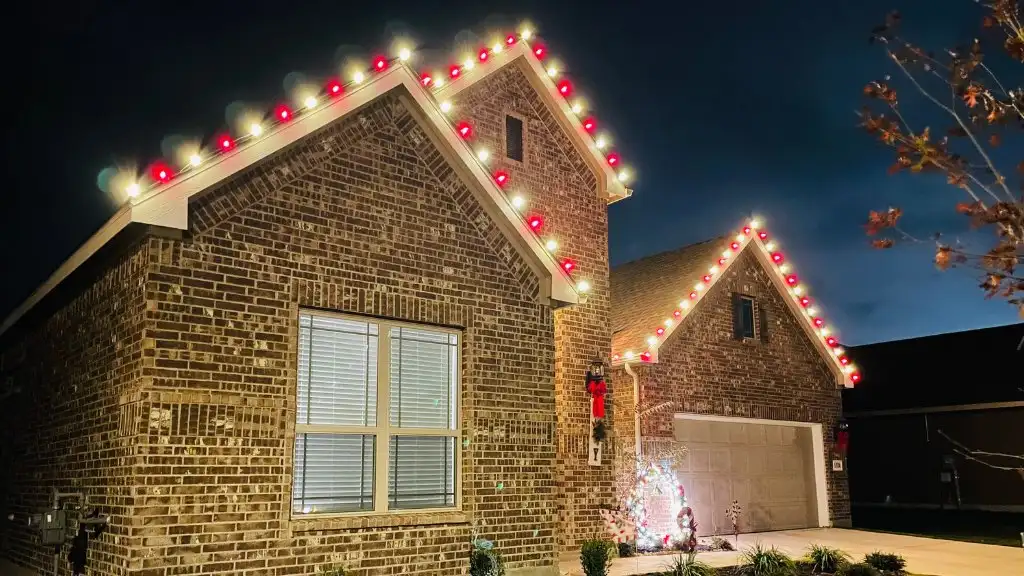
C9 bulbs come in warm white, cool white, and every color. Multicolor, like the bulbs in the photo, gives a nostalgic look. Warm white is classic and elegant. Two-color patterns, like red and white, alternate bulb by bulb for a festive look.
Opaque, Transparent, and Faceted
C9 bulbs come in different finishes. Opaque bulbs have a smooth, soft glow. Transparent bulbs show the light source more directly. Faceted bulbs sparkle. Many installers prefer faceted bulbs on rooflines for the extra shine.
Bulb Shape Options
Besides the classic cone shape, C9-size bulbs come in round globe and other shapes. Globe bulbs give a softer, modern look. The classic faceted cone, like the bulbs in the photo, is the most traditional.
Mixing Bulb Sizes
Using C9s on the roofline and C7s or mini lights on lower features creates depth. The larger bulbs read from the street, while the smaller lights add texture up close.
Where Smaller Bulbs Fit
C9s are best on rooflines, gables, and larger features. C7 bulbs work well on smaller rooflines, window outlines, and porch railings. Mini lights and wide-angle mini lights are best for wrapping trees, covering shrubs, and lighting garland, where you want many small points of light.
Commercial-Grade Versus Store-Bought
Commercial-grade C9 bulbs and strands hold more consistent color and brightness and stand up better to wind and cold than many store-bought sets. Consistent color is especially important on long rooflines, where one off bulb stands out.
Clipped for Even Lines
Each C9 sits in a clip on the gutter or shingle edge, which keeps bulbs upright and evenly spaced. That is what creates the crisp line of light you see from the street.
Replacing a Bulb
If a single C9 burns out or breaks, it can be replaced without taking down the strand. That makes in-season repairs quick.
Bulb Color Temperature
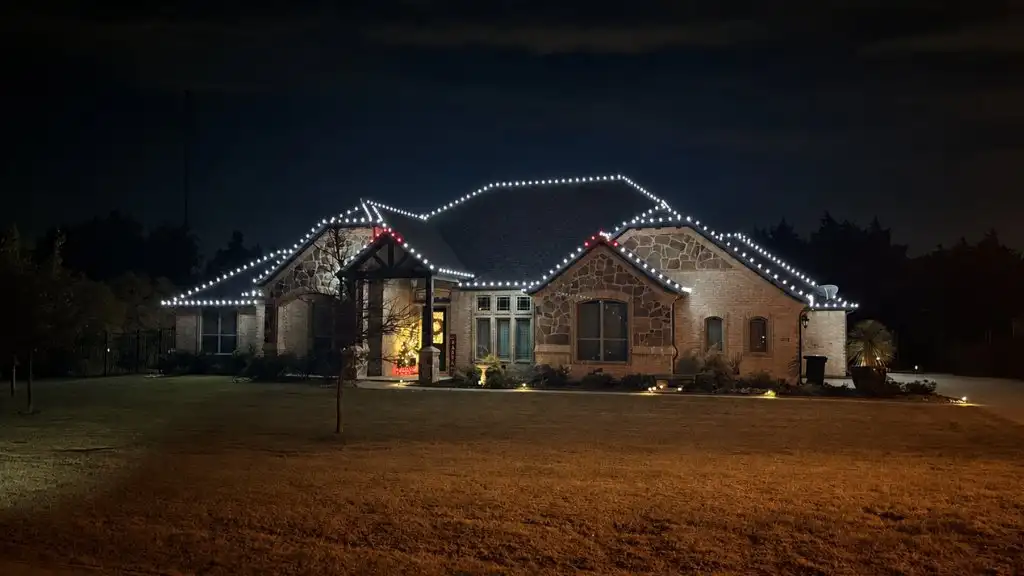
Not all whites are the same. Warm white has a soft, golden glow that suits brick and stone. Cool white has a crisp, bluish tone that looks modern and wintry. Pure white sits between them. Choosing one and sticking with it across the whole roofline keeps the look uniform.
Brightness on Two-Story Homes
On a tall two-story home, C9 bulbs are especially important. Smaller bulbs on a second-story eave can look faint from the street, while C9s keep the upper rooflines as bright and clear as the lower ones.
How Many Bulbs a Roofline Needs
The number of bulbs depends on the length of each run and the spacing. A longer roofline with tight spacing takes many more bulbs than a short eave with wider spacing. That is why rooflines are measured and counted before install day.
Safety and Heat
Because LED C9s stay cool to the touch, they are safer around gutters full of dry leaves, dry shrubs, and curious kids and pets than older incandescent bulbs.
Energy Use
A full roofline of LED C9s uses far less electricity than the same roofline in incandescent bulbs, which makes it practical to run a display every evening from Thanksgiving to New Year's.
Storage
C9 strands and bulbs store well when wound loosely and kept dry. Professional installs often store strands by section so they go back up the same way next year.
Replacement Bulbs on Hand
Professional installers keep spare C9 bulbs in matching colors and finishes, so a dark bulb can be swapped quickly during the season without changing how the roofline looks.
Strand Wire Color
C9 strands come with green or white wire. Green wire blends into shingles and evergreens. White wire blends into white gutters and trim. Matching the wire to the house makes the install look cleaner in daylight.
Choosing for Your Home
For most homes in Lincoln, C9s on the roofline paired with mini lights on trees and shrubs is the right combination.
What a C9 Roofline Looks Like
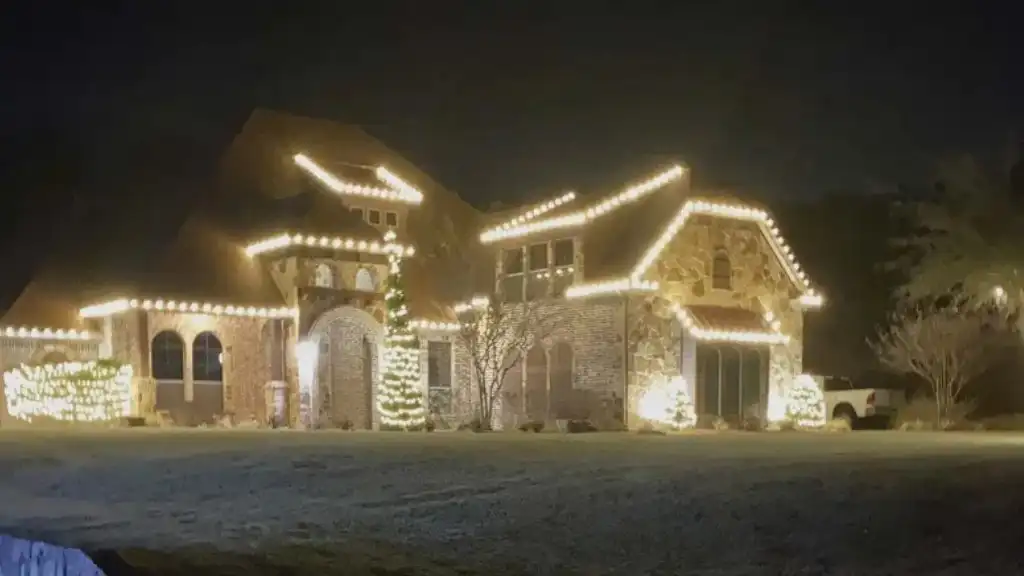
Imagine this. It is a clear December night. From the end of the block, your roofline reads as a crisp, sparkling line of color, every bulb evenly spaced, every peak centered. Up close, each faceted bulb catches the light. It looks the way Christmas lights are supposed to look.
What to Do Next
If you are planning your own display, use C9 bulbs on rooflines and gables, choose LED and faceted for brightness and cold-weather performance, and save mini lights for trees, shrubs, and garland. Keep spacing even and use clips made for your gutters and shingles.
If you would rather have someone else handle the ladders and the cold this year, we are here for that. Yard Boss installs Christmas lights in Lincoln, Crete, and the surrounding area. Call 402-588-4222 or visit yardbosslawns.com to request a free quote.
Here is what to expect. We will look at your home with you, talk through the rooflines, colors, and features you want lit, and explain what the installation would include before anything goes up. You will know what you are getting and when.